21st-Century Teaching Enhancement Based on Four Bala Dhamma of Teachers at Phra Pariyattidhamma School, Dhamma Section, Sangha of Roi Et Province
Keywords:
Teaching And Learning in The 21st Century, The Four Pala Dhammas, The Buddhist Monastic School, Dhamma SectionAbstract
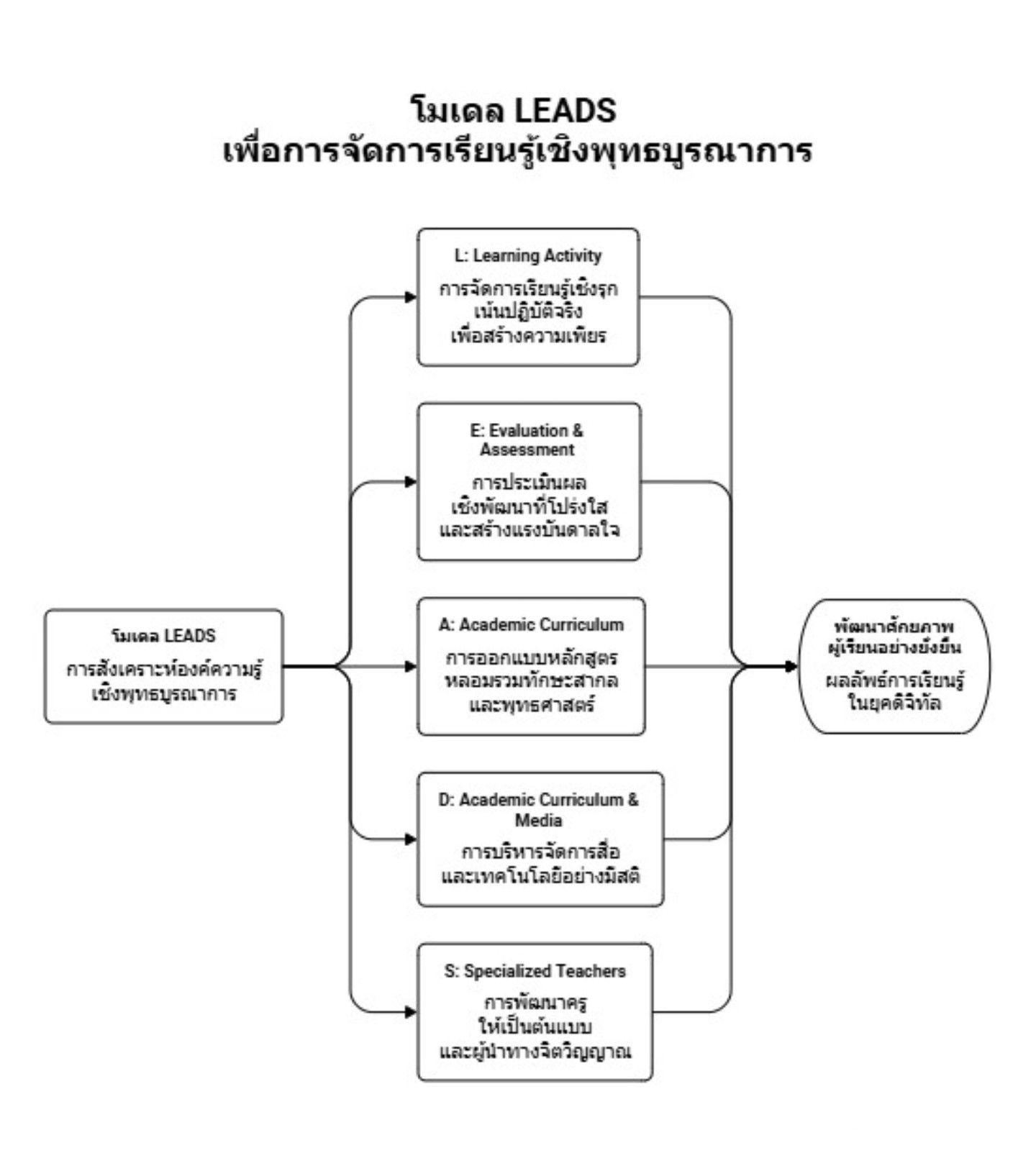
This research aims to (1) examine the current state of 21st-century teaching and learning management among teachers in Buddhist monastic schools (Dhamma section) in Roi Et Province; (2) investigate teaching and learning methods based on the Four Strengths (Pala 4); and (3) propose guidelines for enhancing 21st-century teaching based on the Four Powers (Pala 4): A case study of teachers in Phrapariyatti Dhamma Schools, Roi Et Province. This research employs a mixed-methods approach, combining quantitative research using a sample of 217 individuals who responded to opinion questionnaires with 10 experts who evaluated the suitability, feasibility, and usefulness of the project. The statistical methods used for data analysis included percentages, means, and standard deviations. Qualitative research involved content analysis of interviews with nine experts using descriptive content analysis techniques. The study found that 1) the overall state of 21st-century teaching and learning management among teachers of Buddhist monastic schools in Roi Et Province was at a high level in all aspects; and 2) the 21st-century teaching and learning methods based on the Four Strengths (Pancha Bala 4) were also at a high level. There is conscious integration of digital media, flexible curricula, and the development of academically excellent exemplary teachers to drive education to keep pace with the world while maintaining Buddhist identity. 3) The results of proposing guidelines for 21st-century teaching and learning based on the Four Strengths of Teaching (Pancha Bala 4) for teachers, considering their suitability, feasibility, and usefulness, showed that the overall level was very high. When considered individually, the appropriateness aspect had the highest average score, followed by feasibility and usefulness.
References
กองพุทธศาสนศึกษา. (2568). ประวัติการศึกษาพระปริยัติธรรม แผนกธรรม. สืบค้นจาก https://deb.onab.go.th/th/content/page/index/id/6121.
เงาแข เดือดขุนทด. (2464). รูปแบบการพัฒนาทักษะการจัดการเรียนรู้สำหรับครูในศตวรรษที่ 21 ของโรงเรียนฉะเชิงเทราปัญญานุกูล จังหวัดฉะเชิงเทรา (รายงานการวิจัย). ฉะเชิงเทรา: โรงเรียนฉะเชิงเทราปัญญานุกูล จังหวัดฉะเชิงเทรา สำนักบริหารงานการศึกษาพิเศษ สำนักงานคณะกรรมการการศึกษาขั้นพื้นฐาน กระทรวงศึกษาธิการ.
ณัฐวัฒน์ ด้วงฉุน. (2565). การพัฒนารูปแบบการเรียนการสอนผ่านชุมชนเรียนรู้วิชาชีพ โดยใช้เทคโนโลยีดิจิทัล เพื่อส่งเสริมความสามารถในด้านการสอน สำหรับนักศึกษาหลักสูตรครุศาสตร์อุตสาหกรรมในสถาบันอุดมศึกษา. (ปรัชญาดุษฎีบัณฑิต, มหาวิทยาลัยนเรศวร).
บุญชม ศรีสะอาด. (2560). การวิจัยเบื้องต้น. (พิมพ์ครั้งที่ 10). กรุงเทพฯ: สุวีริยาสาส์น.
พระมหาสุทัศน์ อุตฺตโร (จันอากาศ), วิทยา ทองดี, ปาณจิตร สุกุมาลย์ และ อังคณา ตุงคะสมิต. (2566). การศึกษารูปแบบการจัดการเรียนรู้พระปริยัติธรรมแผนกธรรม ของสำนักศาสนศึกษาในเขตอำเภอน้ำพอง จังหวัดขอนแก่น. วารสารสถาบันวิจัยพิมลธรรม, 10(3), 23–38.
ระพีพัฒน์ หาญโสภา, พระมหาศุภชัย ศุภกิจโจ และ ประยุทธ ชูสอน. (2563). การพัฒนาทักษะการเรียนรู้ในศตวรรษที่ 21 สำหรับโรงเรียนร่มโพธิ์ทองธรรมวิทย์. วารสารมานุษยวิทยาเชิงพุทธ, 5(11), 18–31.
ลัดดาวัลย์ จันลา, วีระกุล อรัณยะนาค และ สุวิทย์ ภาณุจารี. (2568). กลยุทธ์การบริหารโรงเรียน สู่ความเป็นเลิศทางการศึกษา. วารสารนิสิตวัง, 27(1), 131–141.
ลัดดาวัลย์ สะอิ้งทอง. (2564). แนวทางการพัฒนาทักษะการจัดการเรียนรู้ของครูในศตวรรษที่ 21 สังกัดสำนักงานเขตพื้นที่การศึกษาประถมศึกษาสุพรรณบุรี เขต 1. (ครุศาสตรมหาบัณฑิต, มหาวิทยาลัยราชภัฏพระนครศรีอยุธยา).
วชิระ โมราชาติ. (2567). การพัฒนารูปแบบการเรียนการสอนกลับด้านโดยใช้เทคโนโลยีเป็นฐาน เพื่อเสริมสร้างการรู้ดิจิทัลสำหรับนักศึกษาระดับปริญญาตรี คณะครุศาสตร์มหาวิทยาลัยราชภัฏ. (ปรัชญาดุษฎีบัณฑิต, มหาวิทยาลัยมหาสารคาม).
สำนักงานปลัดกระทรวงศึกษาธิการ. (2566). แนวทางการจัดทักษะการเรียนรู้ในศตวรรษที่ 21ที่เน้นสมรรถนะทางสาขาวิชาชีพ. สืบค้นจาก https://ops.moe.go.th/wp-content/uploads/2023/05/1.-%E0%B9%81%E0%B8%99%E0%B8%A7%E0%B8%97%E0%B8%B2%E0%B8%87%E0%B8%81%E0%B8%B2%E0%B8%A3%E0%B8%88%E0%B8%B1%E0%B8%94%E0%B8%97%E0%B8%B1%E0%B8%81%E0%B8%A9%E0%B8%B0%E0%B8%81%E0%B8%B2%E0%B8%A3%E0%B9%80%E0%B8%A3%E0%B8%B5%E0%B8%A2%E0%B8%99%E0%B8%A3%E0%B8%B9%E0%B9%89%E0%B9%83%E0%B8%99%E0%B8%A8%E0%B8%95%E0%B8%A7%E0%B8%A3%E0%B8%A3%E0%B8%A9%E0%B8%97%E0%B8%B5%E0%B9%88-21.pdf.
สำนักงานเลขาธิการสภาการศึกษา กระทรวงศึกษาธิการ. (2560). แผนการศึกษาแห่งชาติ พ.ศ. 2560-2579. กรุงเทพฯ: โรงพิมพ์คุรุสภาลาดพร้าว.
สำนักงานเลขาธิการสภาการศึกษา กระทรวงศึกษาธิการ. (2562). เครื่องมือส่งเสริม การขับเคลื่อนประสิทธิภาพ การจัดการเรียนรู้ของสถานศึกษา ระดับการศึกษาขั้นพื้นฐาน (สำหรับครู). กรุงเทพฯ: พริกหวานกราฟฟิค.
สิริกร ชาติดี และ สุทธิพงศ์ บุญผดุง. (2568). การพัฒนาภาวะผู้นำเชิงสร้างสรรค์ของผู้บริหารสถานศึกษาในศตวรรษที่ 21. วารสารสันตยาภิวัฒน์ วัดหนองนกกด, 3(5), 400-412.
สุวิมล ว่องวาณิช. (2558). การวิจัยประเมินความต้องการจำเป็น. (พิมพ์ครั้งที่ 3 ฉบับปรับปรุง). กรุงเทพฯ: สำนักพิมพ์แห่งจุฬาลงกรณ์มหาวิทยาลัย.
อมรรัตน์ เตชะนอก, รัชนี จรุงศิริวัฒน์ และ พระฮอนด้า วาทสทฺโท. (2563). การจัดการศึกษาในศตวรรษที่ 21. วารสารมหาจุฬานาครทรรศน์, 7(9), 1-14.
อารุณ สิทธิวงศ์. (2562). เคล็ดลับพุทธวิธีภาวะของผู้นำกับการบริหารงานในพระพุทธศาสนา. วารสารสังคมศาสตร์วิชาการ, 12(1), 65-71.
Good, C.V. (1973). Dictionary of Education. New York: McGraw-Hill
Hessong, R. F., & Weeks, T. H. (1987). Introduction to Education. New York: Macmillan
Oliva, P.F. (1992). Developing the Curriculum. (3rd edition). New York: Harper Collins.
Yamane, T. (1973). Statistics: An Introductory Analysis. (3rd ed.). New York: Harper and Row.
Downloads
Published
How to Cite
Issue
Section
License
Copyright (c) 2026 Journal of Social Science Panyapat

This work is licensed under a Creative Commons Attribution-NonCommercial-NoDerivatives 4.0 International License.


