An Analysis of Research Grant Allocation Trends and Disbursement Status of the Mahasarakham Business School, Mahasarakham University
Keywords:
Research Grants, Grant Allocation, Fund Disbursement, Research ManagementAbstract
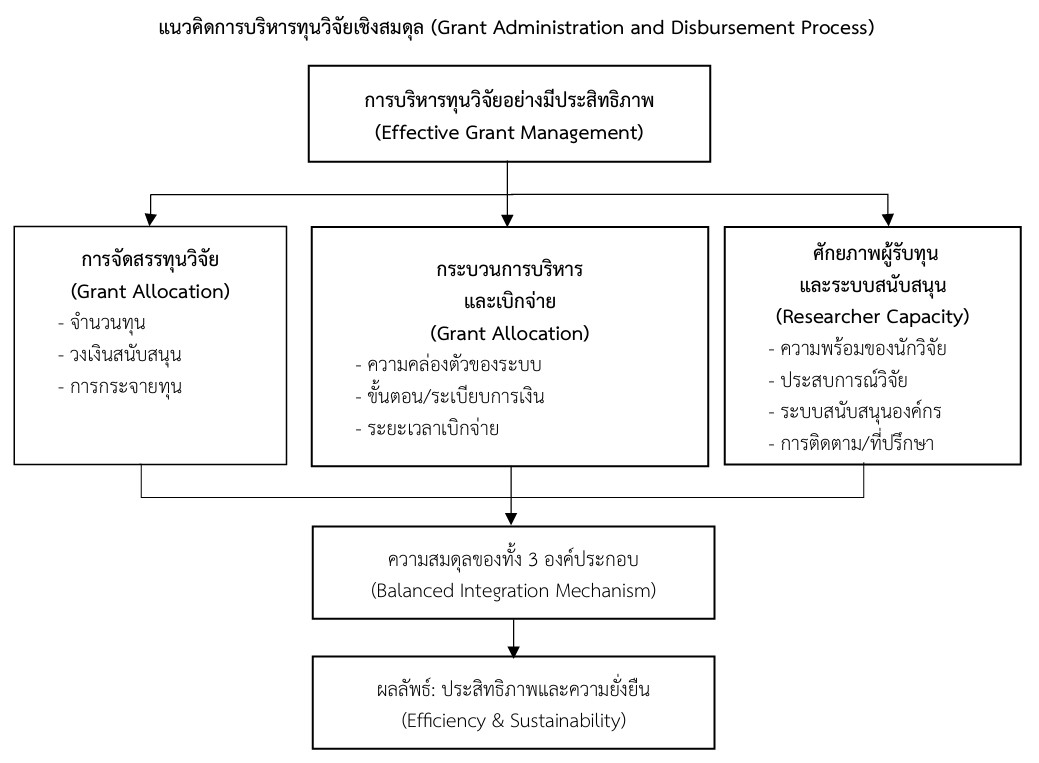
This research aimed to (1) analyze trends in research grant allocation, (2) examine the disbursement status of research grants, and (3) propose guidelines for improving research grant management within the Mahasarakham Business School, Mahasarakham University, during fiscal years 2018–2024. A descriptive research design was employed, utilizing secondary data obtained from institutional research grant summary documents. The research instrument was a structured data recording form, and data were analyzed using descriptive statistics, including frequency, percentage, and trend comparison. The findings revealed that research grant allocation exhibited considerable fluctuations in both the number of grants and total funding. The highest allocation was recorded in fiscal year 2020, while the lowest occurred in fiscal year 2023. In recent years, the allocation pattern shifted toward distributing grants more broadly while decreasing the average funding per project. Regarding disbursement status, overall efficiency was relatively high, with actual disbursement rates exceeding 80% in all years. Fiscal year 2021 demonstrated the highest disbursement performance, with an actual disbursement rate of 100% and no delayed payments in any installment. Nevertheless, issues such as remaining funds, returned grants, and delayed disbursements were identified in certain years, reflecting limitations in administrative processes and project management capacity. When categorized by grant type, funding allocated to academic staff development and academic promotion received the largest share in both number and budget, while graduate student research grants accounted for a high number of projects but relatively low funding per project, reflecting a policy emphasis on enhancing academic staff capacity. Furthermore, findings related to grants for generating new knowledge among faculty members indicated that effective research grant management depends not solely on the amount of funding but on the balance among allocation strategies, administrative processes, and the capacity of grant recipients. Therefore, it is recommended that institutions improve grant management systems by ensuring balanced allocation, streamlining disbursement procedures, and strengthening project monitoring mechanisms to enhance long-term budgetary efficiency and sustainability.
References
กมลทิพย์ คงสวัสดิ์พร. (2561). ปัจจัยที่มีผลต่อประสิทธิภาพการเบิกจ่ายเงินงบประมาณ ประจำปีงบประมาณ 2556 ของกรมที่ดิน. วารสารรัฐศาสตร์ มหาวิทยาลัยราชภัฏสวนสุนันทา, 1(2), 77–88.
กาญจนา พรหมโคตร, อรอนงค์ โนนทิง และ กีรติพร จูตะวิริยะ. (2564). ปัจจัยที่สัมพันธ์กับการขอทุนวิจัยภายนอกของนักวิจัยสายวิชาการ คณะแพทยศาสตร์ มหาวิทยาลัยขอนแก่น. วารสารการพัฒนางานประจำสู่งานวิจัย, 8(2), 36–43.
คณะอนุกรรมการด้านนโยบายและยุทธศาสตร์วิจัยและนวัตกรรม สภานโยบายวิจัยและนวัตกรรมแห่งชาติ. (2560). ยุทธศาสตร์การวิจัยและนวัตกรรม 20 ปี (พ.ศ. 2560–2579). กรุงเทพฯ: บริษัท โคคูน แอนด์โค จำกัด.
จิตติพร นวลละออง, ศิราวัลย์ อัศวเมฆิน และ วรินทร์พิภพ ชยทัตภูมิรัตน์. (2567). การศึกษาสถานภาพงบประมาณการวิจัยโครงการวิจัยที่ได้รับทุนจากแหล่งทุนต่างประเทศของมหาวิทยาลัยมหิดลในสถานการณ์การระบาดของโรคโควิด-19. วารสารมหาวิทยาลัยราชภัฏยะลา, 19(2), 42–51.
เฉิดฉันทร์ ราชบุรณะ และ ครรชิต บุญเรือง. (2567). วิเคราะห์แนวโน้มการตีพิมพ์ผลงานวิจัยระดับนานาชาติของประเทศไทย ในช่วงปี ค.ศ. 2018-2022. วารสารห้องสมุด สมาคมห้องสมุดแห่งประเทศไทยฯ, 68(1), 125–142.
ชนินาถ สุริยะลังกา และ ศิราวัลย์ อัศวเมฆิน. (2567). แนวทางการจัดทำงบประมาณและการจัดประเภทรายการค่าใช้จ่ายในโครงการวิจัยทางคลินิกมหาวิทยาลัยมหิดลที่ได้รับทุนจากแหล่งทุนภายนอก. Mahidol R2R e-Journal, 11(1), 25–36.
โทน เวชชะ. (2563). ประสิทธิผลในการส่งเสริมและสนับสนุนให้นักวิจัยได้รับทุนวิจัยจากหน่วยทุนวิจัย กรณีศึกษา : การส่งเสริมและสนับสนุนนักวิจัย โดยสำนักบริหารวิจัย จุฬาลงกรณ์มหาวิทยาลัย. (รัฐประศาสนศาสตรมหาบัณฑิต, จุฬาลงกรณ์มหาวิทยาลัย).
ธนารีย์ บัวเผื่อน, มุกดาลักษณ์ บุญทรง และ ประทักษ์ โอประเสริฐสวัสดิ์. (2558). ความสัมพันธ์ระหว่างเงินทุนสนับสนุนการวิจัยกับผลงานวิจัยที่ได้รับการตีพิมพ์ในระดับชาติและนานาชาติของคณะแพทยศาสตร์โรงพยาบาลรามาธิบดี. Mahidol R2R e-Journal, 2(1), 118–129.
พรทิพย์ ผึ้งแก้ว และ อำพรรณ ผึ้งแก้ว. (2565). การศึกษาองค์ความรู้จากข้อเสนอโครงการวิจัยแหล่งทุนภายนอก. ใน การประชุมนำเสนอผลงานวิจัยระดับบัณฑิตศึกษา ครั้งที่ 17 ปีการศึกษา 2565 (น. 220–236). กรุงเทพฯ: มหาวิทยาลัยหอการค้าไทย.
มหาวิทยาลัยมหาสารคาม. (2561). ประกาศมหาวิทยาลัยมหาสารคาม เรื่อง หลักเกณฑ์การบริหารเงินอุดหนุนการวิจัย มหาวิทยาลัยมหาสารคาม พ.ศ. 2561. มหาสารคาม: มหาวิทยาลัยมหาสารคาม.
วรรณดี สุทธินรากร และบุญเยี่ยม เหลาสะอาด. (2568). พระราชบัญญัติพื้นที่นวัตกรรมการศึกษา พ.ศ. 2562 กับการสนับสนุนทุนวิจัยของหน่วยบริหารและจัดการทุนด้านการพัฒนาระดับพื้นที่. วารสารศึกษาศาสตร์ปริทัศน์, 40(2), 103–121.
วรางคณา ปัญญากรวงศ์, สุพัตรา ละออรัตนศักดิ์ และ สุดารัตน์ ลือพงศ์พัฒนะ. (2564). ประเมินระดับความพร้อมของเทคโนโลยี อย่างไร เมื่อต้องยื่นขอทุนวิจัย. วารสารสหวิทยาการ, 18(1), 12–63.
วัฒนา บัวภูมิ และ สิทธิพร ตัณฑวิรุฬห์. (2568). การวิเคราะห์ทุนวิจัยของมหาวิทยาลัยมหิดลที่ได้รับการสนับสนุนจากสำนักงานการวิจัยแห่งชาติ (วช.) ด้านวิจัยและนวัตกรรม ในปีงบประมาณ 2564 - 2566. วารสารวิชาการ ปขมท., 14(1), e1385.
สำนักงานปลัดกระทรวงการอุดมศึกษา วิทยาศาสตร์ วิจัยและนวัตกรรม. (2565). แผนด้านการอุดมศึกษาเพื่อผลิตและพัฒนากำลังคนของประเทศ พ.ศ. 2564–2570 (ฉบับปรับปรุง พ.ศ. 2566–2570). กรุงเทพฯ: สำนักงานปลัดกระทรวงการอุดมศึกษา วิทยาศาสตร์ วิจัยและนวัตกรรม.
สิริภัสณ์ ศิระนุภาพ. (2568). คู่มือปฏิบัติงาน เรื่อง การวิเคราะห์การปิดโครงการวิจัยที่ได้รับทุนอุดหนุนการวิจัยจากงบประมาณรายได้ คณะสหเวชศาสตร์ มหาวิทยาลัยนเรศวร. พิษณุโลก: มหาวิทยาลัยนเรศวร.
อลิสา สาเรส. (2569). วิเคราะห์ทุนวิจัยของมหาวิทยาลัยสงขลานครินทร์ วิทยาเขตปัตตานี ที่ได้รับการสนับสนุนจากแหล่งทุนภายนอก ปีงบประมาณ 2563 - 2568. วารสารสังคมศาสตร์และวัฒนธรรม, 10(3), 102–119.
Brown, B. A. (2023). Regimes of research and development funding in higher education. In R. J. Tierney, F. Rizvi, & K. Ercikan (Eds.), International encyclopedia of education (4th ed.) (pp. 108–113). Amsterdam, Netherlands: Elsevier.
Pan, P., & Yin, Y. M. (2024). What kind of education research was funded by the government in China? A decade-long investigation (2010–2020). International Journal of Educational Management, 38(7), 2002-2020.
ShaoXin, Z., & Ming, L. (2026). Funding diversification, governance autonomy, and higher education resilience. International Review of Economics & Finance, 107, 105144.
Tian, Y., See, K. F., & Hsiao, B. (2026). Performance-based research funding allocation for excellence: Evidence from central and western Chinese higher education institutions. Economic Analysis and Policy, 89, 1114-1132.
Downloads
Published
How to Cite
Issue
Section
License
Copyright (c) 2026 Journal of Social Science Panyapat

This work is licensed under a Creative Commons Attribution-NonCommercial-NoDerivatives 4.0 International License.


