Announcements

  • AI Policy

    2026-10-07

    This document serves as the guidelines for the preparation of original articles for publication in the Journal of ASEAN PLUS Studies. The guidelines shall be effective for all manuscripts submitted from November 1, 2026, onward.

    For Authors

    1. Authors may use AI as a tool to support manuscript preparation, including grammar checking, language refinement, or preliminary data synthesis. However, AI cannot be recognized as an author or serve as a substitute for authorial responsibility. This is to ensure that the published articles contribute original knowledge, scholarly value, and academic integrity.

    2. Authors are fully responsible for the accuracy, completeness, and academic integrity of all content submitted for publication. When AI is used to generate, analyze, or otherwise contribute to any part of the manuscript, authors must ensure that the content is original, complies with copyright or ethical standards, and is appropriately acknowledged and cited where applicable.

    Ultimately, authors are responsible and accountable for the contents of their work.

    3. Authors must fully, clearly, and transparently disclose any use of AI, including for data analysis and the generation of text, tables, or images. Details of such use must be provided in the Declaration of AI Use section of the article.

    Declaration of Generative AI and AI-Assisted Technologies in the Manuscript Preparation Process

    During the preparation of this work, the author(s) used [NAME OF TOOL/SERVICE] in order to [REASON/PURPOSE]. After using this tool/service, the author(s) reviewed and edited the content as needed and take(s) full responsibility for the content of the published article.

    4. Authors may use AI-assisted tools for plagiarism detection, reference management, grammar checking, or language editing without specific disclosure, provided that such use does not contribute to or alter the substantive intellectual content of the article

    For Reviewers

    1. Reviewers must not upload, input, or submit the entirety or any portion of the manuscript to AI system, as it may compromise author confidentiality, intellectual property, and personal data protection rights.

    2. Reviewers should not use AI to analyze or formulate the evaluation outcomes, as the peer-review process requires independent human judgment, critical analysis, and scholarly expertise.

    3. Reviewers can use AI-assisted tools for grammar checking and language refinement, without affecting the reviewer’s independent assessment of the manuscript’s scholarly content.

    For editors

    1. Editors must not upload, input, or submit the entirety or any portion of the manuscript to an AI system, as it may compromise author confidentiality, intellectual property, and personal data protection rights. An exception may be made for the use of approved tools designed solely to detect or verify AI-generated content.

    2. Editors should establish appropriate tools or guidelines for identifying the use of AI in manuscript preparation, particularly when content exhibits characteristics commonly associated with AI-generated material. Such characteristics may include synthesized content lacking adequate references, the use of automatically generated images, unnatural language patterns, or other indicators of AI-assisted content creation.

    3. Editors may use AI-assisted tools for manuscript management, including grammar checking, technical and administrative document processing, and reference verification. However, this must not influence editorial discretion, decision-making, or academic judgment, which remain the sole responsibilities of the editor.

    Guidelines for Reviewing AI-Generated Articles

    1. The journal will not consider for review or publication any manuscript in which AI has been used to generate the primary intellectual content or the entirety of the manuscript.

    2. The journal reserves the right to reject the manuscript if the authors fail to fully disclose the use of AI or decline to assume full responsibility for the content submitted for publication.

    3. Authors may appeal decisions concerning the use of AI by submitting a formal request supported by clear and verifiable evidence for consideration by the Editor-in-Chief and the Editorial Board. If the justification is deemed valid and sufficient, the decision may be reconsidered. However, the final decision of the Editorial Board shall be binding.

    4. If a published article is subsequently found to be in violation of the journal’s AI use policy, the journal reserves the right to retract the article and remove it from the journal's website in accordance with its publication ethics and retraction procedures.

    References: The COPE Council (https://doi.org/10.24318/cCVRZBms) and The World Association of Medical Editors (https://wame.org/page3.php?id=106) (Updated on October 1, 2026)


    Read more about AI Policy
  • ThaiJO User Guide for Authors

    2026-06-25

    ThaiJO User Guide for Authors

    https://drive.google.com/file/d/1FHf1iGGokeJUTDWKaSvuKZfH1TC1omRc/view

    Authors are requested to consult the ThaiJO User Guide before submitting their manuscripts to the journal. The guide provides detailed instructions for account registration, manuscript submission, file uploading, revision procedures, and tracking submission status.

    Following the guide will help ensure a complete and efficient submission process.


    Read more about ThaiJO User Guide for Authors
  • Announcement on the Appointment of Two Peer Reviewers for Article Evaluation

    2026-03-27

    Effective from   March 27, 2026 onward, the Journal of ASEAN PLUS Studies will implement a policy requiring two peer reviewers for the evaluation of all submitted manuscripts, in accordance with the OCSC Regulation on Criteria and Procedures for the Appointment of Academic Positions (No. 3), B.E. 2568 (2025).

    The key provisions are as follows: “In the case of publishing research or academic articles in national academic journals, the articles must be published in journals indexed in the Thai-Journal Citation Index (TCI) database. For appointment to the rank of Assistant Professor, the publication must appear in a journal listed in TCI Tier 1 or Tier 2. For appointment to the rank of Associate Professor, the publication must appear in a journal listed in TCI Tier 1. For applications for academic positions in the fields of Social Sciences and Humanities, publications must appear in journals indexed in the TCI database. For the ranks of Assistant Professor and Associate Professor, publications must appear in TCI Tier 1 or Tier 2. For the rank of Professor, publications must appear in TCI Tier 1.”

    This announcement is made in reference to the criteria of the Thai-Journal Citation Index Centre (TCI), which requires that academic journals conduct peer review by at least two qualified reviewers.

    This is hereby announced for general acknowledgment.

    Read more about Announcement on the Appointment of Two Peer Reviewers for Article Evaluation
  • Public Realation

    2024-05-29

    The Committee of Civil Servants in Higher Education Institutions’ Fourth Announcement on the Criteria and Methods of Consideration for the Persons to Be Appointed as Assistant Professors, Associate Professors, and Professors stipulates that “The academic work outcomes must have been published in quality academic journals after having passed the double-blinded peer reviews from at least three outside experts from various higher education institutions;

    In order to comply with the above announcement, Panyapiwat Journal would like to inform you about the change in its operation as follows:

    In order for the received manuscript to be published, it must have passed double-blind peer reviews by at least three experts in the relevant discipline from various institutions, the details of which are shown in the Editorial Board Policy.
    This announcement is effective on October 1, 2021

    Read more about Public Realation
  • Publication of the Panyapiwat Institute of Academic Journals

    2022-09-19

    Publication of the Panyapiwat Institute of Academic Journals

    -2.jpg

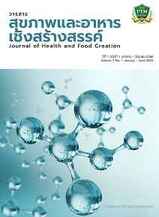
    Journal of Health and Food Creation(New Journal)

    Journal of Health and Food Creation is a journal in all fields of Nursing and Health Science, Health Service System, Health Information Management, Food and Service, Medical and Food Biotechnology, Food Science and Technology, Nutrition, Innovation in Health and Food, and Other related fields.

    Tel: +66 2855 0908   E-mail: jhfc@pim.ac.th

    https://he03.tci-thaijo.org/index.php/JHFC/index


    pim.jpg

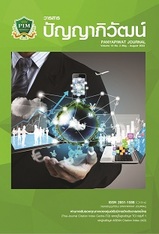
    Panyapiwat Journal

    Journals in Humanities and Social Sciences. Indexed in the Thai-Journal Citation Index (TCI 1)

    Tel. (+66) 2855 0908, (+66) 2855 1102 E-mail: journal@pim.ac.th

    https://so05.tci-thaijo.org/index.php/pimjournal


    isjet.jpg

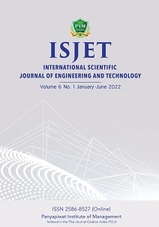
    International Scientific Journal of Engineering and Technology (ISJET) 

    Journal in Science and Technology Indexed in the Thai-Journal Citation Index (TCI 2)

    Tel. (+) 66 2 855 1560  E-mail: isjet@pim.ac.th

    https://www.tci-thaijo.org/index.php/isjet/index


    cjssm.jpg

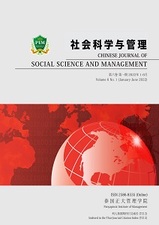
    Chinese Journal of Social Science and Management (CJSSM) 

    Journals in Humanities and Social Sciences Indexed in the Thai-Journal Citation Index (TCI 2)

    Tel. (+) 66 2 855 1048 E-mail: cjssm@pim.ac.th

    https://www.tci-thaijo.org/index.php/CJSSM/index


    Read more about Publication of the Panyapiwat Institute of Academic Journals