
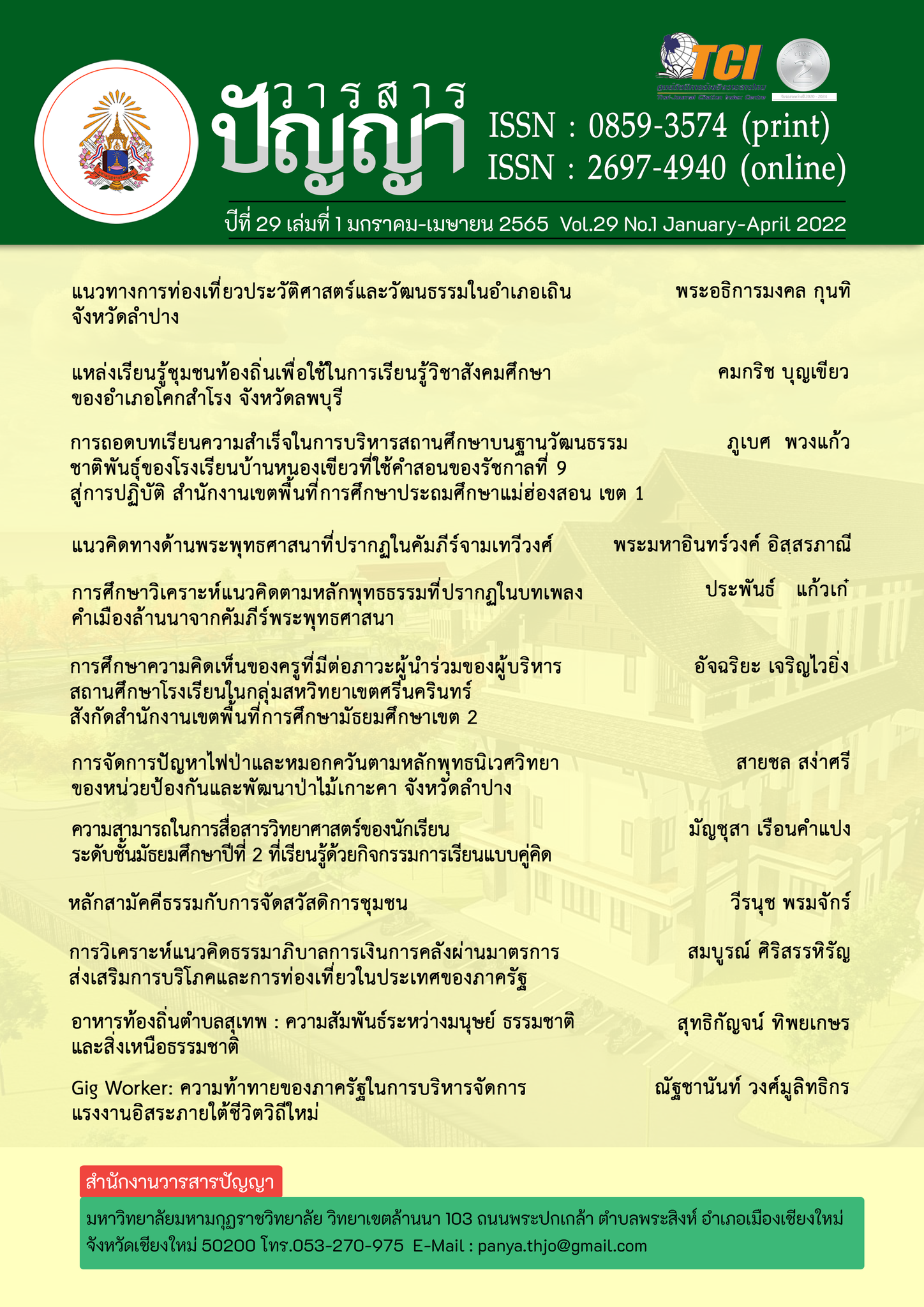
หลักสามัคคีธรรมกับการจัดสวัสดิการชุมชน
คำสำคัญ:
หลักสามัคคีธรรม, การจัดสวัสดิการชุมชนบทคัดย่อ
บทความนี้มีวัตถุประสงค์เพื่อแสดงให้เห็นถึงหลักความสามัคคีธรรมกับการจัดสวัสดิการชุมชนเพื่อช่วยในการแก้ไขปัญหาที่ต้นเหตุอย่างยั่งยืน ไม่ต้องพึ่งพาระบบเศรษฐกิจมหัพภาค ซึ่งท้องถิ่นนับว่าเป็นหน่วยการปกครองที่เล็กที่สุด และมีความสำคัญมาก เนื่องจากเป็นฐานรากของประเทศ การพัฒนาชุมชนจึงนับว่ามีความสำคัญอย่างนี้ และในสถานการณ์ปัจจุบันในยุคสมัยที่สภาวะเศรษฐกิจไม่ค่อยสู้ดี การรวมกลุ่มเพื่อสร้างสวัสดิการสร้างหลักประกันความมั่นคงของคนในชุมชนท้องถิ่น โดยมุ่งเน้นการจัดการตนเอง จึงเป็นทางออกในการดูแลช่วยกันดูแลของคนในชุมชน เป็นการให้ความช่วยเหลือกันและกันฉันท์ญาติมิตร ให้ความรักความเอื้ออาทรต่อกัน ให้การดูแลเอาใจใส่กันและกัน ทำให้การจัดสวัสดิการชุมชนมิใช่เพียงแค่การช่วยเหลือทางการเงินเท่านั้น แต่สวัสดิการเป็นทั้งกำลังใจ กำลังทรัพย์ และความรู้ เป็นกระบวนการของการให้อย่างมีคุณค่า รับอย่างมีศักดิ์ศรี มีส่วนร่วมเป็นธรรมและเท่าเทียม และที่สำคัญที่สุดคือต้องอาศัยหลักของความสามัคคีเป็นสำคัญ เพราะถ้าไม่อาศัยหลักความสามัคคีจากคนในชุมชน และจากหลายหน่วยงานเข้ามาร่วมมือกัน การจัดสวัสดิการก็จะไม่ประสบความสำเร็จ
เอกสารอ้างอิง
นภาภรณ์ หะวานนท์ เพ็ญสิริ จีระเดชากุล และ สุรวุฒิ ปัดไธสง. (2550). ทฤษฎีฐานรากในเรื่อง ความเข้มแข็งของชุมชน. กรุงเทพฯ: สำนักงานกองทุนสนับสนุนการวิจัย (สกว.).
นภาภรณ์ หะวานนท์. (2550). อุบัติการณ์ความเข้มแข็งของชุมชนในสังคมไทย. ใน ทฤษฎีฐานรากในเรื่องความเข้มแข็งของชุมชน. กรุงเทพฯ: สำนักงานกองทุนสนับสนุนการวิจัย (สกว.).
บัวพันธ์ พรหมพักพิง และคณะ. (2550.) การพัฒนารูปแบบการบูรณาการเครือข่ายกองทุนสวัสดิการชุมชนในระดับอำเภอ อำเภอน้ำพอง จังหวัดขอนแก่น. ขอนแก่น: สำนักงานส่งเสริมและสนับสนุนวิชาการ 6 จังหวัดขอนแก่น.
ประเวศ วะสี. (2541). ยุทธศาสตร์ชาติเพื่อความเข้มแข็งทางเศรษฐกิจสังคมและศีลธรรม. กรุงเทพฯ: สำนักพิมพ์หมอชาวบ้าน.
พระธรรมปิฎก (ป.อ ปยุตฺโต). (2542). กรณีธรรมกาย (พิมพ์ครั้งที่ 15). กรุงเทพฯ: โรงพิมพ์อำไพ.
พระธรรมปิฎก (ป.อ ปยุตฺโต). (2546). พจนานุกรมพุทธศาสน์ ฉบับประมวลศัพท์ (พิมพ์ครั้งที่ 10). กรุงเทพ : เอส. อาร์พริ้นติ้ง แมส โปรดักส์.
มหาจุฬาลงกรณราชวิทยาลัย. (2539). พระไตรปิฎกภาษาไทย ฉบับมหาจุฬาลงกรณราชวิทยาลัย.กรุงเทพฯ: โรงพิมพ์มหาจุฬาลงกรณราชวิทยาลัย.
มหามกุฏราชวิทยาลัย. (2534). พระไตรปิฎกพร้อมอรรถกถาแปล ชุด 91. กรุงเทพฯ: โรงพิมพ์มหามกุฏราชวิทยาลัย.
มหาวิทยาลัยมหามกุฏราชวิทยาลัย. (2553). พระไตรปิฎกและอรรถกถาแปล (พิมพ์ครั้งที่ 4). นครปฐม: โรงพิมพ์มหามกุฏราชวิทยาลัย.
ราชบัณฑิตยสถาน. (2546). พจนานุกรมฉบับราชบัณฑิตยสถาน พ.ศ. 2542. กรุงเทพฯ: นานมีบุ๊คส์.
สถาบันพัฒนาองค์กรชุมชน (องค์การมหาชน). (2552). คู่มือการดำเนินงานโครงการสนับสนุนการจัดสวัสดิการชุมชน. สมุทรสาคร: โรงพิมพ์แอ๊ปป้า พริ้นติ้ง กรุ๊ป.
สถาบันพัฒนาองค์กรชุมชน (องค์การมหาชน). (2561). คู่มือการดำเนินงาน โครงการสนับสนุนการจัดสวัสดิการชุมชน. กรุงเทพฯ: สถาบันพัฒนาองค์กรชุมชน (องค์การมหาชน).
สมศักดิ์ สามัคคีธรรม และ สุพรรณี ไชยอำพร. (2560). สวัสดิการชุมชนกับการสร้างสังคมเข้มแข็ง ในเขตกรุงเทพมหานคร. วารสารร่มพฤกษ์ มหาวิทยาลัยเกริก, 35(1), 139-161.
สำเริง เสกขุนทด. (2553.) สวัสดิการชุมชน เครื่องมือสร้างความเข้มแข็งให้การชุมชนท้องถิ่น: กรณีศึกษาตำบลหนองแวงโสกพระ จังหวัดขอนแก่น. (วิทยานิพนธ์ปริญญามหาบัณฑิต, มหาวิทยาลัยขอนแก่น).
ดาวน์โหลด
เผยแพร่แล้ว
รูปแบบการอ้างอิง
ฉบับ
ประเภทบทความ
สัญญาอนุญาต
ผลการวิจัยและความคิดเห็นที่ปรากฏในบทความ ถือเป็นความคิดเห็นและอยู่ในความรับผิดชอบของผู้เขียนบทความ มิใช่ความเห็นหรือความรับผิดชอบของกองบรรณาธิการ หรือมหาวิทยาลัยมหามกุฏราชวิทยาลัย วิทยาเขตล้านนา ทั้งนี้ไม่รวมความผิดพลาดอันเกิดจากการพิมพ์ บทความที่ได้รับการเผยแพร่โดยวารสารปัญญา ถือเป็นสิทธิ์ของวารสารฯ