
ผลกระทบของผงแคลเซียมคาร์บอเนตต่อสมรรถนะการไหลและกำลังรับแรงอัดของคอนกรีตมวลรวมเบาที่อัดแน่นได้ด้วยตัวเอง
Article Sidebar
Main Article Content
บทคัดย่อ
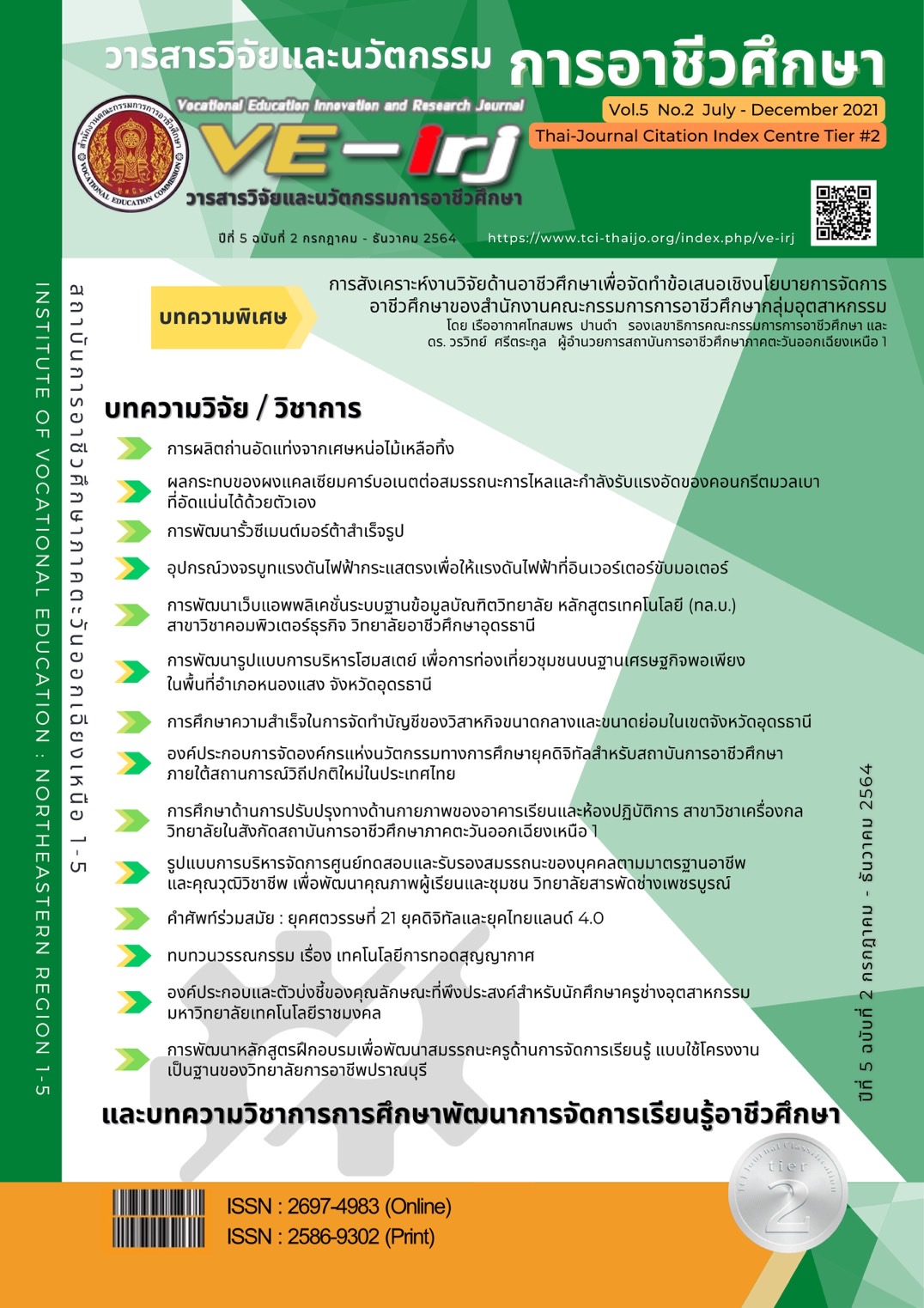
งานวิจัยนี้นำเสนอผลกระทบของการใช้ผงแคลเซียมคาร์บอเนตแทนที่ปูนซีเมนต์บ่างส่วน ที่มีต่อสมรรถนะการไหลและกำลังรับแรงอัดของคอนกรีตที่อัดแน่นได้ด้วยตัวเองที่ใช้เม็ดดินเหนียวขยายตัวเบาเป็นมวลรวมหยาบ ในการทดลองได้แทนที่ปูนซีเมนต์ปอร์ตแลนด์ด้วยผงแคลเซียมคาร์บอเนต ร้อยละ 20, 35 และ 50 ของปริมาตรวัสดุประสานรวม คุณสมบัติของคอนกรีตที่ศึกษาประกอบด้วย ค่าการไหลแผ่ (Slump flow) ระยะเวลาไหลแผ่ถึงเส้นผ่านศูนย์กลาง 500 (T500) ระยะเวลาไหลผ่าน V-funnel ดัชนีการไหลผ่านสิ่งกีดขวาง H2/H1 จากการทดสอบ L-box และกำลังรับแรงอัดของคอนกรีต ผลการวิจัยพบว่า การแทนที่ปูนซีเมนต์ด้วยผงแคลเซียมคาร์บอเนต ทำให้สมรรถนะในการไหลโดยรวมของคอนกรีต LWASCC ต่ำลง โดยค่าการไหลแผ่และดัชนีการไหลผ่านสิ่งกีดขวาง H2/H1 ต่ำลง ขณะที่ระยะเวลา T500 และเวลาในการไหลผ่าน V-funnel เพิ่มขึ้นตามปริมาณผงแคลเซียมคาร์บอเนต นอกจากนี้พบว่า คอนกรีตที่มีส่วนผสมของผงแคลเซียมคาร์บอเนตที่ส่วนผสมมีค่ากำลังรับแรงอัดที่อายุ 7 วัน สูงกว่าคอนกรีตควบคุม และอัตราการแทนที่ปูนซีเมนต์ด้วยผงแคลเซียมคาร์บอเนตที่ให้ค่ากำลังรับแรงอัดสูงสุด คือ ร้อยละ 20
Article Details

อนุญาตภายใต้เงื่อนไข Creative Commons Attribution-NonCommercial-NoDerivatives 4.0 International License.
สงวนสิทธิ์ โดย สถาบันการอาชีวศึกษาภาคตะวันออกเฉียงเหนือ 1
306 หมู่ 5 ถนนมิตรภาพ หนองคาย-อุดรธานี ตำบลโพธิ์ชัย อำเภอเมืองหนองคาย จังหวัดหนองคาย 43000
โทร 0-4241-1445,0-4241-1447
ISSN : 3027-6861 (print) ISSN : 3027-687X (online)
เอกสารอ้างอิง
[2] ธนธรณ์ คัมภีร์ยิ่งเจริญ และ มงคล นามลักษณ์, “อิทธิพลของเถ้าชีวมวลจากโรงไฟฟ้าต่อการเกิดความร้อนและการหดตัวของคอนกรีตชนิดอัดแน่นได้ด้วยตัวเอง”, วารสารวิจัยและนวัตกรรมการอาชีวศึกษา, ปีที่ 4, พ.ศ.2564, หน้า 159-167.
[3] K.H. Yang, G.H. Kim, and Y.H. Choi. "An initial trial mixture proportioning procedure for structural lightweight aggregate concrete". Construction and Building Materials, 55, pp. 431-439, 2014.
[4] A.A. Maghsoudi, Sh. Mohamadpour, and M. Maghsoudi. “Mix design and mechanical properties of self-compacting light weight concrete”. Int. J. Civ. Eng. 9(3), pp.230–236, 2011.
[5] ปานปรียา ขาวเถิน, นิบัสซัม เดะแอ และ มงคล นามลักษณ์, “อิทธิพลของเม็ดดินเหนียวขยายตัวเบาต่อคุณสมบัติของคอนกรีตที่มีความสามารถเทได้สูง”, วารสารวิจัยและนวัตกรรมการอาชีวศึกษา, ปีที่ 5, พ.ศ.2564, หน้า 159-167.
[6] J. Alexandre Bogas, Augusto Gomes, and M.F.C. Pereira, “Self-compacting lightweight concrete produced with expanded clay aggregate”. Construction and Building Materials, 35, pp.1013–1022, 2012.
[7] G. Sua-iam and N. Makul. “Utilization of limestone powder to improve the properties of self-compacting concrete incorporating high volumes of untreated rice husk ash as fine aggregate”. Construction and Building Materials, 38, pp.455-464, 2013.
[8] W. John, A.O. Oghenekume, T.L. Zahemen, “Effect of calcium carbonate filler on self-compacting concrete using different aggregate sizes”. European Journal of Engineering Research and Science, 4, pp.9-16, 2019.
[9] พงศกร พรมสวัสดิ์, บุรฉัตร ฉัตรวีระ, และ กฤษดา เสือเอี่ยม, “สมบัติของคอนกรีตไหลอัดแน่นด้วยตัวเองผสมร่วมผงแคลเซียมคาร์บอเนตและเถ้าลอย”, วิศวกรรมสารฉบับวิจัยและพัฒนา, ปีที่ 31, พ.ศ. 2563, หน้า 11-22.
[10] Thai Industrial Standard Institute. "TIS 15: 2555 Thai standard for Portland cement: Part I specification". TISI, 2012.
[11] ASTM C39 / C39M-21, “Standard Test Method for Compressive Strength of Cylindrical Concrete Specimens”. ASTM International, West Conshohocken, PA, 2021, www.astm.org
[12] G. De Schutter, P. Bartos, P. Domone, J. Gibbs. Self-compacting concrete. Whittles Publishing, Caithness, 2008.
