
ความต้องการจำเป็นและแนวทางการพัฒนาภาวะผู้นำอุดมสติของผู้บริหารโรงเรียนมัธยมศึกษา
Article Sidebar
Main Article Content
บทคัดย่อ
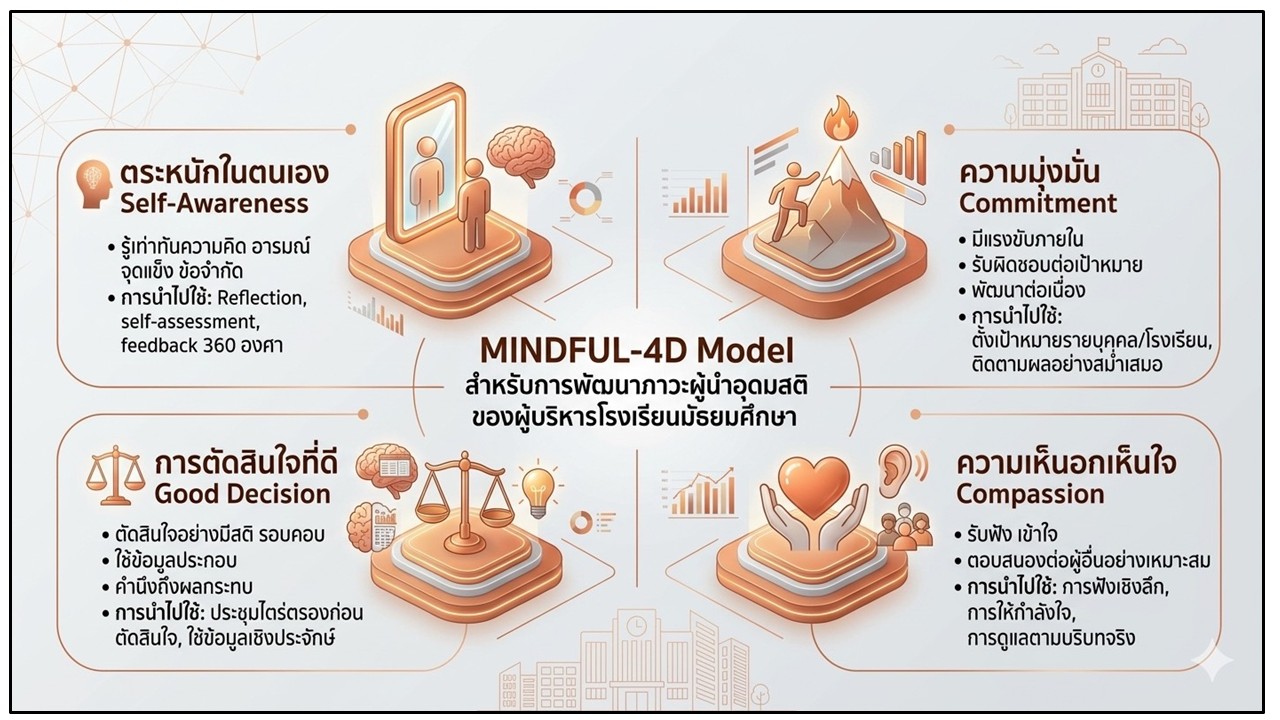
การวิจัยครั้งนี้มีวัตถุประสงค์เพื่อ 1) ประเมินความต้องการจำเป็นในการพัฒนาภาวะผู้นำอุดมสติของผู้บริหารโรงเรียนมัธยมศึกษา และ 2) เสนอแนวทางการพัฒนาภาวะผู้นำอุดมสติของผู้บริหารโรงเรียนมัธยมศึกษา ใช้การวิจัยแบบผสมผสานวิธีแบบลำดับขั้นเชิงอธิบาย (Explanatory Sequential Mixed Methods Design) กลุ่มตัวอย่าง คือ ผู้อำนวยการโรงเรียนมัธยมศึกษาในเขตภาคเหนือ สังกัดสำนักงานคณะกรรมการการศึกษาขั้นพื้นฐาน 214 คน ได้มาโดยการกำหนดขนาดกลุ่มตัวอย่างตามตารางของ Krejcie และ Morgan และการสุ่มแบบหลายขั้นตอน เครื่องมือคือแบบสอบถาม 3 ตอน มีค่าความตรงเชิงเนื้อหา .80–1.00 และค่าความเชื่อมั่นทั้งฉบับ .98 วิเคราะห์ข้อมูลด้วยความถี่ ร้อยละ ค่าเฉลี่ย ส่วนเบี่ยงเบนมาตรฐาน และดัชนีความต้องการจำเป็นแบบปรับปรุง (PNI modified) ส่วนแนวทางการพัฒนาได้จากการวิเคราะห์เนื้อหาข้อเสนอแนะปลายเปิดในแบบสอบถามตอนที่ 3 ผลการวิจัยพบว่า โดยรวมมีความต้องการจำเป็นในการพัฒนาอยู่ในระดับเร่งด่วน (PNI modified = 0.30) เรียงจากมากไปน้อย ได้แก่ การตัดสินใจที่ดี ความเห็นอกเห็นใจ การตระหนักในตนเอง และความมุ่งมั่น แนวทางการพัฒนาที่สังเคราะห์ได้ประกอบด้วย 4 แนวทางหลัก คือ การพัฒนาการตัดสินใจเชิงอุดมสติแบบเปิดรับและเชิงระบบ การพัฒนาภาวะผู้นำแบบกรุณาและเห็นอกเห็นใจเชิงรุก การพัฒนาความตระหนักรู้ตนเองเชิงลึก และการเสริมพลังความมุ่งมั่นและแรงจูงใจภายใน
คำสำคัญ: ความต้องการจำเป็น, แนวทางการพัฒนา, ภาวะผู้นำอุดมสติ, ผู้บริหารโรงเรียนมัธยมศึกษา
Article Details

อนุญาตภายใต้เงื่อนไข Creative Commons Attribution-NonCommercial-NoDerivatives 4.0 International License.
เอกสารอ้างอิง
กระทรวงศึกษาธิการ. (2565). แผนพัฒนาการศึกษาแห่งชาติ 2566–2570. กระทรวงศึกษาธิการ.
วิโรจน์ สารรัตนะ. (2565). ภาวะผู้นำ: ทฤษฎีและนานาทัศนะร่วมสมัยปัจจุบัน (พิมพ์ครั้งที่ 3). ทิพย์วิสุทธิ.
Burmansah, B., Sutawan, K., Putra, R., & Ramadhan, R. (2022). Mindful leadership in educational settings: A review of conceptual development and implications. Journal of Positive School Psychology, 6(8), 1–10.
Bush, T. (2008). Leadership and management development in education. SAGE Publications.
Creswell, J. W., & Creswell, J. D. (2022). Research design: Qualitative, quantitative, and mixed methods approaches (6th ed.). SAGE Publications.
Day, D. V. (2001). Leadership development: A review in context. The Leadership Quarterly, 11(4), 581–613.
Day, D. V., & Gregory, J. L. (2017). Mindfulness as a prerequisite to effective leadership: Exploring the constructs that foster productive use of feedback for professional learning. Interchange, 48(4), 363–375.
Hargreaves, A. (2005). Sustainable leadership. Jossey-Bass.
Hsieh, C. C. (2018). Developing meaningful schools: An exploration of mindful leadership by principals. Educational Research Monthly, 292, 69–86.
Kabat-Zinn, J. (2003). Mindfulness-based interventions in context: Past, present, and future. Clinical Psychology: Science and Practice, 10(2), 144–156.
Liu, L. (2020). Examining the usefulness of mindfulness practices in managing school leader stress during COVID-19 pandemic. Journal of School Administration Research and Development, 5(S1), 15–20.
Mahfouz, J. (2018). Mindfulness training for school administrators: Effects on well-being and leadership. Journal of Educational Administration, 56(6), 602–619.
Tabancalı, E., & Öngel, G. (2020). Examining the relationship between school mindfulness and organizational trust. International Education Studies, 13(6), 14–25.
Wells, C. M. (2015). Conceptualizing mindful leadership in schools. Educational Administration Quarterly, 51(1), 1–38.
Williams, R. (2016). The 7 habits of mindful leaders. Ray Williams Associates.
