
The Study of Components of Teachers' Innovative Thinking Skills
Article Sidebar
Main Article Content
Abstract
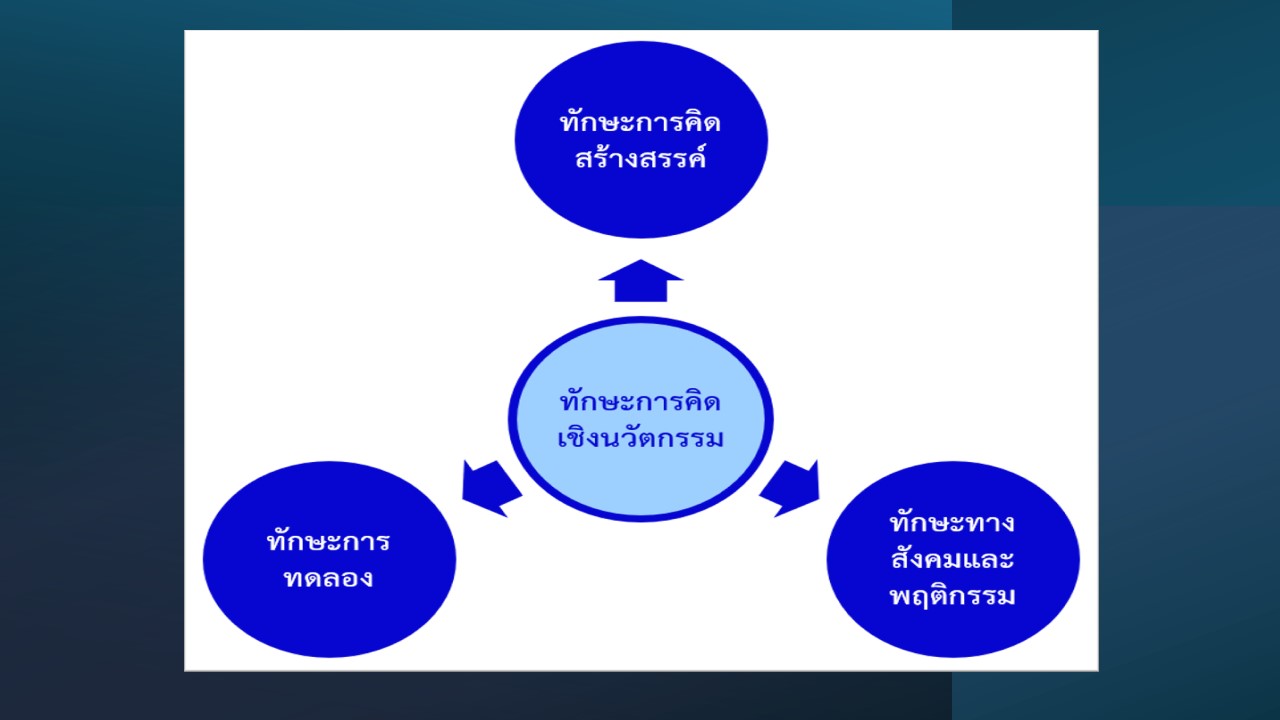
The objective of this research was to examine the components of innovative thinking skills among teachers using a documentary research approach, which was carried out in two steps. Step 1 involved studying theoretical concepts and related research from a total of ten sources. Step 2 assessed the relevance of the components of innovative thinking skills for teachers with the assistance of five experts. The tools used in the research included document synthesis and a questionnaire that utilized a 5-point rating scale. The statistical methods for data analysis comprised frequency, percentage, mean, and standard deviation. The research findings revealed that teachers' innovative thinking skills included five components, ranked from highest to lowest frequency as follows: 1) Creative thinking skills, 2) Social and behavioral skills, and 3) Experimental skills.
Article Details
References
ชาญณรงค์ วิเศษสัตย์. (2562). การพัฒนารูปแบบการเรียนรู้ส่งเสริมทักษะการคิดเชิงนวัตกรรมของนักศึกษาวิชาชีพครู. ดุษฎีนิพนธ์ ปร.ด. มหาสารคาม:มหาวิทยาลัย มหาสารคาม.
ไพฑูรย์ สินลารัตน์และคณะ. (2557). กลยุทธ์การพัฒนาคุณภาพการจัดการเรียนการสอนภาษาจีนของโรงเรียนมัธยมศึกษาตอนปลายในประเทศไทย. สาขาการจัดการการศึกษา วิทยาลัยครุศาสตร์ มหาวิทยาลัยธุรกิจบัณฑิตย์.
สิริกมล มงคลยศ .(2565). การพัฒนาตัวบ่งชี้ทักษะการคิดเชิงนวัตกรรมสาหรับครูระดับชั้นมัธยมศึกษา สังกัดคณะกรรมการการศึกษาขั้นพื้นฐานในเขตภาคกลาง : การทดสอบความไม่แปรเปลี่ยนของการวัดตามประสบการณ์การทำงาน. วิทยานิพนธ์. ค.ม.สาขาวิชาวิธีวิทยาการวิจัยทางการศึกษา มหาวิทยาลัยศิลปากร
อรชร ปราจันทร์. (2560). รูปแบบการบริหารเพื่อพัฒนาทักษะการคิดเชิงนวัตกรรมของครูในสถานศึกษาขั้นพื้นฐาน. ดุษฎีนิพนธ์ กศ.ด. พิษณุโลก:มหาวิทยาลัยนเรศวร.
Debono, E. (1991). Teaching Thinking. London: Penguin Books 1971.
Gandhi, Deardorff (2014). An Implementation of Innovative Thinking in The Entrepreneurship Curriculum for Engineers. California State University, Northridge. American Society for Engineering Education, 2014.
Hoidn,B.J. & karkkaunen, k. (2014). Promoting Skill for Innovation in Higher Education: A Literature Review on the Effectiveness of Problem-Base Learning and of Teaching Behaviors. N.P.: OECD Education Working Pap.
Horth, D., & Buchner, D. (2014). Innovation Leadership: How to Use Innovation to Lead Effectively, Work Collaboratively and Drive Results: Centre for Creative Leadership. http://www.ccl.org/leadership/pdf/research/Innovation Leadership.pdf
Johnston R. E. & Bate J. D. (2013). The Power of Strategy Innovation: A New Way of Tinking Creativity and Strategic Planning to Discover Great Business Opportunities. New York: Amarican.
Lee, S. (2018). Innovation, Entrepreneurship & Sustainability Summer Program. Taipei: National Taiwan University
Universal class. (1999-2019). Developing Innovative Thinking Skills. https://www.universalclass.com/articles/business/developing-innovative-thinking-skills.htm
