
The Study Components of Ethical Leadership of School Administrators
Article Sidebar
Main Article Content
Abstract
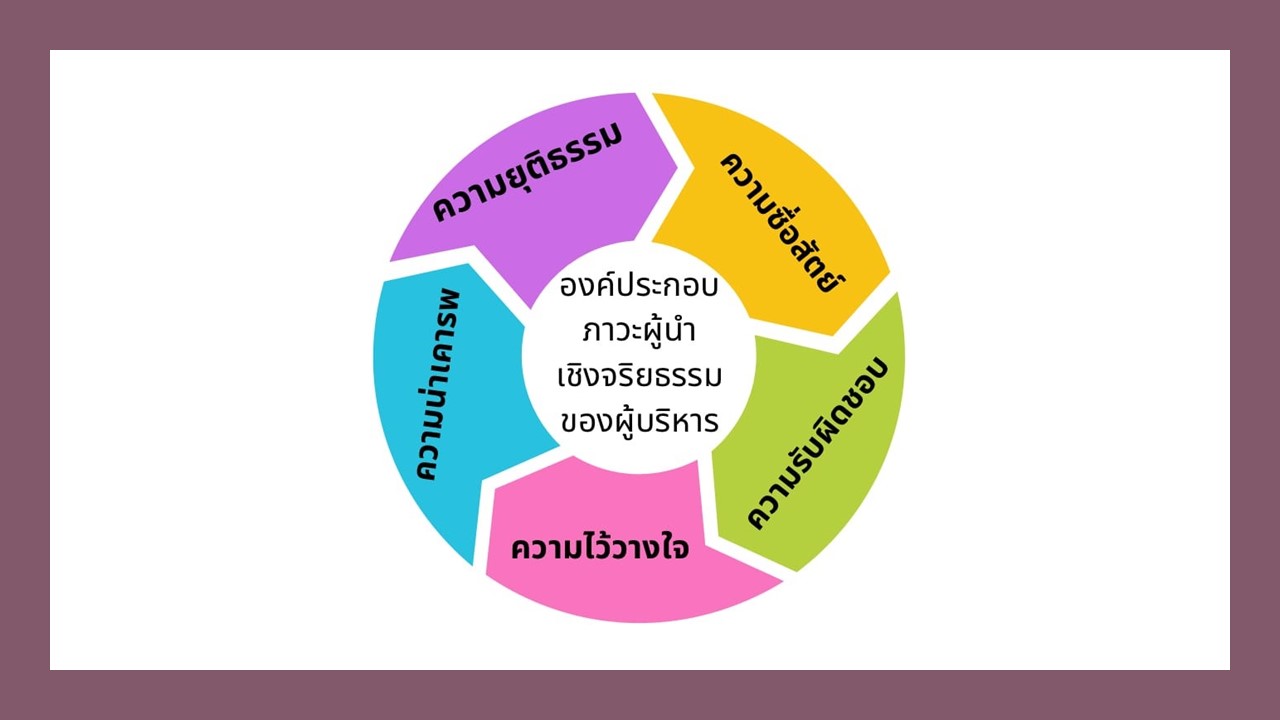
This research aimed to study and evaluate the components of ethical leadership among school executives. The study was conducted in two phases: Step 1 involved synthesizing components from 14 sources of research documents, and Step 2 involved having 5 experts assess the appropriateness of these components. The tools used were a synthesis form, selecting components with a frequency of 42.86% and above, and a 5-point rating scale questionnaire. The research findings revealed that the components of ethical leadership among school executives consist of five elements: 1) Justice, 2) Integrity, 3) Responsibility, 4) Trustworthiness, and 5) Respect. Overall, the appropriateness of the components was found to be at a high level.
Article Details
References
กระทรวงศึกษาธิการ. (2550). คู่มือการบริหารสถานศึกษาขั้นพื้นฐานที่เป็นนิติบุคคล. กรุงเทพฯ:องค์การรับส่งสินค้าและพัสดุภัณฑ์.
ขนิษฐ์ณิชา ทองสุข. (2560). การพัฒนาโปรแกรมเสริมสร้างภาวะผู้นำเชิงจริยธรรมของผู้บริหารโรงเรียน สังกัดสำนักงานคณะกรรมการการศึกษาขั้นพื้นฐาน. วิทยานิพนธ์การศึกษาดุษฎีบัณฑิต สาขาวิชาการบริหารและพัฒนาการศึกษา บัณฑิตวิทยาลัยมหาวิทยาลัยมหาสารคาม.
ณัฐพร ศรีแจ่ม. (2564). ภาวะผู้นำเชิงจริยธรรมของผู้บริหารสถานศึกษาสถาบันการอาชีวศึกษาภาคกลาง 1 สังกัดสำนักงานคณะกรรมการการอาชีวศึกษา. วิทยานิพนธ์ปริญญาศึกษาศาสตรมหาบัณฑิต สาขาวิชาการบริหารการศึกษา มหาวิทยาลัยเทคโนโลยีราชมงคลธัญบุรี.
ปัทมา แคนยุกต์. (2554). รูปแบบการสร้างเสริมภาวะผู้นำเชิงจริยธรรมของนักศึกษาหลักสูตรพยาบาลศาสตรบัณฑิต วิทยาลัยพยาบาลเครือข่ายภาคใต้. วิทยานิพนธ์ปริญญาดุษฎีบัณฑิต มหาวิทยาลัยทักษิณ.
พระพรหมคุณาภรณ์ (ป.อ.ประยุตฺโต). (2551). ภาวะผู้นำ: จริยธรรมนักการเมือง. กรุงเทพฯ: สหธรรมิก.
พระมหาวุฒิชัย วชิรเมธี (ว.วชิรเมธี). (2552). ภาวะผู้นำ: จากเนลสัน มันเดลา โอบามาแห่งทำเนียบขาว. กรุงเทพฯ: สถาบันวิมุตตยาลัย.
วาโร เพ็งสวัสดิ์. (2551). วิธีวิทยาการวิจัย. กรุงเทพฯ: สุวีริยาสาส์น.
สัมฤทธิ์ กางเพ็ง และพระครูสุธีจริยวัฒน์ (สาคร ชิตงฺกโร). (2565). ภาวะผู้นำเชิงจริยธรรม: แนวคิด ทฤษฎี และการวิจัย. พิมพ์ครั้งที่ 3. มหาสารคาม: อภิชาติการพิมพ์.
สุธาสินี แม้นญาติ. (2554). โมเดลความสัมพันธ์โครงสร้างปัจจัยที่ส่งผลต่อภาวะผู้นำเชิงจริยธรรมของผู้บริหารสถานศึกษา สังกัดกรมส่งเสริมการปกครองท้องถิ่น. วิทยานิพนธ์ปริญญาปรัชญาดุษฎีบัณฑิต มหาวิทยาลัยขอนแก่น.
สุพิน จันทร์ธิมาน. (2558). ความสัมพันธ์ระหว่างพฤติกรรมภาวะผู้นำเชิงจริยธรรมกับพฤติกรรมการจัดการความขัดแย้งของผู้บริหารโรงเรียน สังกัดสำนักงานเขตพื้นที่การศึกษาประถมศึกษาตราด.วิทยานิพนธ์การศึกษามหาบัณฑิต มหาวิทยาลัยสุโขทัยธรรมาธิราช.
หนูไกร มาเชค. (2559). การพัฒนาภาวะผู้นำเชิงจริยธรรมในผู้บริหารสถานศึกษาสังกัดสำนักงานคณะกรรมการการศึกษาขั้นพื้นฐาน. วิทยานิพนธ์ปรัชญาดุษฎีบัณฑิต มหาวิทยาลัยบูรพา.
Brown, M. E. and Treviño, L. K. (2006). Ethical leadership: A review and future directions. The Leadership Quarterly, 17 (2006), 595–616.
DuBrin, A. J. (2010). Principles of Leadership. 6th ed. Canada: South-Western, Cengage Learning.
Henry, K. (2009). Leading with Your Soul: The Comprehensive Ethical Leadership Model™ Shows you how to Create an Ethical Workplace that will Lead to Sustainability for your Company. In Proceedings of the ethics is a topic at IMA’s annual conference: Strategic Finance, 3, 41-51. Chicago: North Park University.
Josephson, M. (2009). Ethical Leadership Outcomes Student Leader Learning Outcomes (SLLO) Project. Retrieved February, 3, 2020.
Kalshoven, K., Den Hartog, D. N., & De Hoogh, A. H. (2011). Ethical Leadership at Work Questionnaire (ELW): Development and Validation of a Multidimensional Measure. The Leadership Quarterly, 22(1), 51-69.
Resick, C. J., Martin, G., Keating, M., Dickson, M. W., Kwan, H. K., &Peng, C. (2011). What Ethical Leadership Means to Me: Asian, American, and European Perspectives. Journal of Business Ethics, 101, 435-457.
Zheng, X., Zhu, W., Yu, H., Zhang, X., & Zhang, L. (2011). Ethical Leadership in Chinese Organizations: Developing a Scale. Frontiers of Business Research in China, 5(2), 179-198.
