
The Comparison of Achievement in Chinese Subject on Chinese for Communication of Primary 3 Students between teaching with The series of E-Book "Daily Chinese" and Regular Teaching
Article Sidebar
Main Article Content
Abstract
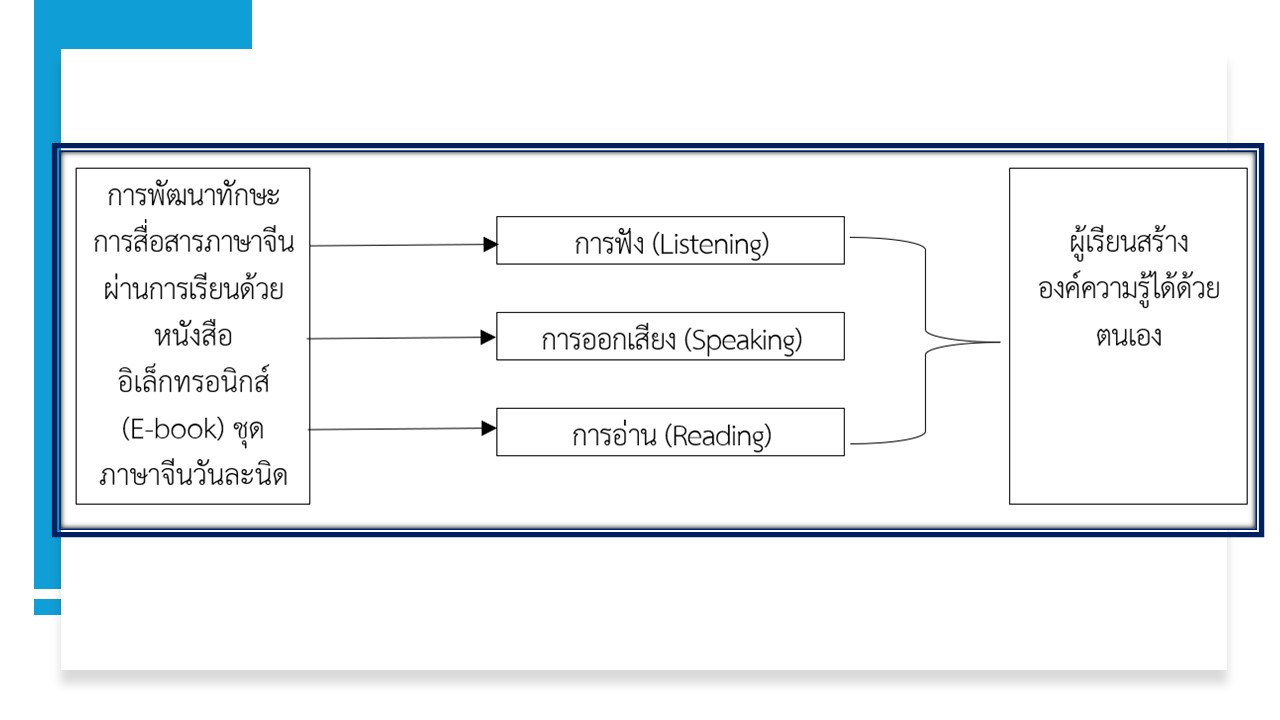
This research aims to 1) Create and measure the efficiency of the series of E-book "Daily Chinese" on the topic of "Chinese for Communication for Primary 3 students, ensuring it meets the 80/80 efficiency standard. 2) Compare the learning achievement in the Chinese language subject of Primary 3 students between teaching using the "Daily Chinese" E-book and Regular Teaching. The sample group consisted of Primary 3 students, selected through simple random sampling method, and divided into two groups: The experimental group, consisting of 35 students from Class 3/2, who were taught using the E-book "Daily Chinese." and the control group, consisting of 35 students from Class 3/1, who were taught using Regular teaching. The research instrument comprised 1) The series of E-book titled "Daily Chinese" for Primary 3 students. 2) learning management plan on topic of "Food and Drinks" for Primary 3 students. 3) learning achievement test on the topic of "Food and Drinks" for Primary 3 students, with the reliability of 0.94. The study employed a two-group experimental design using the Randomized Control Group Pretest-Posttest Design method. The statistics used are percentage, mean, standard deviation and t - test.
The research results indicated that:
1) The series of E-book titled "Daily Chinese" on the topic of Chinese for Communication for Primary 3 students in the Chinese language subject, was 80.08/81.86 (E1/E2).
2) The learning achievement of students in the Chinese language subject on Chinese for Communication of Primary 3 students taught using the series of E-book titled "Daily Chinese" was higher than that of students taught using a Regular Teaching at the .05 level of statistical significance.
Article Details
References
กรมองค์การระหว่างประเทศ กระทรวงการต่างประเทศ. (2565). บัวแก้วไขปริศนาสหประชาชาติ. กรุงเทพมหานคร :กรมองค์การระหว่างประเทศ กระทรวงการต่างประเทศ.
ธัญธัช นันท์ชนก. (2563). เขียน E-book ขาย หารายได้เสริมออนไลน์ไม่ต้องลงทุน. กรุงเทพมหานคร :บริษัท พี เอ็น เค แอนด์ สกายพริ้นติ้งส์ จำกัด.
นายูลา ดาเลาะ. (2559). ชุดที่1 ความรู้เบื้องต้นเกี่ยวกับหนังสืออเล็กทรอนิกส์ ชั้นมัธยมศึกษาปีที่ 5. โรงเรียนสตูลวิทยา.
บากัส ราซิด ซิดิก และคณะ. (2567). การพัฒนาหนังสืออิเล็กทรอนิกส์วิชาจุลชีววิทยาโดยอิงจากผลการวิจัยในห้องปฏิบัติการเพื่อใช้เป็นสื่อการสอนเพื่อพัฒนาทักษะกระบวนการทางวิทยาศาสตร์ของนักศึกษา. ภาควิชาชีววิทยา คณะคณิตศาสตร์และวิทยาศาสตร์ธรรมชาติ มหาวิทยาลัยรัฐมาลัง อินโดนีเซีย.
ปิติ เสาวภาคพฤกษ์. (2567). การพัฒนาหนังสืออิเล็กทรอนิกส์เชิงปฏิสัมพันธ์ร่วมกับแนวคิดการจัดการเรียนรู้แบบกลับด้าน เพื่อเสริมสร้างความสามารถในการฟังและพูดภาษาจีน ของนักเรียนชั้นประถมศึกษาปีที่ 5 โรงเรียนราชวัตรวิทยา. วิทยานิพนธ์ คณะศึกษาศาสตร์ มหาวิทยาลัยเกษตรศาสตร์.
มูลนิธิการศึกษาและวัฒนธรรมสัมพันธ์ไทย – นานาชาติ.(2565). 5 เหตุผล ทำไมที่ควรเรียนภาษาและวัฒนธรรมจีน. [ออนไลน์]. เข้าถึงได้จาก: https://afsthailand.org/2022/10/11/5-reasons-to-learn-chinese/?utm_source=chatgpt.com.
สำนักงานคณะกรรมการการศึกษาขั้นพื้นฐาน กระทรวงศึกษาธิการ. (2556). ตัวชี้วัดและสาระการเรียนรู้ภาษาจีน. กรุงเทพมหานคร :สกสค. ลาดพร้าว.
สำนักงานเลขาธิการสภาการศึกษา กระทรวงศึกษาธิการ. (2560). แผนการศึกษาแห่งชาติ พ.ศ. 2560 – 2579. กรุงเทพมหานคร :บริษัท พริกหวานกราฟฟิค จำกัด.
สุภาภรณ์ อุ้ยนอง. (2561). ผลสัมฤทธิ์ทางการเรียน. [ออนไลน์]. เข้าถึงได้จาก: https://supapornouinong.blogspot.com/2018/04/blog-post_25.html.
