
Developing a Training Model for Local Wisdom Learning Resources Based on Artificial Intelligence for Teachers at Phitsanulok Province Learning Encouragement
Article Sidebar
Main Article Content
Abstract
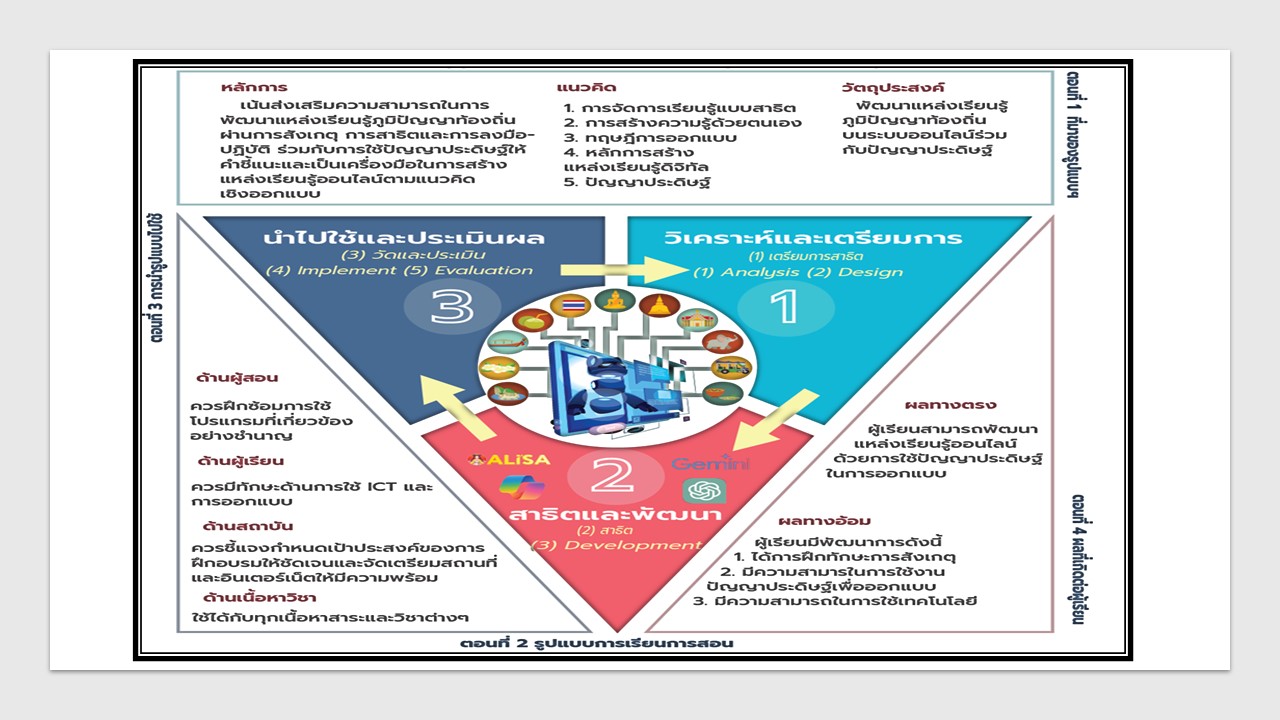
This research aimed to: 1) study the components of a training model designed to promote the creation of digital local wisdom learning resources; 2) develop and evaluate the quality of this training model; and 3) investigate the outcomes of utilizing the training model in the following ways: 3.1) assess the digital local wisdom learning resources against a 70% criterion; and 3.2) gather feedback from the trainees regarding the training model. The sample comprised teachers from the Bang Krathum District Learning Management Promotion Center in Phitsanulok Province. They were selected through simple random sampling, resulting in a total of 14 individuals. The research utilized the following tools: 1) the training model, 2) an evaluation form for digital local wisdom learning resources, and 3) an opinion questionnaire. The research findings revealed that: 1. The developed training model consists of five components: 1) Principles, 2) Needs Assessment, 3) Objectives, 4) Activity Organization, and 5) Measurement and Evaluation. 2. The training model is based on the framework established by Joyce, Weil, and Calhoun, which includes four parts: 1) the origins of the model, 2) the model itself, 3) the application of the model, and 4) direct and indirect outcomes. When evaluated for quality by experts, the model was deemed highly appropriate. 3. The results concerning the application of the training model indicate the following: 3.1) The score for the digital local wisdom learning resources, after training with the model, exceeded the 70% criterion. 3.2) The trainees expressed positive opinions regarding the training model, indicating that the training activities effectively supported participants in developing digital local wisdom learning resources.
Article Details
References
กระทรวงศึกษาธิการ. (2566). พระราชบัญญัติส่งเสริมการเรียนรู้. (19 มีนาคม 2566). ราชกิจจานุเบกษา. เล่ม140 ตอนที่ 20ก หน้า 60-72.
ทวีสิน อำนวยพันธ์วิไล. (2567). ประมวลการนำเสนองานสาธิตวิชาการ ครั้งที่ 9 Essentail Soft Skills for the Future จรณะทักษะจำเป็นสำหรับอนาคต. สำนักพิมพ์จุฬาลงกรณ์มหาวิทยาลัย.
ปภาดา เสนาะพิน. (2557). การพัฒนารูปแบบการจัดการฝึกอบรมเสริมสร้างสมรรถนะการเป็นผู้บริหารมืออาชีพ สำหรับผู้บริหารสถานศึกษาขั้นพื้นฐาน. วารสารวิชาการ Veridian E-Journal, 7(3), 544-558.
พระมหานพดล สีทอง (2565) การพัฒนารูปแบบหลักสูตรฝึกอบรมตามทฤษฎีการเรียนรู้สู่การเปลี่ยนแปลงเพื่อเสริมสร้างสมรรถนะการเป็นที่ปรึกษาโครงงานคุณธรรมของพระสอนศีลธรรม (วิทยานิพนธ์ปริญญาดุษฎีบัณฑิต). มหาวิทยาลัยราชภัฏวไลยอลงกรณ์ ในพระบรมราชูปถัมภ์ จังหวัดปทุมธานี.
พิชญาภา ยวงสร้อย และ วิวัฒน์ มีสุวรรณ์. (2567). การพัฒนารูปแบบการจัดการเรียนรู้ตามหลักพุทธวิธี ผ่านห้องเรียนเมตาเวิร์ส ร่วมกับการจัดการเรียนรู้โดยใช้ปัญหาเป็นฐาน เพื่อพัฒนาทักษะการรู้เท่าทันสื่อและสารสนเทศสำหรับนิสิตระดับปริญญาตรี. วารสารพุทธจิตวิทยา, 9(3), 477-493.
พีรเดช บุญรอด. (2565). การพัฒนาหลักสูตรฝึกอบรมหัตถากาแฟ สำหรับนักศึกษาในระดับอุดมศึกษา (วิทยานิพนธ์ครุศาสตร์มหาบัณฑิต). มหาวิทยาลัยราชภัฎพิบูลสงคราม.
วรพงศ์ ผูกภู่. (3 เม.ย 2563). องค์ประกอบการพัฒนาแหล่งเรียนรู้. สืบค้น 16 มกราคม 2568. จาก https://url.in.th/vKnOx
วัชรี บูรณสิงห์. (2544). การบริหารหลักสูตร. (พิมพ์ครั้งที่ 2). กรุงเทพฯ : สำนักพิมพ์มหาวิทยาลัยรามคำแหง.
สนธยา หลักทองและเผชิญ กิจระการ. (2564). การพัฒนารูปแบบการฝึกอบรมแบบผสมผสานตามหลักการนำตนเองเพื่อเสริมสร้างสมรรถนะการรู้ดิจิทัล สำหรับครูในสังกัดสำนักงานคณะกรรมการการศึกษาขั้นพื้นฐาน. วารสารมนุษยศาสตร์และสังคมศาสตร์ มหาวิทยาลัยนครพนม, 11(2), 197-212.
สำนักงานเลขาธิการสภาการศึกษา. (2563). แนวทางการพัฒนาแหล่งการเรียนรู้ในยุคดิจิทัลที่เหมาะสมกับผู้เรียนในวัยเรียน. บริษัท 21 เซ็นจูรี่ จำกัด นนทบุรี.
สุราษฎร์ พรมจันทร์. (2550). ยุทธวิธีการเรียนการสอน วิชาเทคนิค. กรุงเทพฯ : คณะครุศาสตร์อุตสาหกรรม มหาวิทยาลัยเทคโนโลยีพระจอมเกล้าพระนครเหนือ.
EduCorpus. (2024). What is the Demonstration Method. Retrieved 13 February 2025. From: https://educorpus.com/demonstration-method/
Herzberg, F. (2017). The Motivation to Work. Routledge : New York.
Joyce, B., Weil, M., & Calhoun, E. (2004). Models of teaching. Boston: Allyn and Bacon.
McGriff, S.J. (2008, February 18). WikiEducator “Free e-learning content. Retrieved 10 February 2025. From: http://wikieducator.org/File:ADDIE_model_ diagram_by_McGriff.gif
Papert, S. (1993). Mindstorms: Children, Computers, and Powerful Ideas, Basic Books, Harper Collins Publishers, Inc., New York.
McGriff. S, J. (2008). Instructional Systems College of Education. Penn State University.
Yousafzai, A. (2023). The Demonstration Method of Teaching. Retrieved 8 February 2025. From: https://zonofeducation.com/the-demonstration-method-of-teaching/
