
Guidelines for the Development of Transformative Leadership Related to Performance Standards of Teachers to Increase the Effectiveness of Early Childhood Education Standards under Local Administrative Organizations in Chiang Mai Province
Article Sidebar
Main Article Content
Abstract
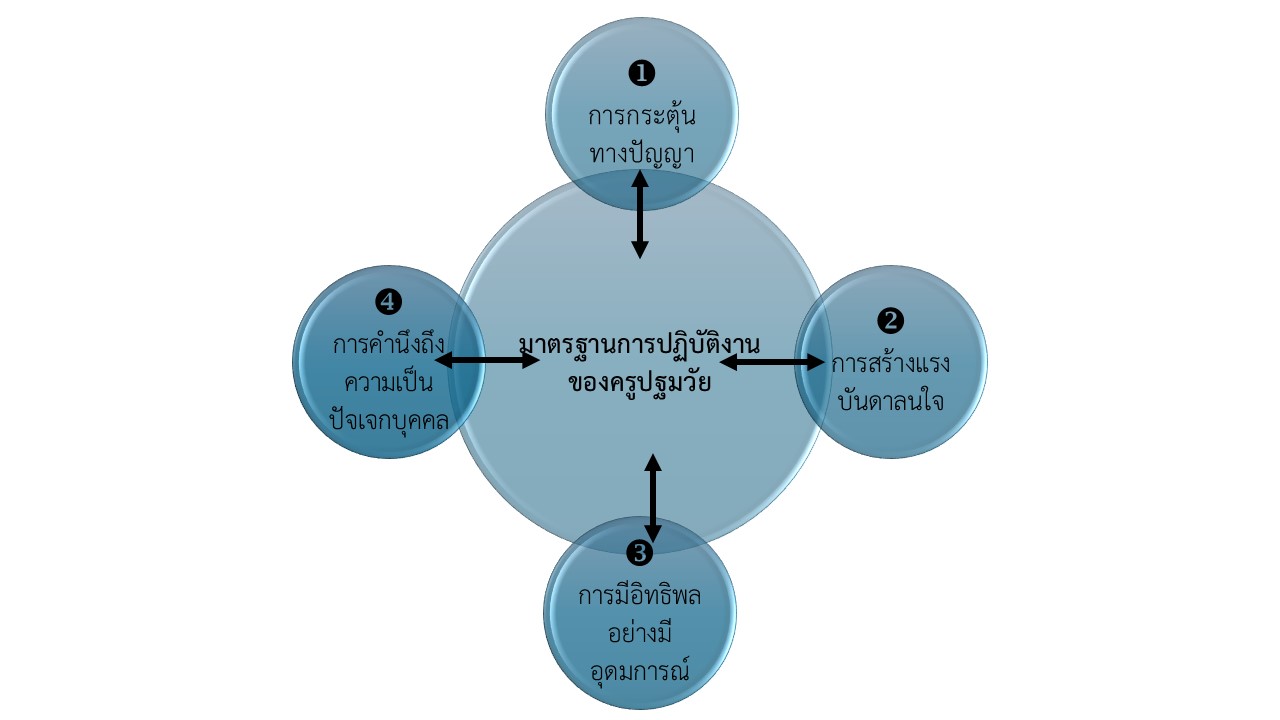
This research aimed to study: 1) the level of transformational leadership, 2) the level of teachers' performance standards, 3) the relationship between transformational leadership and teachers' performance standards, and 4) guidelines for developing transformational leadership according to teachers' performance standards to enhance the effectiveness of early childhood education institutions under local administrative organizations in Chiang Mai province. The sample includes 120 kindergarten teachers and 10 school administrators. The research instruments used were a questionnaire with a reliability coefficient 0.97 and a structured interview. The statistical methods used for quantitative data analysis included frequency, percentage, mean, and standard deviation, while qualitative data was analyzed through content analysis. The research findings revealed that: (1) the transformational leadership of school administrators and the overall performance standards of teachers were at a high level, (2) there was a significant positive relationship between transformational leadership and the performance standards of teachers at a significance level of 0.01, and (3) the guidelines for developing transformational leadership according to teachers' performance standards to enhance effectiveness in early childhood education institutions suggested that school administrators should stimulate cognitive engagement, encourage teachers to be creative in problem-solving, and provide opportunities for teachers to express their opinions and participate in decision-making in various ways using new methods, such as the PLC process. It is also important to inspire, create visions, and enhance understanding of principles and decision-making based on reasoned judgment that is accurate and fair. Individual differences must be acknowledged, tasks must be assigned according to knowledge and ability, teachers' self-development must be promoted, and exemplary behavior must be demonstrated at work. Additionally, creating a positive working atmosphere and encouraging teachers to collaborate as a team is essential.
Article Details
References
กฤษฎา เจตน์จำนงค์. (2563). ภาวะผู้นำการเปลี่ยนแปลงของผู้บริหารที่ส่งผลต่อการทำงาน เป็นทีมของครู ในสังกัดสำนักงานเขตพื้นที่การศึกษาประถมศึกษานครราชสีมา เขต 3.วิทยานิพนธ์ครุศาสตรมหาบัณฑิต สาขาวิชาการบริหารการศึกษา. บัณฑิตวิทยาลัย: มหาวิทยาลัยราชภัฏนครราชสีมา.
ฐิติณัฐ ปรุงชัยภูมิ. (2561). ความสัมพันธ์ระหว่างภาวะผู้นำทางวิชาการของผู้บริหาร สถานศึกษากับ ประสิทธิผลการปฏิบัติงานของครูสังกัดสำนักงานเขตพื้นที่ การศึกษามัธยมศึกษา เขต 30. วิทยานิพนธ์ ค.ม. ชัยภูมิ: มหาวิทยาลัยราชภัฏชัยภูมิ.
ธีระ รุญเจริญ. (2550). ความเป็นมืออาชีพในการจัดและบริหารการศึกษายุคปฏิรูปการศึกษา. กรุงเทพฯ: แอล.ที.เพรส.
นาตยา ทับยาง. (2561). ความสัมพันธ์ระหว่างภาวะผู้นำการเปลี่ยนแปลงของผู้บริหาร สถานศึกษากับ การปฏิบัติงาน ของครูสังกัดสำนักงานเขตพื้นที่การศึกษา ประถมศึกษากาญจนบุรีเขต 3. วิทยานิพนธ์ค.ม. ราชบุรี: มหาวิทยาลัยราชภัฏหมู่บ้านจอมบึง.
ผุสดี จิรนากุล. (2562). ความสัมพันธ์ระหว่างภาวะผู้นำการเปลี่ยนแปลงกับประสิทธิผลการบริหารงานบุคคล ของผู้บริหารสถานศึกษาในอำเภอแม่ฟ้าหลวง สังกัดสำนักงานเขตพื้นที่การศึกษาประถมศึกษา เชียงราย เขต 3. การศึกษาค้นคว้าด้วยตนเองการศึกษามหาบัณฑิต สาขาวิชาการบริหารารศึกษา. บัณฑิตวิทยาลัย: มหาวิทยาลัยพะเยา.
พิมพ์พร วงศ์อนุสิทธิ์. (2564). ภาวะผู้นำการเปลี่ยนแปลงของผู้บริหารสตรีที่ส่งผลต่อประสิทธิผลของ โรงเรียนสังกัดสำนักงานเขตพื้นที่การศึกษาประถมศึกษา ในจังหวัดนครพนม. วิทยานิพนธ์ มหาบัณฑิต. มหาวิทยาลัยราชภัฏสกลนคร.
มัลลิกา ต้นสอน. (2550). พฤติกรรมองค์การ. กรุงเทพฯ: เอ็กเปอร์เน็ท.
ยุทธภพ ศรีกงพาน. (2563). การศึกษาความสัมพันธ์ระหว่างภาวะผู้นำการเปลี่ยนแปลงของผู้บริหาร สถานศึกษากับความเป็นครูมืออาชีพตามมาตรฐานวิชาชีพครูในสถานศึกษาสังกัดสำนักงานเขต พื้นที่การศึกษามัธยมศึกษา เขต 20. การศึกษาค้นคว้าด้วยตนเอง กศ.ม., วิทยาลัยสันตพล, อุดรธานี.
สำนักงานเลขาธิการคุรุสภา. (2549). เกณฑ์มาตรฐานวิชาชีพครูของคุรุสภา พ.ศ. 2537. กรุงเทพฯ: คุรุสภาลาดพร้าว.
อภิสิทธิ์ ทนคำดี. (2560). ปัจจัยการบริหารที่ส่งผลต่อภาวะผู้นำการเปลี่ยนแปลงของ ผู้บริหารสถานศึกษา สังกัดสำนักงานเขตพื้นที่การศึกษามัธยมศึกษา เขต 23. วิทยานิพนธ์ค.ม. สกลนคร: มหาวิทยาลัยราชภัฏสกลนคร.
อุทุมพร จันทร์สิงห์. (2561). ความสัมพันธ์ระหว่างภาวะผู้นำการเปลี่ยนแปลงของผู้บริหารสถานศึกษากับการทำงานเป็นทีมในโรงเรียน สังกัดสำนักงานเขตพื้นที่การศึกษาประถมศึกษาปทุมธานี เขต 2. วิทยานิพนธ์มหาบัณฑิต. มหาวิทยาลัยราชมงคลธัญบุรี.
Bass, B. M. (1999). Two Decades Research and Development in Transformational Leadership. European Journal of Word and Organization Psychology 8(1), 9-32.
Bass, B. M. & Avolio, B. J. (1994). Improving Oganizational Effectiveness Through Transformational Leadership. Thousand Oaks: Sage Publication.
Bass, B. M. & Bruce, J.A. (1994). Transformational leadership development. Pola Alto, California: Consulting Psychologists.
Krejcie, R. V., & Morgan, D. W. (1970). Determining sample size for research activities. Educational and Psychological Measurement, 30(3), 607–610.
Likert, R. (1967). New Patterns of Management. McGraw-Hill, New York.
