
Soft Skills of School Administrators Affecting Development of Teacher’s Functional Competency under Sakon Nakhon Primary Educational Service Area Office 1
Article Sidebar
Main Article Content
Abstract
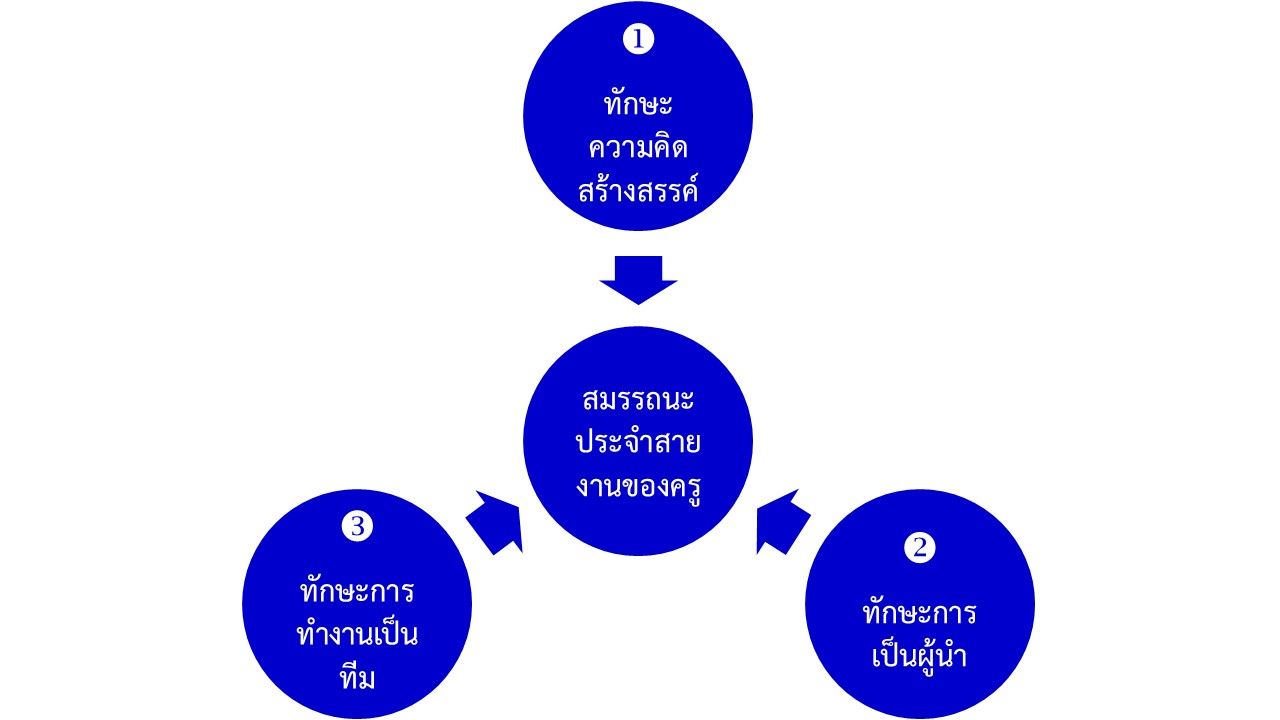
The objectives of this research were (1) to study and compare the soft skills of school administrators classified according to the status and size of educational institutions, (2) to examine and compare the functional competency classified according to the status and size of educational institutions, (3) to develop the relation between the soft skills of school administrators and functional competency teachers, and (4) to evaluate the predictive power of the soft skills of school administrators affecting the development of teacher’s functional competency under Sakon Nakhon Primary Educational Service Area Office 1 There were 372 samples, including 62 school administrators and 310 teachers. The findings revealed that 1) the soft skills of school administrators overall are at the highest level. The result of comparing the soft skills of school administrators classified according to the status and size of educational institutions was that overall, there was no difference. 2) The teacher’s functional competencies overall are at the highest level. The comparison of the statuses showed that overall, there was no difference. The result compares the size of educational institutions. It was found that overall they were significantly different at the .01 level. 3) (3) Soft skills of school administrators and teachers' functional competencies. There is a positive relationship in the level is high, significant at the .01 level. 4) The variables on the soft skills of school administrators affecting the development of teachers’ functional competency under Sakon Nakhon Primary Educational Service Area Office 1. There are 3 variables first, creative thinking (X1), second, leadership (X6), and teamwork collaboration (X7), which together can predict 55 percent. The equation can be written as follows.
Forecasting equation in raw scores
Y' = 1.51 + .51X1 + .11X6 + .05X7
Forecasting equation in standard scores
Zy' = .76Z1 + .16Z6 + .09Z7
Article Details
References
กระทรวงศึกษาธิการ. (2560). แผนการศึกษาแห่งชาติ พ.ศ. 2560-2579. กรุงเทพฯ.
คณะกรรมการข้าราชการพลเรือน. (2553). คู่มือการกำหนดสมรรถนะในราชการ พลเรือน: คู่มือ
สมรรถนะหลัก. กรุงเทพฯ: สำนักงานคณะกรรมการข้าราชการพลเรือน.
ทรงศักดิ์ ภูสีอ่อน. (2558). การประยุกต์ใช้ SPSS วิเคราะห์ข้อมูลงานวิจัย. พิมพ์ครั้งที่ 7.
มหาสารคาม : ตักสิลาการพิมพ์.
ทิพยรัตน์ กาประสิทธิ์ ทรงเดช สอนใจ และประภาพร บุญปลอด (2566). วารสารมนุษยศาสตร์และ
สังคมศาสตร์มหาวิทยาลัยราชภัฏสุรินทร์, 25(1), 108-109.
ธนัสสรณ์ พลอยทับทิม. (2559). การศึกษาสภาพและแนวการพัฒนาสมรรถนะของ ผู้บริหาสถาน
ศึกษา สังกัดโรงเรียนมัธยมศึกษาในเขตภาคเหนือตอนล่าง. วิทยานิพนธ์ ครุศาสตรมหา
บัณฑิต มหาวิทยาลัยราชภัฎพิบูลสงคราม.
นิภาวรรณ เอกวรรณัง. (2560). การพัฒนาชุดประเมินสมรรถนะวิชาชีพครู สำหรับนักศึกษาฝึก
ประสบการณ์วิชาชีพครู. มหาวิทยาลัยราชภัฎ.วิทยานิพนธ์ปริญญาศึกษาศาสตรดุษฎี
บัณฑิต. มหาวิทยาลัยเกษตรศาสตร์.
บุญชม ศรีสะอาด. (2560). การวิจัยเบื้องต้น ฉบับปรับปรุงใหม่. พิมพครั้งที่ 10. กรุงเทพ ฯ.
พงษ์ศักดิ์ ด้วงทา (2557). การพัฒนาสมรรถนะวิชาชีพครูโรงเรียนเอกชนในสังกัดสํานักงานเขตพื้นที่
การศึกษาพิษณุโลก เขต 1. วิทยานิพนธ์ปรัชญาดุษฎีบัณฑิต มหาวิทยาลัยศรีปทุม.
พรพรรณ โปรเทียรณ. (2561). รูปแบบการพัฒนาสมรรถนะการปฏิบัติงานตามหลักภาวนา ๔ ของ
บุคลากร สายสนับสนุนวิชาการมหาวิทยาลัยมหาจุฬาลงกรณราชวิทยาลัย. ปริญญาพุทธ
ศาสตรดุษฎีบัณฑิต มหาวิทยาลัยมหาจุฬาลงกรณราชวิทยาลัย.
มงกุฎ วงศ์สาคร (2566). สมรรถนะประจำสายงานของครูที่ส่งผลต่อประสิทธิผลการจัดการเรียนรู้
ของครูในโรงเรียน สังกัดสำนักงานเขตพื้นที่การศึกษา มัธยมศึกษาสกลนคร.ครุศาสตรมหา
บัณฑิต.มหาวิทยาลัยราชภัฏสกลนคร.
วาริษา ประเสริฐทรง และ ดร.วัลลภา อารีรัตน์ (2557). ทักษะภาวะผู้นำด้าน SOFT SKILLS ของ
ผู้บริหารสถานศึกษาสังกัดสำนักงานเขตพื้นที่การศึกษามัธยมศึกษา เขต 25. วารสาร
ศึกษาศาสตร์ หาวิทยาลัยขอนแก่น, 38(2)} 88-95..
วิชัย วงษ์ใหญ่ และมารุต พัฒผล. (2562). Soft Skills to Master. บัณฑิตวิทยาลัย มหาวิทยาลัยศรี-
นครินทรวิโรฒ, กรุงเทพมหานคร.
สงกรานต์ พันธุ์พินิจ. (2558). รูปแบบการจัดการเรียนรู้ในที่ทำงานเพื่อพัฒนาสมรรถนะประจำสายงาน
ครูโรงเรียนเอกชน. ปรัชญาดุษฎีบัณฑิต มหาวิทยาลัยราชภัฏบุรีรัมย์.
สมคิด สร้อยน้ำ (2563). ความสัมพันธ์ระหว่างทักษะทางสังคมของผู้บริหารโรงเรียนที่ส่งผลต่อ
ประสิทธิผลของโรงเรียน สังกัดสำนักงานเขตพื้นที่การศึกษาประถมศึกษาหนองคาย. New Trends and Issues Proceedings on Humanities and Social Sciences. 6(2) (2019) 032-039.
สมนึก ภัททิยธนี. (2565). การวัดผลการศึกษา. พิมพ์ครั้งที่ 14 ฉบับปรับปรุง. กาฬสินธุ์.
สาลินี ชนาพงษ์จารุ. (2556). การพัฒนาระบบการประเมินสมรรถนะประจำสายงานของครู สังกัด
สำนักงาน เขตพื้นที่การศึกษาประถมศึกษากำแพงเพชร เขต 1 และ 2 โดยประยุกต์วิธีการ
ประเมินเชิงผสมผสาน. ปรัชญาดุษฎีบัณฑิต มหาวิทยาลัยราชภัฏกำแพงเพช.
สาวนีย์ สิทธิชัยจารุเมธี และสุชาดา บุบผา (2565). Soft Skills ของผู้บริหารสถานศึกษาที่ส่งผลต่อ
ประสิทธิผล ของโรงเรียนขนาดกลาง สังกัดสำนักงานเขตพื้นที่ การศึกษามัธยมศึกษา
หนองคาย. วารสาร มจร อุบลปริทรรศน์, 7(2), 2176-2178.
สำนักงานเขตพื้นที่การศึกษาประถมศึกษาสกลนคร เขต 1. (2566). คู่มือการปฏิบัติงานกลุ่มส่งเสริม
การจัดการศึกษา. สกลนคร.
สำนักงานเลขาธิการคุรุสภา. (2561). ข้อบังคับคุรุสภาว่าด้วยมาตรฐานวิชาชีพ (ฉบับที่ 4) พ.ศ. 2562.
(3 พฤษภาคม 2567). ราชกิจจานุเบกษา เล่ม 136 ตอนพิเศษ 68.
Ali I. AlHouli Abdul Kareem A. Al-Khayatt. (2020). Assessing the Soft skills needs of Teacher
Education students. International Journal of Education and Practice, 8(3), 416-431.
Ariratana, W., Ngang, T. K. and Sirisooksil, S. (2019). The effect of innovative leadership on
competency of creating high performance organization. Kasetsart Journal of Social
Sciences, 40, 311-318.
Cimatti, B. (2016). Definition, development, assessment of soft skills and their role for the
quality of organizations and enterprises. International Journal for Quality Research,
(1), 97–130.
Kaustuv Kanti Bandyopadhyay & Priti Sharma. (2016). Using Soft skill in Non-formal Education.
Society for Participatory Research in Asia (PRIA) 42, Tughlakabad. Institutional
Area New Delhi India.
Tang Keow Ngang. (2012). The soft skills of leadership. School of Educational Studies, University
Sains Malaysia, 11800 USM, Penang, Malaysia.
Yaowatida Siewseng Ampapan Tuntinakhongul and Pariyaporn Tungkunanan. (2020.)
Components of Chinese Language Teacher’s Functional Competencies: A Confirmatory Factor Analysis. International Journal of Instruction January, 14(1), 813-826.
