
The Development of the Senior Scouts Patriotism Curriculum under the Jurisdiction of Chonburi Primary Educational Service Area Office 2
Article Sidebar
Main Article Content
Abstract
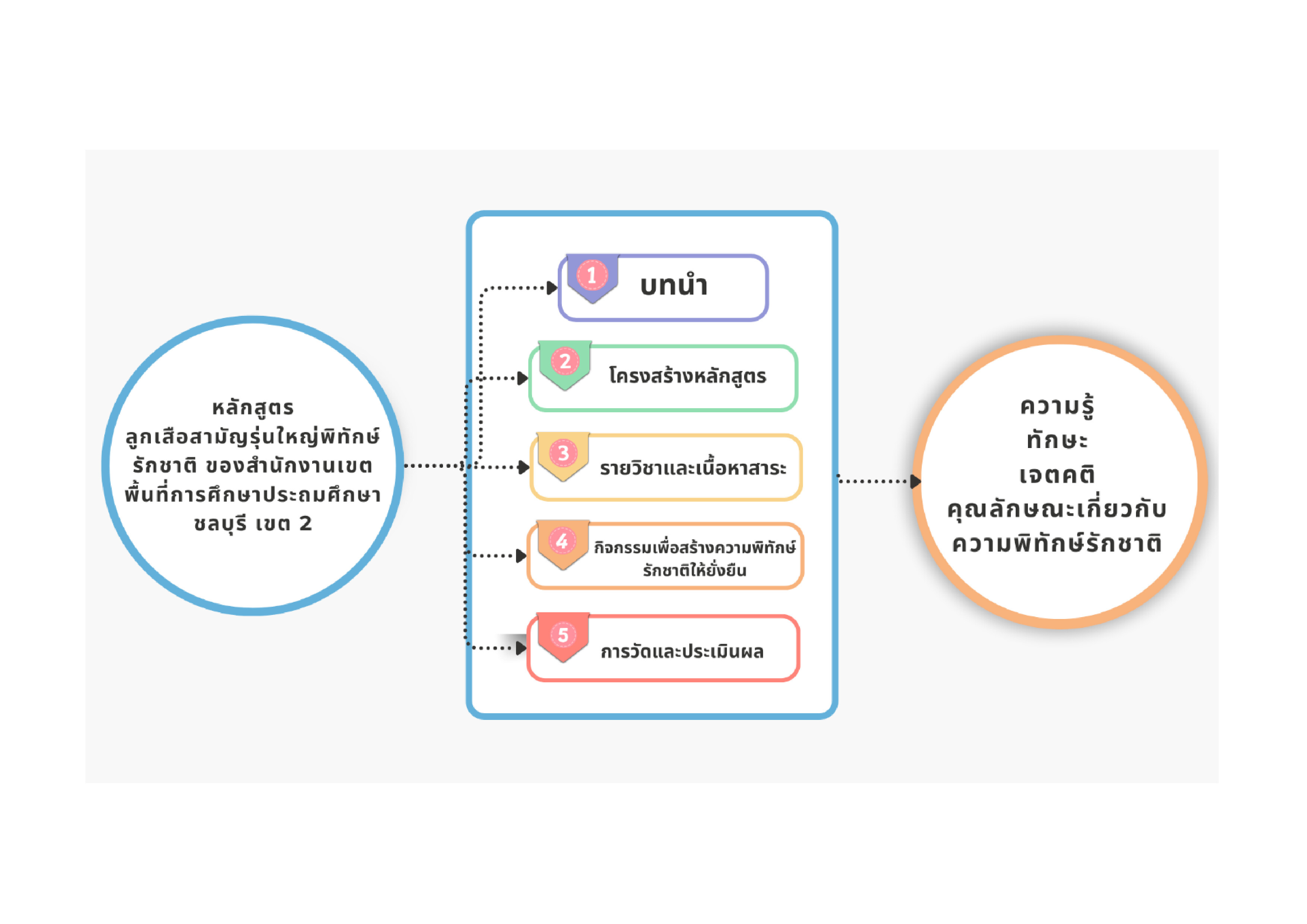
The purposes of this research were 1) A Study of Causal Factors Affecting Patriotism Among Senior Cub Scouts Under the Office of Chonburi Primary Educational Service Area Office 2; (2) to develop a “Senior Scouts Patriotism Curriculum” for the said educational office; and (3) to evaluate the developed curriculum. The sample group consisted of 200 Senior Scouts from opportunity expansion schools that offered the Senior Scout program within the jurisdiction of Chonburi Primary Educational Service Area Office 2. The study was divided into three phases: Phase 1 – analysis of content components influencing patriotism; Phase 2 – development of the Senior Scouts Patriotism Curriculum; and Phase 3 – evaluation of the developed curriculum. The research instruments comprised questionnaires, evaluation forms, a Focus Group Discussion Form, and an Evaluation Form. Data were analyzed using mean, standard deviation, and confirmatory factor analysis. The research results were as follows: 1) The curriculum content components included five observable variables: Thai values, citizenship, environment, morality and ethics, and media and communication technology. These were grouped under the latent external variable “curriculum content,” while the latent internal variable “patriotism” consisted of four observable variables: knowledge, skills, attitude, and patriotism-related characteristics. 2) The developed curriculum was structured into five parts: introduction, curriculum structure, subjects and content, supplemental patriotism-enhancing activities, and assessment and evaluation. 3) The evaluation of the curriculum revealed that it was rated at the highest level in terms of accuracy, propriety, feasibility, and utility. Therefore, it is considered effective and practical for enhancing the patriotism of Senior Scouts.
Article Details
References
เคลน บุณยานันต์. (2562). แนวทางการพัฒนาหลักสูตรครุศาสตรบัณฑิตสาขาวิชาดนตรีศึกษาของมหาวิทยาลัยราชภัฏ. วิทยานิพนธ์ครุศาสตรมหาบัณฑิต, จุฬาลงกรณ์มหาวิทยาลัย. คลังปัญญาจุฬาฯ. https://doi.org/10.58837/CHULA.THE.2019.1502
ธำรง บัวศรี. (2542). ทฤษฎีหลักสูตร:การออกแบบและพัฒนา. (พิมพ์ครั้งที่ 4). กรุงเทพฯ: โรงพิมพ์คุรุสภาลาดพร้าว.
พิศิษฐ์ ชำนาญนา. (2566). การวิจัยและพัฒนาหลักสูตรการประกอบการทางสังคมระดับปริญญาบัณฑิต.วิทยานิพนธ์ครุศาสตรมหาบัณฑิต, จุฬาลงกรณ์มหาวิทยาลัย.
รติ จิรนิรัติศัย. (2561). การสังเคราะห์กระบวนการพัฒนาหลักสูตรท้องถิ่น. วิทยานิพนธ์ครุศาสตรมหาบัณฑิต, จุฬาลงกรณ์มหาวิทยาลัย. คลังปัญญาจุฬาฯ. https://doi.org/10.58837/CHULA.THE.2018.1459
ราชกิจจานุเบกษา. (2560). รัฐธรรมนูญแห่งราชอาณาจักรไทย พุทธศักราช 2560. เล่ม 134 ตอนที่ 40 ก 6 เมษายน 2560. https://kku.world/0yb7g8
ราชกิจจานุเบกษา. (2562). พระราชบัญญัติการศึกษาแห่งชาติ พ.ศ. 2542 แก้ไขเพิ่มเติม (ฉบับที่ 2) พ.ศ. 2545 และ (ฉบับที่ 3) พ.ศ. 2553, เล่ม 116/ตอนที่ 74 ก/หน้า 1/19 สิงหาคม 2542. https://kku.world/i2izxf
วัชรินทร์ ชาญศิลป์. (2561). ความเป็นพลเมืองของเยาวชนไทย Thai Youth’s Citizenship. วารสารรัฐศาสตร์ปริทรรศน์ มหาวิทยาลัยเกษตรศาสตร์. 5(1).
สํานักงานลูกเสือแห่งชาติ. (2551). พระราชบัญญัติลูกเสือ พ.ศ. 2551. เอกสารเผยแพร่และประชาสัมพันธ์. กรุงเทพฯ: สํานักงานลูกเสือแห่งชาติ.
สำนักงานเขตพื้นที่การศึกษาประถมศึกษาชลบุรี เขต 2. (2567). แผนพัฒนาการศึกษา พ.ศ. 2566 – 2570 (ฉบับปรับปรุงปีงบประมาณ พ.ศ. 2567). https://www.chon2.go.th/news/images/Ducument/2566/plan2566_2570.pdf
สำนักงานคณะกรรมการพัฒนาการเศรษฐกิจและสังคมแห่งชาติ. (2560). ยุทธศาสตร์ชาติ พ.ศ. 2561-2580 (ฉบับย่อ). https://www.nesdc.go.th/download/document/SAC/NS_SumPlanOct2018.pdf
สำนักงานเลขานุการของคณะกรรมการยุทธศาสตร์ชาติ. (2561). ยุทธศาสตร์ชาติ พ.ศ. 2561–2580 (ฉบับย่อ). กรุงเทพฯ: สำนักงานคณะกรรมการพัฒนาการเศรษฐกิจและสังคมแห่งชาติ.
The Joint Committee on Standards for Educational Evaluation. (2014). The Student
Evaluation Standards. SAGE Publications.
