
Strategies for the Development of School Administrators in the Era of Disruption under the Office of the Basic Education Commission
Article Sidebar
Main Article Content
Abstract
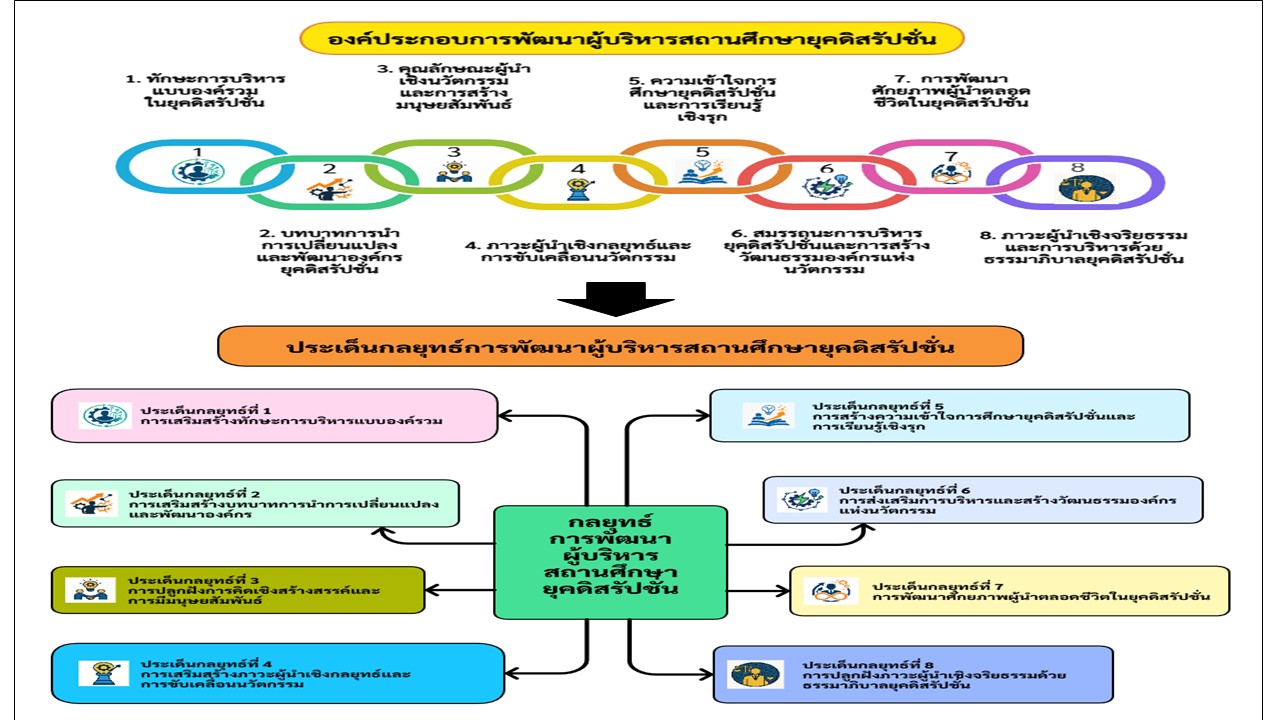
This research aimed to: 1) Analyze the components of school administrator development in the disruption era under the Office of the Basic Education Commission. 2) Formulate strategies for school administrator development in the disruption era under the Office of the Basic Education Commission. 3) Evaluate the strategies for school administrator development in the disruption era under the Office of the Basic Education Commission. The study employed a mixed-methods research design, conducted in three phases. Phase one involved component analysis through qualitative content analysis of documents and interviews with 18 experts. Concurrently, quantitative analysis utilized statistics including frequency, percentage, mean, standard deviation, and Exploratory Factor Analysis (EFA) on data from a questionnaire administered to a sample of 400 school administrators. Phase two focused on creating the strategy and a corresponding manual, which were validated for appropriateness by 9 experts via a Connoisseurship seminar. The third phase consisted of evaluating the final strategy with 30 school administrators. The findings revealed that: 1. There are eight primary components for developing school administrators: (1) Holistic Management Skills; (2) Role in Leading Change and Organizational Development; (3) Innovative Leadership and Interpersonal Skills; (4) Strategic Leadership and Innovation Driving; (5) Understanding of Education in the Disruption Era and Active Learning; (6) Administrative Competency and Building an Innovative Organizational Culture; (7) Lifelong Leadership Potential Development; and (8) Ethical Leadership and Good Governance. 2. Strategy for the Development of School Administrators in the Disruption Era, which includes philosophy, vision, mission, goals, 8 strategic issues, and implementation guidelines. The accompanying manual was rated as highly appropriate (=4.63). 3.The evaluation of the strategy demonstrated that its validity, appropriateness, feasibility, and utility were all at the highest level (=4.63, 4.57, 4.54, and 4.63, respectively).
Article Details

This work is licensed under a Creative Commons Attribution-NonCommercial-NoDerivatives 4.0 International License.
References
กัญชพร ปานเพ็ชร. (2565). ภาวะผู้นำเชิงจริยธรรมตามหลักวุฒิธรรมสำหรับผู้บริหารสถานศึกษาในยุค 4.0.
วารสารครุศาสตร์ปริทรรศน์ฯ, 9(1), 496-497.
ก้องนเรนท์ พลชา. (2561). กลยุทธ์การพัฒนาทักษะผู้บริหารสถานศึกษาในศตวรรษที่ 21 ของสถานศึกษา
สังกัดสำนักงานเขตพื้นที่การศึกษาประถมศึกษาในจังหวัดเลย [วิทยานิพนธ์]. มหาวิทยาลัยราชภัฏ
อุดรธานี.คณะบริหารและพัฒนาองค์ความรู้ มจธ. (2560). เทรนด์การเรียนรู้ของคนรุ่นใหม่ในยุคดิจิทัล. สืบค้นจาก https://www.okmd.or.th/okmd-opportunity/
FutureLearningPlatform/899 /Digilearn_infographic
จิณณวัตร ปะโคทัง. (2561). กลยุทธ์การพัฒนาผู้บริหารสถานศึกษามืออาชีพในศตวรรษที่ 21 สังกัดสำนักงาน
คณะกรรมการการศึกษาขั้นพื้นฐาน. วารสารศึกษาศาสตร์, มหาวิทยาลัยมหาสารคาม.
จิรพล สังข์โพธิ์, และคณะ. (2560). ภาวะผู้นำในการบริหารองค์กรยุคดิจิทัล กรณีศึกษา: องค์กรไอทีและ
องค์กรที่เกี่ยวข้องกับไอทีในเขตกรุงเทพมหานครและปริมณฑล. วิทยาลัยนวัตกรรม
มหาวิทยาลัยธรรมศาสตร์.
จิรัฏฐิกานต์ จันทร์แทน, และคณะ. (2564). ธรรมาภิบาลหัวใจของการบริหารสถานศึกษายุคนิวนอร์มัล.
วารสารคุณภาพชีวิตกับกฎหมาย, 17(2), 8.
จิติมา วรรณศรี. (2564). การบริหารจัดการศึกษายุคดิจิทัล. รัตนสุวรรณการพิมพ์ 3.
ชัชชญา พีระธรณิศร์. (2563). ความท้าทายการจัดการศึกษาในยุค Disruptive Change ของผู้บริหาร
สถานศึกษา. ศึกษาศาสตร์สาร มหาวิทยาลัยเชียงใหม่, 4(2), 136.
ชัยยนต์ ประดิษฐศิลป์. (2560). ตัวแบบธรรมาภิบาลในสถาบันอุดมศึกษาเอกชน .วิทยานิพนธ์ปรัชญาดุษฎี
บัณฑิต, มหาวิทยาลัยสยาม.
ฐากร ปิยะพันธ์. (2564). Digital Disruption คืออะไร? เราควรปรับตัวอย่างไร. สืบค้นจาก
https://blog.cariber.co/post/what-is-digital-disruption
ทวีสันต์ วิชัยวงษ์, & ยุภาพร ยุภาศ. (2562). ภาวะผู้นำยุคใหม่และทักษะในการบริหารงานในองค์กร. วารสาร
แสงอีสาน, มหาวิทยาลัยมหามกุฎราชวิทยาลัย วิทยาเขตอีสาน.
นุชนรา รัตนะศิระประภา. (2557). สมรรถนะของผู้บริหารที่ส่งผลต่อคุณลักษณะโรงเรียนมาตรฐานสากล
สังกัดสำนักงานคณะกรรมการการศึกษาขั้นพื้นฐาน. Veridian E-Journal, 7(3), 507–528.
ปุณณิฐฐา มาเชค. (2565). การบริหารองค์กรทางการศึกษาในยุคดิจิทัล. คณะศึกษาศาสตร์ มหาวิทยาลัย
บูรพา.
พัชราภรณ์ ดวงชื่น. (2561). เปลี่ยนมุมมองการบริหารองค์กรการศึกษาในโลก Disruptive. วารสารบริหาร
การศึกษา มหาวิทยาลัยศิลปากร, 8(2), 252–253.
พิมลพรรณ เพชรสมบัติ. (2564). กลยุทธ์การพัฒนาคุณลักษณะผู้บริหารยุคนิวนอร์มัล สังกัดสำนักงานเขต
พื้นที่การศึกษาประถมศึกษา. วารสารสันติศึกษาปริทรรศน์ มจร, 9(5).
ไพฑูรย์ สินลารัตน์. (2561). หลักคิดการจัดการหลักสูตรและการสอน. จุฬาลงกรณ์มหาวิทยาลัย.
พรวิภา เชยกลิ่น. (2566). ภาวะผู้นำของผู้บริหารสถานศึกษายุคดิจิทัล. วิทยานิพนธ์ปรัชญาดุษฎีบัณฑิต,
มหาวิทยาลัยศิลปากร.
มานะ ครุธาโรจน์. (2563). กลยุทธ์การพัฒนาสมรรถนะผู้บริหารสถานศึกษาขั้นพื้นฐาน ยุคการศึกษา 4.0.
วิทยาลัยครุศาสตร์ มหาวิทยาลัยธุรกิจบัณฑิตย์.
รัชยา เรืองศรี. (2562). ปรับธุรกิจให้รอดในยุคดิจิทัล = Digital Darwinism. บริษัท ซีเอ็ดยูเคชั่น จำกัด.
รัฐพล ฤทธิธรรม, และโพชฌ์ จันทร์โพธิ์. (2564). ภาวะผู้นำและมาตรฐานทางจริยธรรมของผู้บริหารสมัยใหม่ที่
มีประสิทธิผลสูง. วารสารมหาจุฬานาครทรรศน์, 8(4), 33.
วรรณพัทร ซื่อตรง, และนิษฐวดี จิรโรจน์ภิญโญ. (2560). จริยธรรมของผู้บริหารสถานศึกษาในศตวรรษที่ 21
สำหรับโรงเรียนมัธยมศึกษา ในสังกัดสำนักงานศึกษาธิการภาค 4. วารสาร มจร สังคมศาสตร์
ปริทรรศน์, 6(2), 941.
วิชัย วงษ์ใหญ่, & มารุต พัฒผล. (2562). การจัดการเรียนรู้ในยุค Disruptive Innovation. ศูนย์ผู้นำนวัตกรรม
หลักสูตรและการเรียนรู้.
สันติธาร เสถียรไทย. (2563). ดิสรัปชัน คือเสียงที่เราไม่ได้ยิน. สืบค้นจาก https://thestandard.co/
disruption-sounds -that-we-cant-hear
สุกัญญา แช่มช้อย. (2562). การบริหารสถานศึกษาในยุคดิจิทัล. จุฬาลงกรณ์มหาวิทยาลัย.
สุจิตรา พิพัฒนพงษ์. (2564). นวัตกรรมเส้นทางการพัฒนาผู้บริหารโรงเรียนตามแนวคิดสมรรถนะผู้นำใน
อนาคต. สาขาวิชาบริหารการศึกษา ภาควิชานโยบาย การจัดการและความเป็นผู้นำทางการศึกษา
คณะครุศาสตร์, จุฬาลงกรณ์มหาวิทยาลัย.
สุจิตรา โอสถอภิรักษ์, และคณะ. (2565). การบริหารการจัดการเรียนรู้ในยุค Digital Disruption. วารสาร
สำนักวิชาการแนะนำงานวิจัย.
สุรศักดิ์ ปาเฮ. (2563). แนวทางการพัฒนาสมรรถนะของผู้บริหารสถานศึกษา สังกัดสำนักงานเขตพื้นที่
การศึกษามัธยมศึกษา เขต 21. วารสารการบริหารการศึกษาและภาวะผู้นำ มหาวิทยาลัยราชภัฏ
สกลนคร, 9(34), 10-18.
สุวิมล ทองจำรัส. (2561). ผู้บริหารสถานศึกษาในศตวรรษที่ 21. ใน เอกสารการประชุมวิชาการเสนอ
ผลงานวิจัยระดับชาติ “GRADUATE SCHOOL CONFERENCE 2018”.
สำนักนโยบายและแผนการศึกษาขั้นพื้นฐาน สพฐ. (2565). สรุปข้อมูลสารสนเทศทางการศึกษา ปี 2565.
ออนไลน์. สืบค้นเมื่อ 5 เมษายน 2566 จาก http://www.bopp.go.th/?page_id=1828.
อนุชา โสมาบุตร. (2556). ทักษะการเรียนรู้และนวัตกรรมสำหรับการเรียนรู้แห่งศตวรรษที่ 21. สืบค้นจาก
https://teacherweekly.wordpress.com/2013/09/25/learning-and-innovation-skills
อาภาภรณ์ ภูศรี, และพชรวิทย์ จันทรศิริสิร. (2565). กลยุทธ์การพัฒนาภาวะผู้นําเชิงดิจิทัลสำหรับผู้บริหาร
สถานศึกษาขนาดเล็ก สังกัดสำนักงานเขตพื้นที่การศึกษาประถมศึกษา มหาสารคาม เขต 2. วารสาร
พุทธปรัชญาวิวัฒน์, 6(2), 200.
เอกชัย กี่สุขพันธ์. (2559). การบริหารสถานศึกษายุคดิจิทัล. สืบค้นจาก https://www.trueplookpanya.com
/dhamma/content/52232
Dru, J.-M. (1996). Disruption: Overturning conventions and shaking up the marketplace. Wiley.
Fullan, M. (2001). The new meaning of educational change (3rd ed.). Teachers College Press.
Hair, J. F., Black, W. C., Babin, B. J., Anderson, R. E., & Tatham, R. L. (2006). Multivariate data
analysis (6th ed.). Pearson Prentice Hall.
Hughes, R. L., & Beatty, K. C. (2005). Becoming a strategic leader: Your role in your
organization's enduring success. Jossey-Bass.
Kotter, J. P. (1996). Leading change. Harvard Business School Press.
Marzano, R. J., Waters, T., & McNulty, B. A. (2005). School leadership that works: From
research to results. Association for Supervision and Curriculum Development (ASCD).
Mintzberg, H. (1994). The rise and fall of strategic planning. Prentice Hall.
Reichard, R. J., & Johnson, S. K. (2011). Leader self-development as organizational strategy.
The Leadership Quarterly, 22(1), 33–42. https://doi.org/10.1016/j.leaqua.2010.12.005
Swanson, R. A., & Holton, E. F. (2009). Foundations of human resource development (2nd
ed.). Berrett-Koehler Publishers.
