
A Development of Board Game for Learning to Survive in Mass Shooting: Escapement
Article Sidebar
Main Article Content
Abstract
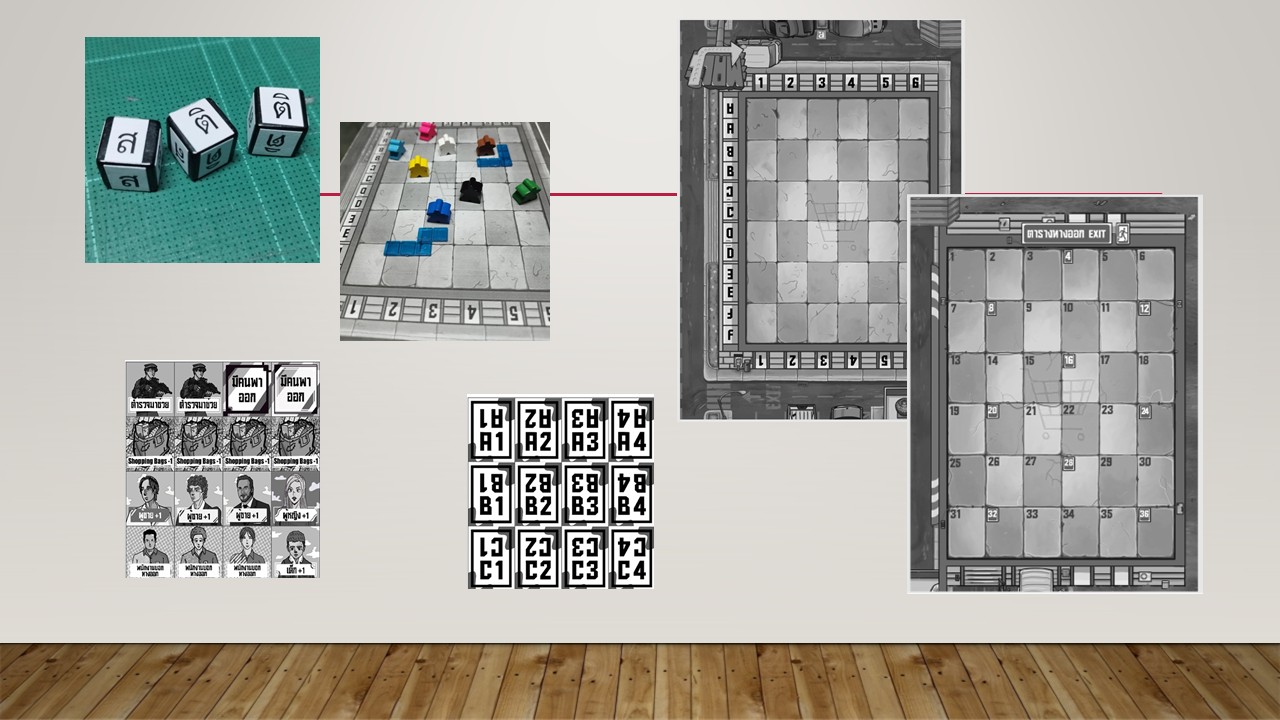
This research aimed to 1) develop a board game for learning survival skills in shooting incidents: escapement, 2) compare the results before and after using the board game for learning survival skills in shooting incidents: escapement, and 3) study the reflective outcomes of using the board game for learning survival skills in shooting incidents: escapement. The sample group consisted of 221 first-year undergraduate students, using cluster random sampling. The research employed a One-Group Pretest-Posttest experimental design to study the before-and-after effects of using the board game. Data analysis included mean, standard deviation, and Paired-Sample T-test statistics. The research findings were as follows: 1. Development of the board game for learning survival skills in shooting incidents: escape aspect - Expert evaluation found the board game's appropriateness to be at a moderate level overall. 2. Comparison results before and after using the board game for learning survival skills in shooting incidents: escapement - The experimental group showed significantly higher post-test scores compared to pre-test scores at the .05 statistical significance level. 3. Reflective outcomes of using the board game for learning survival skills in shooting incidents: escapement - Findings showed that, regarding feelings, participants experienced excitement, suspense, and perceived low survival chances. Regarding learning, participants learned survival skills and escape routes. Regarding application in daily life, participants recognized the need to maintain composure to find exit strategies.
Article Details

This work is licensed under a Creative Commons Attribution-NonCommercial-NoDerivatives 4.0 International License.
References
กระทรวงเทคโนโลยีสารสนเทศและการสื่อสาร. (2559). แผนพัฒนาดิจิทัลเพื่อเศรษฐกิจและสังคม.
กรุงเทพฯ: กระทรวงเทคโนโลยีสารสนเทศและการสื่อสาร.
กองสารนิเทศ สำนักงานตำรวจแห่งชาติ. (2565). ตร. ตีแผ่ “หนี ซ่อน สู้” หลักสากลในการเอา
ชีวิตรอดในเหตุกราดยิง (Active Shooter), 5 สิงหาคม 2565.
บีบีซี นิวส์ ไทย. (2566). ผบ.ตร. สรุปยอดผู้เสียชีวิต 2 ราย บาดเจ็บ 5 ในเหตุคนร้ายใช้อาวุธยิงกลางพารากอน
, https://www.bbc.com/thai/articles/c0kxql0ggwro
ตรัง สุวรรณศิลป์. (2565). เกมมิฟิเคชัน จูงใจคนด้วยกลไกเกม. (พิมพ์ครั้งที่ 2). สำนักพิมพ์ Salt.
ธีระวุฒิ ศรีมังคละ. (2566, 31 กรกฎาคม). 5 Steps Educational Board Game Design; บันได 5 ขั้นของ
การออกแบบบอร์ดเกมเพื่อการศึกษา. https://inskru.com/idea/-NafSI-eAr7ishRbTr0b/
ไทย พีบีเอส. (2568, 5 กุมภาพันธ์). สวีเดนเศร้า! มือปืนกราดยิงโรงเรียนผู้ใหญ่คร่า 10 ชีวิต.
https://www.thaipbs.or.th/news/content/348959
ปณิตา วรรณพิรุณ และ นำโชค วัฒนา. (2560). ความฉลาดทางดิจิทัล (Digital Intelligence). วารสารพัฒนา
เทคนิคศึกษา มหาวิทยาลัยเทคโนโลยีพระจอมเกล้าพระนครเหนือ, 29(102), 12-20.
วรพจน์ วงศ์กิจรุ่งเรือง. (2561). คู่มือพลเมืองดิจิทัล. กรุงเทพฯ: สำนักงานส่งเสริมเศรษฐกิจดิจิทัล
กระทรวงดิจิทัลเพื่อเศรษฐกิจและสังคม.
วราภรณ์ ลิ้มเปรมวัฒนา และกันตภณ ธรรมวัฒนา. (2560). พฤติกรรมในการเล่นเกมกระดาน และ
องค์ประกอบของปัจจัยทางด้านผลกระทบจากการเล่นเกมของวัยรุ่นในเขตกรุงเทพมหานคร.
วารสารวิจัยสังคม, 40(2), 107-132.
ศรินทร์ทิพย์ เศวตพันธิกุล และปรีดา เบ็ญคาร. (2567). ผลการจัดการเรียนรู้แบบสตอรี่ไลน์ร่วมกับผังกราฟิกที่
มีต่อผลสัมฤทธิ์ทางการเรียนวิชาประวัติศาสตร์ของนักเรียนชั้นประถมศึกษาปีที่ 4. วารสารครุศาสตร์
ปัญญา, 3(6), 31-42.
สฤณี อาชวานันทกุล. (2559). Board game universe จักรวาลกระดานเดียว. กรุงเทพฯ: แซลมอน.
อลิษา มูลศรี รัชดา เชาวน์เสฎฐกุล และชนาธิป ทองดียิ่ง. (2568). ผลของการจัดการเรียนรู้ด้วยวิธีการแบบ
เปิดร่วมกับการใช้การ์ตูนเป็นสื่อการจัดการเรียนรู้ที่มีต่อความสามารถในการแก้ปัญหาทางคณิตศาสตร์
ของนักเรียน. วารสารครุศาสตร์ปัญญา, 4(1), 1-11.
Csikszentmihalyi, M. (1990). Flow: The psychology of optimal experience. Harper & Row.
Deterding, S., Dixon, D., Khaled, R., & Nacke, L. (2011). From game design elements to
gamefulness: Defining "gamification". Proceedings of the 15th International Academic
MindTrek Conference.
Federal Bureau of Investigation. (n.d.). Active shooter planning and response.
Gee, J. P. (2007). What video games have to teach us about learning and literacy (Rev. ed.).
Palgrave Macmillan.
Hamari, J., Koivisto, J., & Sarsa, H. (2016). Does gamification work? A literature review of
empirical studies on gamification. In 2016 49th Hawaii International Conference on
System Sciences (HICSS).
Johnson, L., Adams Becker, S., Estrada, V., & Freeman, A. (2018). NMC Horizon Report: 2018
Higher Education Edition. The New Media Consortium.
Kapp, K. M. (2012). The gamification of learning and instruction: Game-based methods and
strategies for training and education. Pfeiffer.
Klopfer, E., Osterweil, S., & Salen, K. (2009). Moving learning games forward.
The Education Arcade.
Kolb, D. A. (1984). Experiential learning: Experience as the source of learning and
development. Prentice-Hall.
Krejcie, R. V., & Morgan, D. W. (1970). Determining sample size for research activities.
Educational and Psychological Measurement, 30(3), 607–610.
Nicholson, S. (2018). Creating engaging board games for learning. International Journal of
Game-Based Learning, 8(2), 1-15.
Squire, K. (2011). Video games and learning: Teaching and participatory culture in the digital
age. Teachers College Press.
Whitton, N. (2012). The place of game-based learning in an age of austerity. Electronic
Journal of e-Learning, 10(2), 249-256.
