
Collaborative culture development in school
Article Sidebar
Main Article Content
Abstract
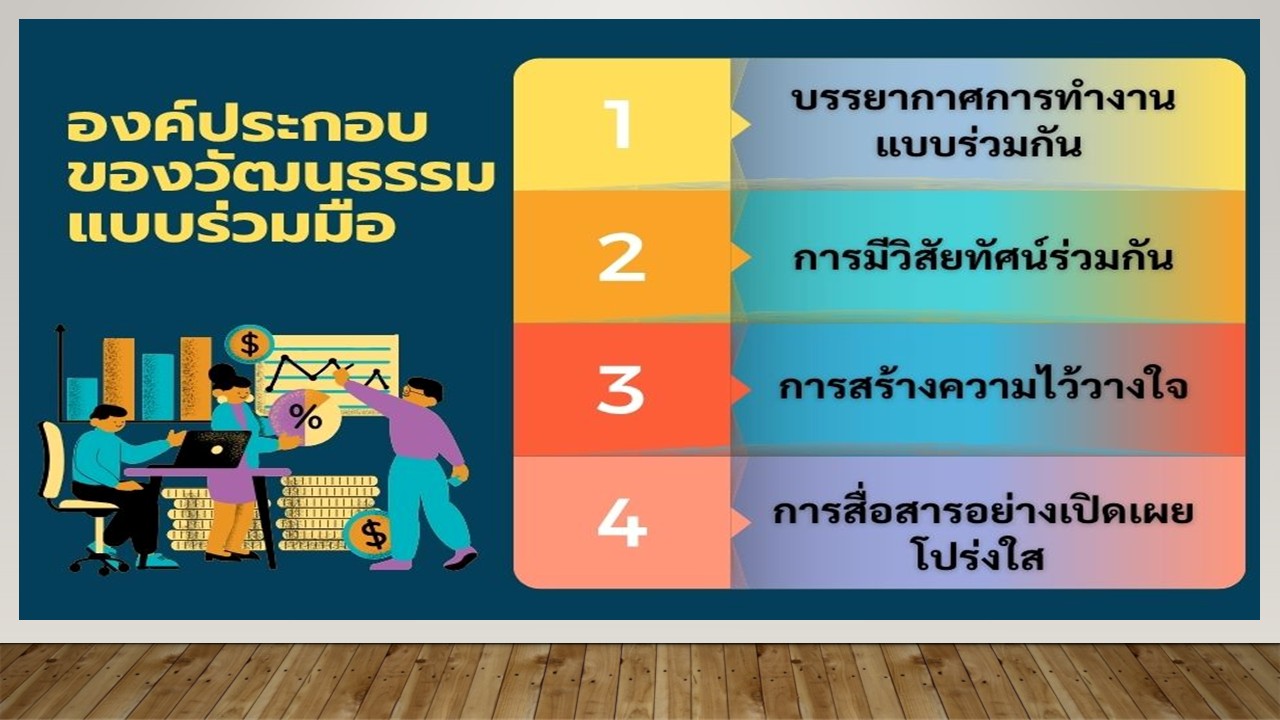
This research aimed to study the actual conditions, desired conditions, and essential needs of a collaborative culture in schools under the Bueng Kan Primary Educational Service Area Office, covering 212 schools. The sample consisted of 33 school administrators and 287 teachers, selected using Krejcie & Morgan’s table and stratified random sampling based on school size. The research instrument was a five-point Likert scale questionnaire with a reliability coefficient of 0.933. Data were analyzed using mean, standard deviation, and the Priority Needs Index (PNI Modified). The findings revealed that the overall actual conditions were at a high level, while the overall desired conditions were at the highest level. The aspect with the highest mean score in both actual and desired conditions was open and transparent communication, whereas the lowest mean score was found in shared vision. The highest priority need index (PNIModified = 0.171) was for a collaborative work atmosphere, while the lowest (PNIModified = 0.155)
Article Details

This work is licensed under a Creative Commons Attribution-NonCommercial-NoDerivatives 4.0 International License.
References
กระทรวงศึกษาธิการ. (2566). รมว.ศธ.แถลงนโยบายการศึกษา “เรียนดี มีความสุข”. ค้นเมื่อ 23 มิถุนายน 2567, จาก https://moe360.blog/2023/09/14/minister-ed-statement-ed-policy/
ดาวรุวรรณ ถวิลย์การ. (2561). รูปแบบการพัฒนาวัฒนธรรมคุณภาพของสถานศึกษาขนาดเล็กในภาคตะวันออกเฉียงเหนือ. วารสารวิจัยมหาวิทยาลัยขอนแก่น (ฉบับบัณฑิตศึกษา) สาขามนุษยศาสตร์และสังคมศาสตร์, 6(3), 114 -126.
มหาวิทยาลัยราชภัฏสุราษฎ์ธานี. (2561). ผู้บริหารสถานศึกษากับการสร้างคุณภาพสถานศึกษา.
ค้นเมื่อ 20 กรกฎาคม 2567, จาก https://graduate.sru.ac.th/wp-content/uploads/ 2018/06/edu0107-04-ผู้บริหารสถานศึกษากับการสร้างคุณภาพสถานศึกษา
วิริยา จันทรศิริ. (2567). รูปแบบการพัฒนาวัฒนธรรมแบบร่วมมือสำหรับสถานศึกษาขนาดเล็กสังกัดสำนักงานเขตพื้นที่การศึกษาประถมศึกษาชัยภูมิ เขต 1. วิทยานิพนธ์ปริญญาศึกษาศาสตรมหาบัณฑิต สาขาวิชาการบริหารการศึกษา บัณฑิตวิทยาลัย มหาวิทยาลัยขอนแก่น.
สุตวรธรรมกิจ และพงศ์ทราทิตย์ สุธีโร. (2563). การพัฒนาครูไทยสู่ศตวรรษที่ 21. วารสารบัณฑิตสาเกตปริทรรศน์, 5(2), 19-30.
สุวิมล ว่องวาณิช. (2558). การวิจัยประเมินความต้องการจำเป็น. กรุงเทพฯ: สำนักพิมพ์แห่งจุฬาลงกรณ์มหาวิทยาลัย.
สำนักงานเขตพื้นที่การศึกษาประถมศึกษาบึงกาฬ. (2566). แผนพัฒนาการศึกษา สำนักงานเขต
พื้นที่การศึกษาประถมศึกษาบึงกาฬ (2566-2570). ค้นเมื่อ 27 มิถุนายน 2567, จาก
https://www3.bkn.go.th/?page_id=5148
Herrity, J. (2023). 9 Steps To Create a Collaborative Culture at Work. Retrieved June 23, 2024, from https://www.indeed.com/career-advice/career-development/culture-collaboration
McCann-Kyte, C. (2019). Building a Culture of Collaboration. London: Western University.
Men, L. R.. (2014). Strategic Internal Communication: Transformational Leadership,
Communication Channels, and Employee Satisfaction. Leadership and internal
communication, (973) 818-8801
Moolenaar, N., Daly, A.J. and Sleegers, P.J.C. (2010). Occupying the Principal Position: Examining Relationships Between Transformational Leadership, Social Network Position, and Schools’Innovative Climate. Educational Administration Quarterly, 46(5), 623–670.
Tschannen-Moran, M. (2014). Trust and school life: The Interconnectivity of Trust in Schools. Dordrecht: Springer Nature.
