
The Management Model of Senior Scouts Activities Affecting Students' Patriotism Under the Jurisdiction of Chonburi Primary Educational Service Area Office 2
Article Sidebar
Main Article Content
Abstract
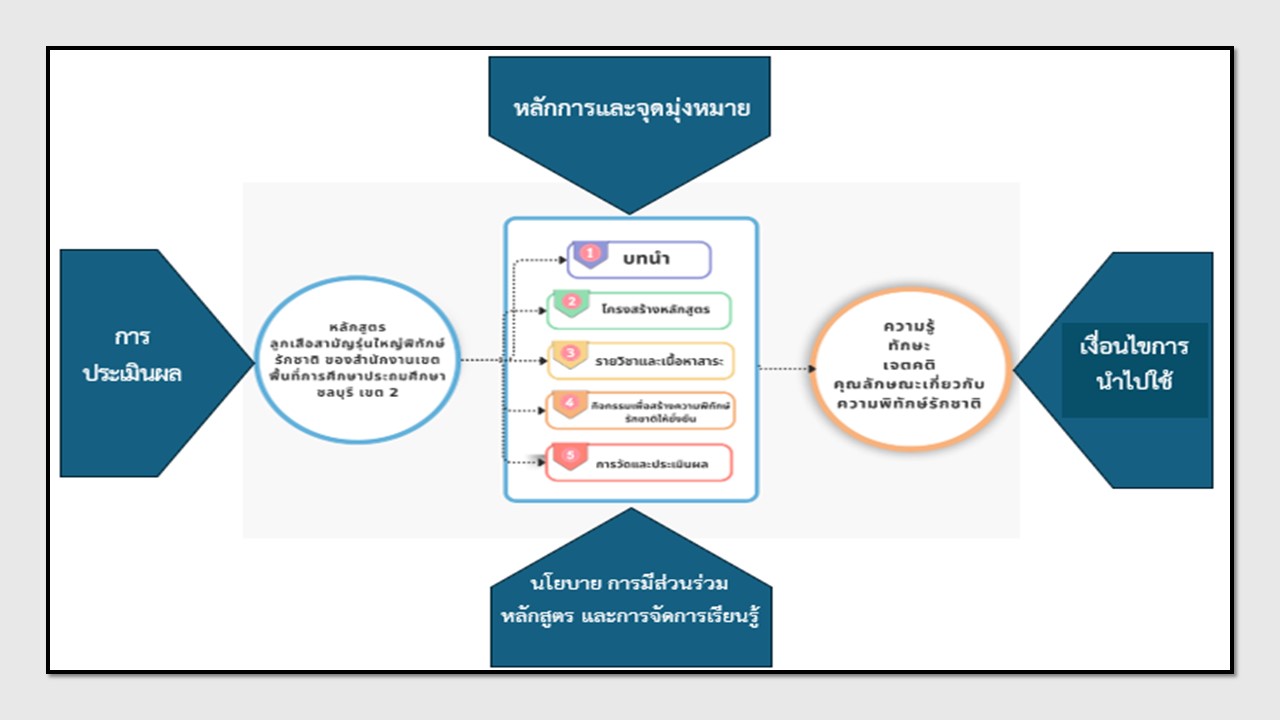
This research aimed to: 1) study the current conditions, problems, and approaches to the management of senior scout activities for student development; 2) develop a management model for senior scout activities; 3) examine the results of implementing the developed model; and 4) evaluate the appropriateness and usefulness of the model. The study revealed that the components of an effective management model for senior scout activities that foster patriotism among students consist of five key aspects: policy, participation, curriculum, personnel, and instructional management. The developed model comprised four main parts: 1) introduction, 2) implementation process, 3) evaluation, and 4) conditions for application. The implementation results demonstrated that: 1) all seven administrative policies were achieved as intended; 2) collaboration from seven expert stakeholders significantly supported activity implementation; 3) the "Senior Scout for Patriotism" curriculum covered essential areas including structure, content, learning activities, and assessment; and 4) 80 trained personnel participated in implementation, and formal cooperation (MOU) was established among educational agencies in Chonburi Province. The outcome of the implementation showed a high level of patriotism among students, with a moderate difference between pre- and post-implementation levels. Furthermore, administrators, scoutmasters, students, and parents expressed high satisfaction with the curriculum. The evaluation indicated that the model’s overall appropriateness and usefulness were rated at a high level in all aspects.
Article Details

This work is licensed under a Creative Commons Attribution-NonCommercial-NoDerivatives 4.0 International License.
References
กษมา ชนะวงศ์. (2564). รูปแบบการบริหารจัดการหลักสูตรสถานศึกษาเพื่อส่งเสริมคุณลักษณะในศตวรรษที่ 21 ของนักเรียนโรงเรียนเอกชน. หลักสูตรการศึกษาดุษฎีบัณฑิต สาขาวิชาการบริหารการศึกษา, มหาวิทยาลัยนเรศวร.
ชุติมาภรณ์ ค้าขาย. (2562). อิทธิพลของสื่อสังคมออนไลน์ต่อพฤติกรรมเบี่ยงเบนของเด็กและเยาวชนในเขตกรุงเทพมหานคร. วารสารสังคมสงเคราะห์ศาสตร์, 27(2), 194-227.
บุญชม ศรีสะอาด. (2554).การวิจัยเบื้องต้น.กรุงเทพฯ : บริษัท สุวีริยาสาส์น จำกัด.
พจนา วลัย. (2557). การศึกษาไทยกับการรับมือการเปลี่ยนแปลงทางสังคม : การสร้างประชาธิปไตยในห้องเรียน. กรุงเทพฯ: มูลนิธิสื่อเพื่อการศึกษาของชุมชน.
ราชกิจจานุเบกษา. (2562). พระราชบัญญัติการศึกษาแห่งชาติ พ.ศ. 2542 และที่แก้ไขเพิ่มเติม ฉบับที่ 2 พ.ศ. 2545, ฉบับที่ 3 พ.ศ. 2553 และฉบับที่ 4 พ.ศ. 2562.
ศุภฤกษ์ ศิโรทศ. (2561). แนวทางการบริหารงานกิจกรรมลูกเสือสามัญรุ่นใหญ่ สังกัดสำนักงานเขตพื้นที่การศึกษามัธยมศึกษา เขต 5. หลักสูตรครุศาสตรมหาบัณฑิต สาขาวิชาการบริหารการศึกษา, มหาวิทยาลัยราชภัฏนครสวรรค์.
สํานักงานลูกเสือแห่งชาติ. (2551). พระราชบัญญัติลูกเสือ พ.ศ. 2551. เอกสารเผยแพร่และประชาสัมพันธ์. กรุงเทพฯ: สํานักงานลูกเสือแห่งชาติ.
สำนักการลูกเสือ ยุวกาชาดและกิจการนักเรียน. (2557). แนวทางการพัฒนาหลักสูตรการจัด. กิจกรรมลูกเสือในสถานศึกษา พ.ศ. 2552. กรุงเทพฯ : โรงพิมพ์ สกสค.
สำนักงานเขตพื้นที่การศึกษาประถมศึกษาชลบุรี เขต 2. (2567). แผนพัฒนาการศึกษา พ.ศ. 2566 – 2570 (ฉบับปรับปรุงปีงบประมาณ พ.ศ. 2567). https://www.chon2.go.th/news/images/Ducument/2566/plan2566_2570.pdf
