
Consumer Opinions on Brand Image Affecting Purchase Decisions for Bottled Drinking Water in Mueang District, Khon Kaen Province
Article Sidebar
Main Article Content
Abstract
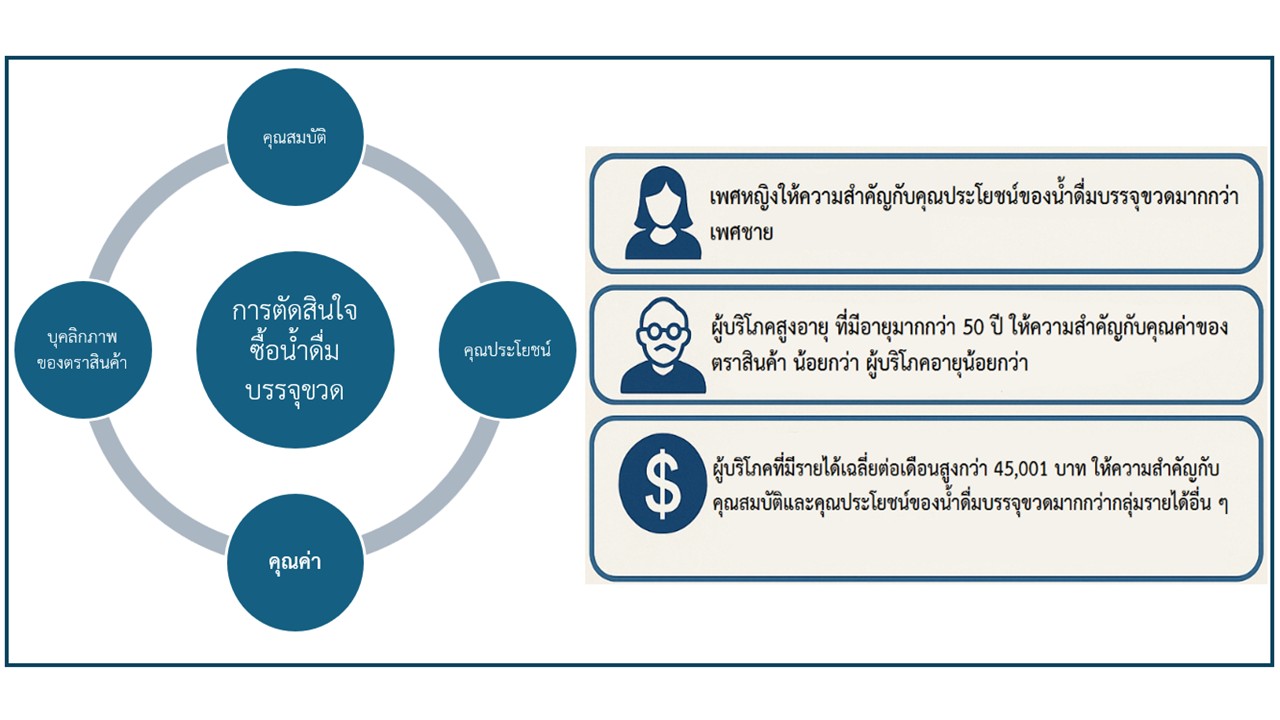
Consumer product purchase decisions today are complex and influenced by various factors, especially in highly competitive markets like bottled drinking water. Therefore, brand image is a crucial element impacting purchasing behavior. This research aimed to 1) study the level of consumer opinions on brand image influencing bottled drinking water purchase decisions, and 2) compare the differences in opinions on brand image influencing bottled drinking water purchase decisions, classified by demographic characteristics. A quantitative research methodology was employed. The sample group consisted of 216 bottled drinking water consumers in Mueang District, Khon Kaen Province. A questionnaire was used as the research instrument, with a reliability of 0.891. The statistics used included mean, standard deviation, T-test, and F-test. The research findings revealed that 1) overall opinions on brand image influencing bottled drinking water purchase decisions were at the highest level, and 2) opinions on brand image influencing bottled drinking water purchase decisions, classified by gender, age, and average monthly income, differed significantly at the 0.05 level. Key findings from the research include: 1) Females place more importance on the benefits of bottled drinking water than males; 2) Consumers aged over 50 years place less importance on brand value than younger age groups; and 3) Consumers with an average monthly income over 45,001 Baht place more importance on the attributes and benefits of bottled drinking water than other income groups.
Article Details

This work is licensed under a Creative Commons Attribution-NonCommercial-NoDerivatives 4.0 International License.
References
กัลยา วานิชย์บัญชา. (2561). สถิติสำหรับงานวิจัย. กรุงเทพฯ: สามลดา.
ชัชวาลย์ เรืองประพันธ์. (2543). สถิติพื้นฐาน พร้อมตัวอย่างการวิเคราะห์ด้วยโปรแกรม MINITAB SPSS และ SAS. ขอนแก่น: มหาวิทยาลัยขอนแก่น.
วิไลลักษณ์ แก้วมา. (2566). ปัจจัยที่มีอิทธิพลต่อการตัดสินใจซื้อน้ำดื่มบรรจุขวดของผู้บริโภคในเขตกรุงเทพมหานคร. วิทยานิพนธ์บริหารธุรกิจมหาบัณฑิต มหาวิทยาลัยธรรมศาสตร์.
วิรานนท์ ตุ้มสูงเนิน. (2564). การสื่อสารการตลาดแบบบูรณาการและภาพลักษณ์ตราสินค้าที่มีผลต่อ
การตัดสินใจซื้อเครื่องดื่มวิตามินซี C-vitt ของผู้บริโภคในจังหวัดกรุงเทพมหานคร.
การประชุมนำเสนอผลงานวิจัยบัณฑิตศึกษาระดับชาติ, ครั้งที่ 16, 918-931.
Biemer, P.P., & Lyberg, L.E. (2003). Introduction to Survey Quality. John Wiley & Sons.
Edberg, A., & Köhnlein, K. (2025). Bridging The Attitude-Behaviour Gap: investigating the conflict between Sustainability Attitudes and Fashion consumption Behaviours among Generation Z and Baby Boomers in Central-Northern Europe. From https://hb.diva-portal.org/smash/get/diva2:1979812/FULLTEXT01.pdf
Hoyer, W.D., MacInnis, D.J., & Pieters, R. (2021). Consumer behavior (8th ed.). Cengage Learning.
Isoraite, M. (2018). Brand image development. Coforum, 1(14), 1-6.
Kotler, P., & Keller, K.L. (2024). Marketing management (16th ed.). Pearson Education.
Kumar, A., & Singh, S.K. (2023). Influence of brand image on purchase intention of bottled water in India. Journal of Business Research, 159, 113702.
Rindell, A. & Iglesias, O. (2014). Context and time in brand image constructions. Journal of Organizational Change Management, 27(5), 756–768.
Rutkowska, A., Cieslik, B., Tomaszczyk, A., & Szczepanska-Gieracha, J. (2022). Mental Health Conditions Among E-Learning Students During the COVID-19 Pandemic: A Study on Polish Students. Frontiers in Public Health, 10, 9152265.
Smith, J., Johnson, L., & Brown, M. (2022). Consumer perceptions of bottled water brand image and purchase decisions. Journal of Consumer Marketing, 39(5), 512-525.
