
การสร้างแบบฝึกการพัฒนาโสตทักษะทางดนตรีจากบทเพลงรองเง็งสำหรับนักเรียนของเดอะเปียโนมิวสิคสตูดิโอ อำเภอเกาะสมุย จังหวัดสุราษฎร์ธานี
Article Sidebar
Main Article Content
บทคัดย่อ
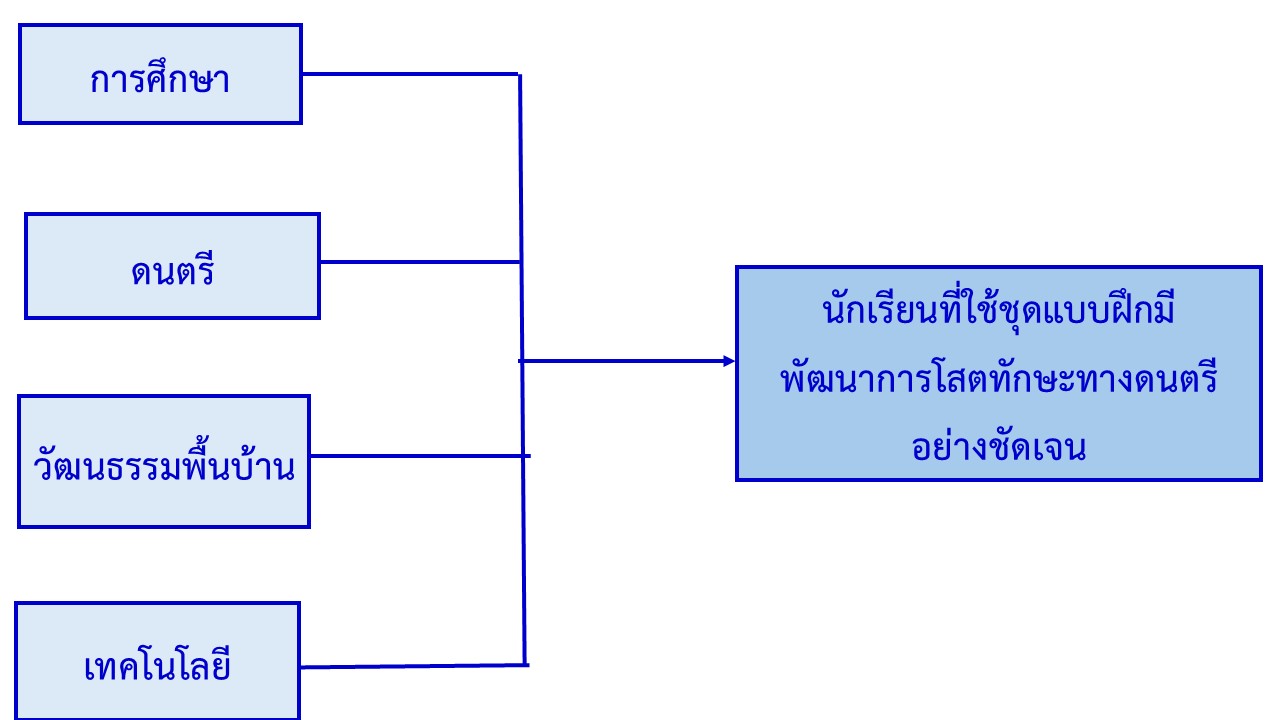
การวิจัยครั้งนี้ มีวัตถุประสงค์เพื่อ 1) สร้างแบบฝึกในการพัฒนาโสตทักษะทางดนตรีของนักเรียน 2) ศึกษาประสิทธิภาพของแบบฝึกในการพัฒนาโสตทักษะทางดนตรีขั้นพื้นฐานจากบทเพลงรองเง็ง ตามเกณฑ์มาตรฐาน 80/80 3) เปรียบเทียบผลสัมฤทธิ์ของนักเรียนก่อนและหลังเรียนด้วยแบบฝึกการพัฒนาโสตทักษะที่สร้างขึ้น กลุ่มตัวอย่างเป็นนักเรียนที่เลือกเรียนวิชาเปียโนที่เดอะเปียโนมิวสิคสตูดิโอ อำเภอเกาะสมุย จังหวัดสุราษฎร์ธานี จำนวน 20 คน ผู้เข้าร่วมทั้งหมดในโครงการวิจัยนี้ใช้ระยะเวลา 6 สัปดาห์ สัปดาห์ละ 1 ครั้ง ครั้งละ 1 ชั่วโมง เครื่องมือที่ใช้ในงานวิจัย 1) แบบฝึกการพัฒนาโสตทักษะทางดนตรีจากบทเพลงรองเง็ง 2) แผนจัดการเรียนรู้ 3) แบบทดสอบก่อนเรียน 4) แบบทดสอบระหว่างเรียน และ 5) แบบทดสอบหลังเรียน การเก็บรวบรวมข้อมูลจากแบบทดสอบภาคทฤษฎีและภาคปฏิบัติ การวิเคราะห์ข้อมูลโดยการเปรียบเทียบคะแนนระหว่างแบบทดสอบระหว่างเรียนกับคะแนนแบบทดสอบหลังเรียน (E1,E2) และคะแนนแบบทดสอบก่อนเรียนกับคะแนนแบบทดสอบหลังเรียน เพื่อทำการหาประสิทธิภาพของแบบฝึกและเปรียบเทียบผลสัมฤทธิ์ทางการเรียนของนักเรียน ผลการวิจัยพบว่าจากแบบฝึกที่ถูกสร้างขึ้นมีประสิทธิภาพ เท่ากับ 95.2/96.8 โดยสูงกว่าเกณฑ์มาตรฐานที่กำหนด 80/80 ผลเฉลี่ยค่าคะแนนหลังเรียนในการพัฒนาโสตทักษะจากบทเพลงรองเง็งในทุกเนื้อหาของนักเรียนมีความก้าวหน้าดีขึ้นจากคะแนนก่อนเรียนอย่างมีนัยสำคัญทางสถิติที่ .05 แสดงให้เห็นว่าแบบฝึกที่สร้างขึ้นอย่างเป็นระบบบนพื้นฐานจากเพลงพื้นบ้าน มีประสิทธิภาพช่วยในการเพิ่มทักษะในการเรียนดนตรีขั้นพื้นฐานได้เป็นอย่างดีและเห็นผลพัฒนาการของนักเรียนที่ชัดเจนตามวัตถุประสงค์ที่ตั้งไว้
Article Details

อนุญาตภายใต้เงื่อนไข Creative Commons Attribution-NonCommercial-NoDerivatives 4.0 International License.
เอกสารอ้างอิง
ครรชิต แสนอุบล. (2564). เอกสารประกอบการสอนวิชา จิตวิทยาสำหรับครู (ศษ 141). https://ir.swu.ac.th/jspui/bitstream/123456789/16616/1/Edu-Book-ED141-Gui-Psy.pdf
จิระนันท์ โตสิน. (2565). การใช้กิจกรรมการเรียนรู้ตามแนวคิดดาลโครซร่วมกับเทคนิค STAD เพื่อพัฒนาทักษะการฟังและการร้องโน้ตดนตรีสากลของนักเรียนชั้นมัธยมศึกษาปีที่ 2. วิทยานิพนธ์ศึกษาศาสตรมหาบัณฑิต สาขาวิชาหลักสูตรและการสอน วิทยาลัยครูสุริยเทพ บัณฑิตวิทยาลัย มหาวิทยาลัยรังสิต.
จุฑารัตน์ มณีวัลย์. (2551). การสอนโสตทักษะด้านทำนองในหลักสูตรเปียโน ระดับชั้นต้นของสำนักพิมพ์อัลเฟรด กรณีศึกษา โรงเรียนดนตรีปิ่นนคร. วิทยานิพนธ์ปริญญาศิลปศาตร์บัณฑิต มหาบัณฑิต(ดนตรี) บัณฑิตวิทยาลัย มหาวิทยาลัยมหิดล.
ณรุทธ์ สุทธจิตต์. (2560). วิธีวิทยาการสอนดนตรี. พิมพ์ครั้งที่ 2. กรุงเทพมหานคร: คณะครุศาสตร์ จุฬาลงกรณ์มหาวิทยาลัย.
_______. (2566). ดนตรีศึกษาหลักการและสาระสำคัญ. พิมพ์ครั้งที่ 11. กรุงเทพมหานคร: สำนักพิมพ์จุฬาลงกรณ์มหาวิทยาลัย.
ตรีวนันท์ เนื่องอุทัย และนฤมล รัตนไพจิตร. (2564). ปัจจัยที่มีผลต่อผลสัมฤทธิ์ทางการเรียนในวิชาจิตวิทยาทั่วไปกรณีศึกษามหาวิทยาลัยเทคโนโลยีราชมงคลศรีวิชัย วิทยาเขตนครศรีธรรมราช ไสใหญ่. วารสารสังคมศาสตร์และมานุษยวิทยาเชิงพุทธ. 6. (พฤศจิกายน), 51. https://www.repository.rmutsv.ac.th/handle/123456789/2433
น้อยทิพย์ เฉลิมแสนยากร. (2561). การศึกษาการสอนโสตทักษะด้านทำนองในชั้นเรียนเปียโนขั้นต้นสำหรับผู้ใหญ่. วารสารสหศาสตร์, 18(1), 110-127.
นิอร เตรัตนชัย. (2565). การศึกษาเนื้อหาการสอนเปียโนระดับชั้นกลาง ช่วงอายุ 8 – 12 ปี. มนุษยศาสตร์วิชาการ, 29(1), 256-273.
วิชัย มีศรี. (2557). บทเพลงรองเง็ง : กรณีศึกษา นายเซ็ง อาบู. รายงานการวิจัยได้รับเงินอุดหนุนการวิจัยจากงบประมาณกองทุนวิจัย มหาวิทยาลัยราชภัฏสงขลา.
วีระภัทร์ ชาตินุช. (2560). การพัฒนาโสตทักษะวิชาดนตรีสากลโดยใช้ชุดกิจกรรมตามแนวคิดของธอร์นไดค์สำหรับนักเรียนชั้นประถมศึกษาปีที่ 5. (วิทยานิพนธ์ปริญญามหาบัณฑิต). กรุงเทพมหานคร: มหาวิทยาลัยธุรกิจบัณฑิตย์.
วีระศักดิ์ อักษรถึง. (2556). การศึกษาประสิทธิภาพบทเรียนคอมพิวเตอร์ช่วยสอน เรื่อง การฝึกโสตและการอ่านโน้ต. วารสารวิทยบริการ, 24(4), 170-179.
ศักดิ์ชัย หิรัญรักษ์. (2550). วิกฤตการฟังเสียงสะท้อนจากการวิจัยการสอนทักษะการฟังดนตรีในโรงเรียน. เพลงดนตรี. Music Journal, 13 (ตุลาคม), 42.
สมจิต จันทร์ฉาย. (2557). การออกแบบและการพัฒนาการเรียนการสอน. พิมพ์ครั้งที่ 1. นครปฐม: เพชรเกษมพริ้นติ้ง กรุ๊ป.
Gordon, E. E. (1989). Learning Sequences in Music. Chicago: GIA Publications.
Kraus, J. (2021). Perceptions of theory and aural skills instructions: Music educators’ perceptions of the importance, implementation, and barriers of music theory and aural skills instruction in public middle and high school music programs. (A Capstone Project Presented to the College of the Arts of the University of Florida in Partial Fulfillment of the Requirements for the Degree of Master of Music in Music Education). Florida: University of Florida.
