
Program to Enhance Transformational Leadership of Educational Administrators in Small Schools Under Khon Kaen Primary Educational Service Area Office 2
Article Sidebar
Main Article Content
Abstract
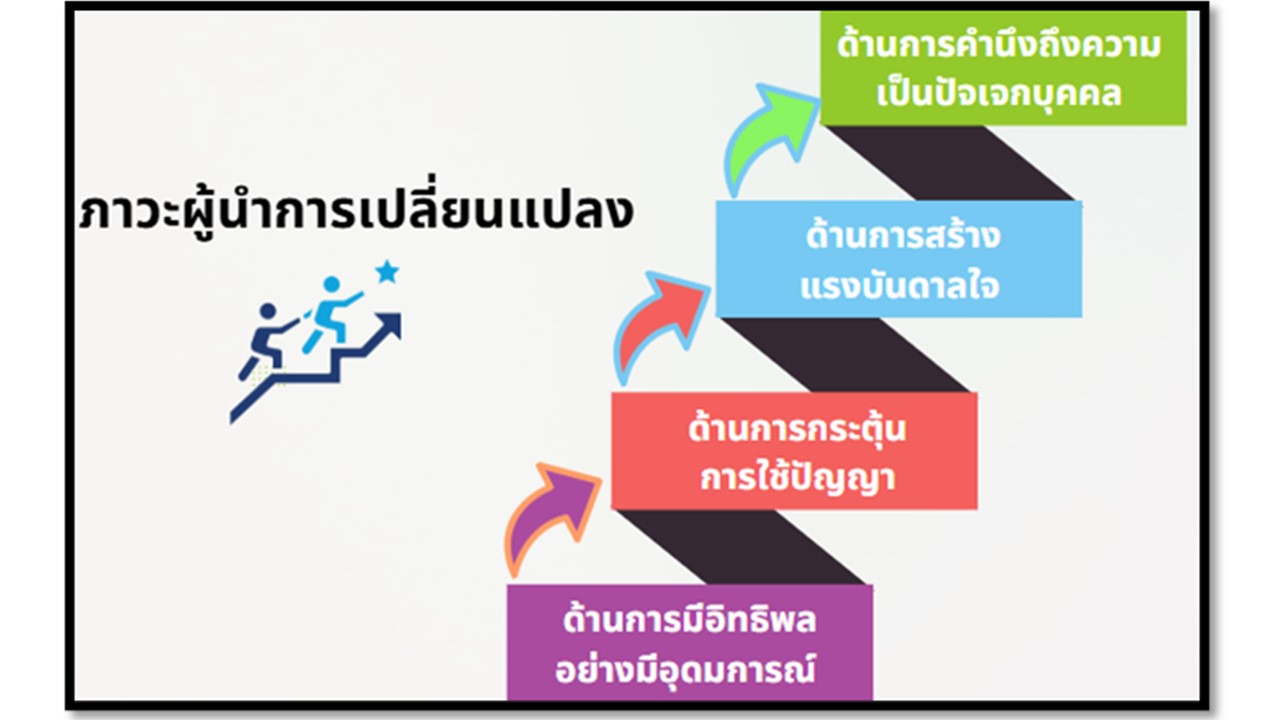
The purposes of this research consisted of two main objectives: 1. to study the current conditions, desired conditions, and needs for transformational leadership of educational administrators in small schools under Khon Kaen Primary Educational Service Area Office 2; and 2. to develop a program to enhance the transformational leadership of educational administrators in small schools. This research employs a mixed-methods approach. The research instrument was a questionnaire, an interview form, and an evaluation form of the program. The sample consisted of 112 small school administrators, determined using the table by Krejcie and Morgan, selected through stratified random sampling. Additionally, five educational experts were selected using purposive sampling. Data collected were analyzed using descriptive. Statistics, including percentage, mean, and standard deviation. The research results revealed that 1) The current state of transformational leadership of educational administrators in small schools was found to be at a high level overall. The desired state of transformational leadership of educational administrators in small schools was at the highest level overall. And the ranking of the priority of needs for enhancing transformational leadership of educational administrators in small schools, from highest to lowest, was as follows: Idealized Influence (PNImodified = 0.343), Intellectual Stimulation (PNImodified = 0.338), Inspiration Motivation (PNImodified = 0.319), and Individualized Consideration(PNImodified = 0.305) and 2) The developed program to enhance transformational leadership of educational administrators in small schools comprised five key components: (1) principles, (2) objectives, (3) content, (4) development methods, and (5) assessment and evaluation. The program was structured into four modules: Module 1: Intellectual Stimulation, Module 2: Individualized Consideration, Module 3: Understanding Idealized Influence, and Module 4: Inspirational Motivation. The overall assessment results of the program were at a high suitability level and the highest feasibility level.
Article Details

This work is licensed under a Creative Commons Attribution-NonCommercial-NoDerivatives 4.0 International License.
References
กาญจน์ เรืองมนตรี และธรินธร นามวรรณ. (2549). ทฤษฎีผู้นำ. มหาสารคาม : มหาวิทยาลัยมหาสารคาม.
กุลชลี จงเจริญ. (2561). นวัตกรรมการบริหารการศึกษาและภาวะผู้นำในภาวะผู้นำ
การเปลี่ยนแปลง หน่วยที่ 12. นนทบุรี: มหาวิทยาลัยสุโขทัยธรรมาธิราช.
ไชยพร สำราญสุข. (2566). การพัฒนาโปรแกรมเสริมสร้างภาวะผู้นำการเปลี่ยนแปลงของผู้บริหารสถานศึกษา สังกัดสำนักงาน
เขตพื้นที่การศึกษามัธยมศึกษาสุรินทร์. (วิทยานิพนธ์). สาขาการบริหารและพัฒนาการศึกษา. มหาวิทยาลัย
มหาสารคาม: มหาสารคาม.
นุสรา สารกรณ์. (2566). โปรแกรมเสริมสร้างภาวะผู้นำการเปลี่ยนแปลงของผู้บริหารสถานศึกษาแบบปกติใหม่ สังกัด
สำนักงานเขตพื้นที่การศึกษาประถมศึกษา กาฬสินธุ์ เขต 1. (วิทยานิพนธ์). สาขาการบริหารและพัฒนาการศึกษา.
มหาวิทยาลัยมหาสารคาม: มหาสารคาม.
ปิยนันท์ สวัสดิ์ศฤงฆาร. (2561). 70-20-10 Rule. สืบค้นเมื่อ 2 มิถุนายน 2566, จาก
https://drpiyanan.com/2018/11/19/702010/
ผุสรัตน์ ดอนสถิตย์. (2561). การพัฒนาโปรแกรมเสริมสร้างภาวะผู้นำการเปลี่ยนแปลงของผู้บริหารสถานศึกษาโรงเรียนขยาย
โอกาสทางการศึกษา สังกัดสำนักงานเขตพื้นที่การศึกษาประถมศึกษาอุดรธานี เขต 1. (วิทยานิพนธ์). สาขาการ
บริหารและพัฒนาการศึกษา. มหาวิทยาลัยมหาสารคาม: มหาสารคาม.
พัชรินทร์ สงครามศรี. (2561). การพัฒนาโปรแกรมเสริมสร้างภาวะผู้นำการเปลี่ยนแปลงของผู้บริหารสถานศึกษาโรงเรียน
มัธยมศึกษา สังกัดสำนักงานเขตพื้นที่การศึกษามัธยมศึกษา เขต 20. (วิทยานิพนธ์). สาขาการบริหารและพัฒนา
การศึกษา. มหาวิทยาลัยมหาสารคาม: มหาสารคาม.
พรชัย เจดามาน. (2567). ภาวะผู้นำการเปลี่ยนแปลง ศตวรรษที่ 21 : ไทยแลนด์ 4.0. สืบค้นเมื่อ 15 กุมภาพันธ์ 2567, จา
https://www.kroobannok.com/83312
รัตติกรณ์ จงวิศาล. (2550). ภาวะผู้นำการเปลี่ยนแปลง (Transformation Leadership) ในยุคแห่งการเปลี่ยนแปลง.
กรุงเทพฯ: อักษรเจริญทัศน์.
วรวุฒิ อันปัญญา. (2563). การพัฒนาโปรแกรมเสริมสร้างภาวะผู้นำการเปลี่ยนแปลงเชิงสร้างสรรค์ของผู้บริหารสถานศึกษา
สังกัดองค์การปกครองส่วนท้องถิ่น. (วิทยานิพนธ์). สาขาการบริหารและพัฒนาการศึกษา. มหาวิทยาลัยมหาสารคาม:
มหาสารคาม.
วิทยา วิจิตร. (2557). 70 : 20 : 10 Framework. สืบค้นเมื่อ 2 มิถุนายน 2566, จาก
http://indochinahub.blogspot.com/2011/08/702010-framework.html
สมุทร ชำนาญ. (2556). ภาวะผู้นำทางการศึกษา ทฤษฎี และปฏิบัติ. พิมพ์ครั้งที่ 2. ระยอง: พี เอส การพิมพ์.
สุวัฒน์ จุลสุวรรณ์. (2559). การบริหารการเปลี่ยนแปลงในสถานศึกษา. มหาสารคาม : อภิชาติการพิมพ์.
สำนักงานเขตพื้นที่การศึกษาประถมศึกษาขอนแก่น เขต 2. (2567). แผนปฏิบัติการประจำปีงบประมาณ พ.ศ. 2567. สืบค้น
เมื่อ 20 ตุลาคม 2566, จาก https://www. https://kkn2.go.th/
Bass, B.M. and R.E. Riggio. (2006). Transformational Leadership. 2nd ed. Mahwah, New Jersey : Erlbaum
Associates.
Fullan. M. (2006). Turnaround Leadership. San Francisco : Jossey-Bass.
Jennings, C. (2013). Framework for High Performance. [online]. Available from :
http://charlesjennings.blogspot.com/2013/06/702010framework-for-
highperformance.html. [accessed 14 june 2024].
Krejcie, R. V. and Morgan, D. W. (1970). Determining Sample Size for Research Activities. Educational and
Psychological Measurement, 30(3), 607-610.
McCauley, C.D. (1986). Developmental Experiences in Managerial Work : A Literature Review. North Carolina :
Center for Creative Leadership.
Rogers, E.M. (2000). Diffusion of Innovations. New York : Glencoe.
