
A Narrative and Emotion Appeal Study of Social Care PSAs in China
Article Sidebar
Main Article Content
Abstract
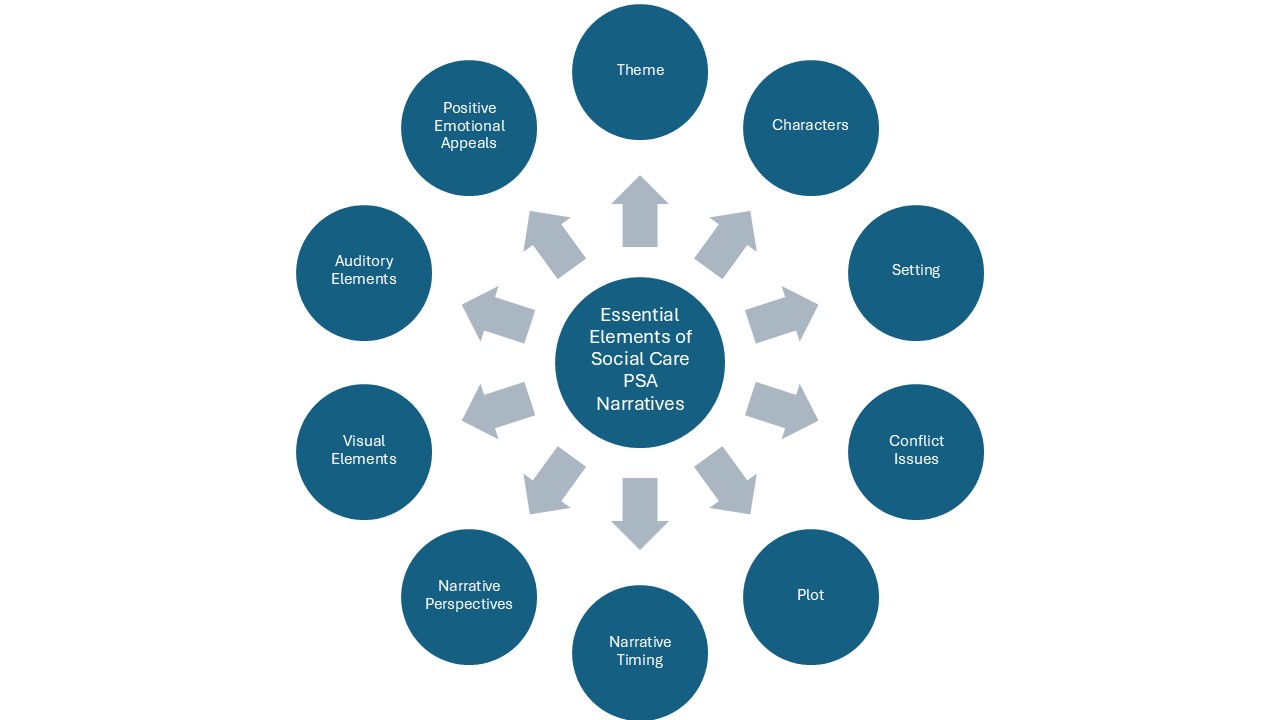
In the context of the digital age, special groups are increasingly appearing in the public's view, and the cause of caring for special groups is also getting more and more attention. For social care-themed PSAs to effectively convey advertising messages and guide viewers' consciousness and behavior, enhancing advertising content and emotional appeal is crucial. Based on narrative theory and the research of many scholars on storytelling and emotional appeal, this study analyzes five social care-themed public service advertisements that have won awards in the past years between 2018 and 2022 using case analysis. It analyzes the narrative elements of these excellent public service advertisements, including nine aspects: theme, characters, environment, conflict, plot, narrative time, narrative perspective, visual elements, auditory elements, and the emotional appeal of these excellent public service advertisements. In addition to the emotional appeal of these excellent PSAs, the study conducted an in-depth analysis and research. The study found that social care PSAs use true stories to highlight social issues, featuring helpers or those in need of help and reflecting their status. These ads symbolically portrayed the environment, used different conflicts, and employed linear or fragmented storylines. They strategically condense and repeat the narrative to reinforce the main points. Perspectives vary to convey emotions and events realistically. Visuals and sounds strive for realism to emphasize themes and emotions. PSAs use positive and negative emotional appeals to resonate and influence behavior.
Article Details
References
Aristotle. (2006). Rhetoric. Shanghai People’s Publishing House.
Bal, M. (2003). Narratology: Introduction to the Theory of Narrative. China Social Sciences Press.
Chen, L. (2017). A Study of Narrative in Thai Film and Television Commercials. [Doctoral dissertation, Graduate Council of Heilongjiang University]. M.A.
Genette, G. (1990). Narrative Discourse-New Narrative Discourse. Cornell University Press, Ithaca and New York.
Guo, Y. & Wang, J. (2011). What classroom teaching can do to cultivate students' social emotions. Journal of Huazhong Normal University (Humanities and Social Sciences Edition) (05), 159-166. https://doi:10.19992/j.cnki.1000-2456.2022.05.015.
Hart, J. (2012). Story craft: The Complete Guide to Writing Narrative Nonfiction. China Renmin University Press.
Hu, Y. (2004). Narratology. Huazhong Normal University Press.
Lee, I. J. (1939). Some conceptions of emotional appeal in rhetorical theory. Communications Monographs, 6(1), 66-86.
Liu, L., & He, Q. (2001). Introduction to Public Service Advertising. Communication University of China Press.
McKee, R. (2014). Story: Substance, Structure, Style and the Principles of Screenwriting. Tianjin People’s Publishing House.
Richardson, B. (2000). Recent concepts of narrative and the narratives of narrative theory. Style, 34(2), 168-175.
Yang, L., & Li, Y. (2019). Introduction to Public Service Advertising. Xi’an Jiaotong University Press.
Yayun, Z. (2022). Forty Years of Public Service Advertising in China. Youth.
http://gy.youth.cn/gywz/202208/t20220812_13916814.html
Yin, C. C., Chiu, H. C., & Hsieh, Y. C. (2020). Aligning conflict brand stories with product types. Journal of Consumer Marketing, 37(7), 909-919.
Zhang, F.L. (2002). A new approach to building social care for the disadvantaged. Seeking the truth (10), 52-54.
Zhang, M. (2004). The Mystery of Public Service Advertising. Guangdong Economy Publishing House.
