
The Development of a Learning Management Model Based on The Active Learning Approach in Buddhist Studies by Monks Teaching Morality in Schools, Uthai Thani Province
Article Sidebar
Main Article Content
Abstract
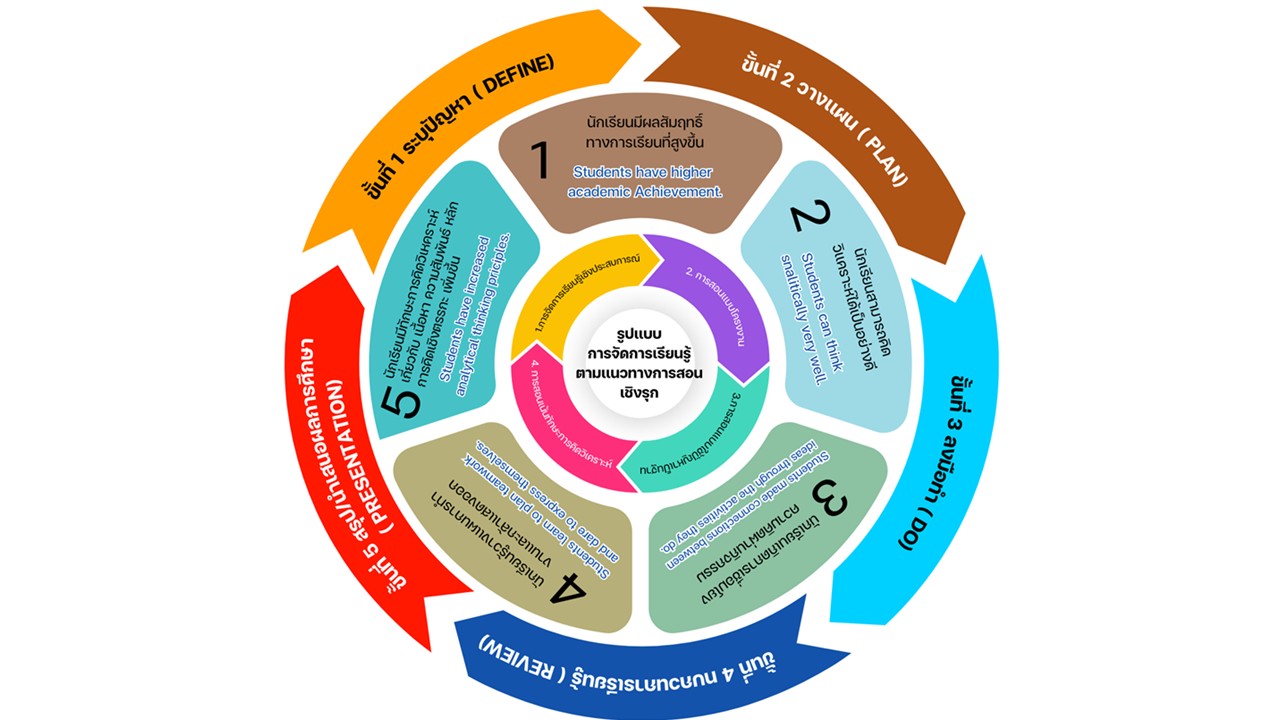
The objective of this research was to: 1) study the problems and the necessary needs in the teaching and learning of Buddhism, 2) develop a learning management model for Buddhism education based on an active teaching approach and to promote students' analytical thinking skills, 3) experiment with the use of the learning management model according to the active teaching approach, and 4) evaluate the effectiveness of the learning management model based on the active teaching approach in the subject of Buddhist ethics to enhance analytical thinking skills in primary schools under the Uthai Thani education district office. This is a research and development (R&D) study involving a group of 40 students. The research tools include interviews, lesson plans, assessments, and evaluation forms. The statistical methods used for data analysis include percentages, means, standard deviation, dependent t-test, and inductive analysis methods. The findings reveal that: 1. There are problems in teaching that focuses on the teacher as the center, resulting in a lack of analytical thinking skills among students, which indicates a need to develop a learning management model based on the active teaching approach to promote students' analytical thinking skills. 2. The learning management model for Buddhism education based on the active teaching approach and promoting students' analytical thinking skills includes: 1) experiential learning, 2) project-based teaching, 3) problem-based learning, and 4) teaching that emphasizes thinking process skills. 3. The results of the experiment with the learning activity sets showed an efficiency level of 80.34/81.07. The average post-learning achievement score was higher than the average pre-learning score, and the students had a high level of satisfaction with the active teaching approach to Buddhist ethics. 4. The evaluation of the effectiveness of the learning management model for Buddhism education based on the active teaching approach allowed students to enjoy learning, have the freedom to explore various factors of the problems, engage in group learning exchanges, show interest in the situations under study, and actively seek out the arising problems. The activities helped students understand the content related to the Threefold Training and Buddhist proverbs much better.
Keywords: Model Development, Learning Management, Active Learning
Article Details

This work is licensed under a Creative Commons Attribution-NonCommercial-NoDerivatives 4.0 International License.
References
พรทิพย์ นวลแก้ว. (2560). รายงานการจัดการเรียนรู้เชิงรุก (Active Learning) เพื่อพัฒนา ผลสัมฤทธิ์ทางการเรียน เรื่อง ระบบนิเวศและสิ่งแวดล้อมในท้องถิ่น รายวิชาวิทยาศาสตร์ ว 23101 ชั้นมัธยมศึกษาปีที่ 3. สงขลา: โรงเรียนเทศบาล 5(วัดหัวป้อมยนอก).
พระครูปลัดสุวัฒนบัณฑิตคุณ และคณะ. (2558). การติดตามประเมินผลพระสอนศีลธรรมในโรงเรียน. พระนครศรีอยุทธยา: มหาวิทยาลัยมหาจุฬาลงกรณราชวิทยาลัยประจำปีงบประมาณ.
พระปลัดปรีชา นนฺทโก (จุลเจือ). (2560). การศึกษาแนวทางการพัฒนาศักยภาพพระสอนศีลธรรมโรงเรียนมัธยมศึกษาสังกัดสำนักงานคณะกรรมการการศึกษาขั้นพื้นฐาน ในจังหวัดระยอง. วิทยานิพนธ์พุทธศาสตรดุษฎีบัณฑิต สาขาวิชาพระพุทธศาสนา:มหาวิทยาลัยมหาจุฬาลงกรณราชวิทยาลัย.
พระมหาอภินันท์ นนฺทภาณี (คำหารพล), พระธีรวัฒน์ อนาวิโล (ทองบุญชู), พระมหาศักดิ์ดา สิริเมธี (หารเทศ)นิเวศน์ วงศ์สุวรรณ, สมชัย ศรีนอก. (2562). การพัฒนา ผลสัมฤทธิ์ทางการเรียนโดยใช้การเรียนรู้เชิงรุก สาระหน้าที่พลเมือง ของนักเรียนชั้นประถมศึกษาปีที่ 2 โรงเรียนเทศบาลวัดศาลามีชัย อำเภอเมือง จังหวัดนครศรีธรรมราช. วารสารมหาจุฬานาครทรรศน์, 6(3), 1148-1160.
รสิตา รักสกุล. (2557). สัมฤทธิ์ผลของการจัดการเรียนการสอนแบบบูรณาการโดยใช้ Active Learning. กรุงเทพฯ: มหาวิทยาลัยเทคโนโลยีพระจอมเกล้าธนบุรี.
วีระพันธ์ พานิชย์. (2556). เทคนิคการจัดการเรียนการสอน Active Learning. ชลบุรี; ภาควิชานวัตกรรมและเทคโนโลยีทางการศึกษา คณะศึกษาศาสตร์ มหาวิทยาลัยบูรพา.
วุทธิศักดิ์ โภชนุกูล. (2552). Active Learning สู่: Action Research. กรุงเทพฯ: ภาควิชาเทคโนโลยีการศึกษา คณะศึกษาศาสตร์ มหาวิทยาลัยสงขลานครินทร์.
สถาพร พฤฑฒิกุล. (2558). เอกสารประกอบการฝึกอบรม “คุณภาพผู้เรียนเกิดจากกระบวนการเรียนรู้” สระแก้ว: คณะเทคโนโลยีการเกษตร มหาวิทยาลัยบูรพา วิทยาเขตสระแก้ว.
สำนักงานคณะกรรมการการศึกษาขั้นพื้นฐานกระทรวงศึกษาธิการ. (2562). แนวทางการนิเทศเพื่อพัฒนาและส่งเสริมการจัดการเรียนรู้เชิงรุก (Active Learning) ตามนโยบายลดเวลาเรียนเพิ่มเวลารู้. https://academic.obec.go.th/web/document/view/143
สำนักงานคณะกรรมการการศึกษาแห่งชาติ. (2545). พระราชบัญญัติการศึกษาแห่งชาติ พ.ศ. 2542 และที่แก้ไขเพิ่มเติม (ฉบับที่ 2) พ.ศ. 2545. กรุงเทพฯ: สำนักงานคณะกรรมการการศึกษาแห่งชาติ.
สำนักงานปลัดกระทรวงศึกษาธิการ. (2563). แผนยุทธศาสตร์กระทรวงศึกษาธิการ (พ.ศ. 2563 – 2565). กรุงเทพฯ: สำนักนโยบายและยุทธศาสตร์.
สิทธิพงษ์ สุพรม. (2561). การพัฒนาความสามารถในการเรียนรู้เชิงรุกในศตวรรษที่ 21 สำหรับนักเรียนชั้นมัธยมศึกษาตอนต้น. วารสารวิจัยและประเมินผลอุบลราชธานี, 7(2), 49-58.
อารีตา ฮูลูเจ๊ะหะ, สารีปะห์ แมเราะดำ และลิลลา อดุลยศาสน์ (2560). การพัฒนาแผนการจัดการเรียนรู้ เรื่อง การบวกและการลบพหุนามโดยใช้วิธีสอนแบบแอคทีฟเลิร์นนิ่ง (Active learning) ตามแนวคอนสตรัคติ วิสต์สำหรับนักเรียนชั้นมัธยมศึกษาปีที่ 1 อำเภอเมือง จังหวัดยะลา. http://wb.yru.ac.th/xmlui/handle/yru/3699
