
Body composition and Prevalence of Obesity in Grade 6 Demonstration School Students Khon Kaen University
Article Sidebar
Main Article Content
Abstract
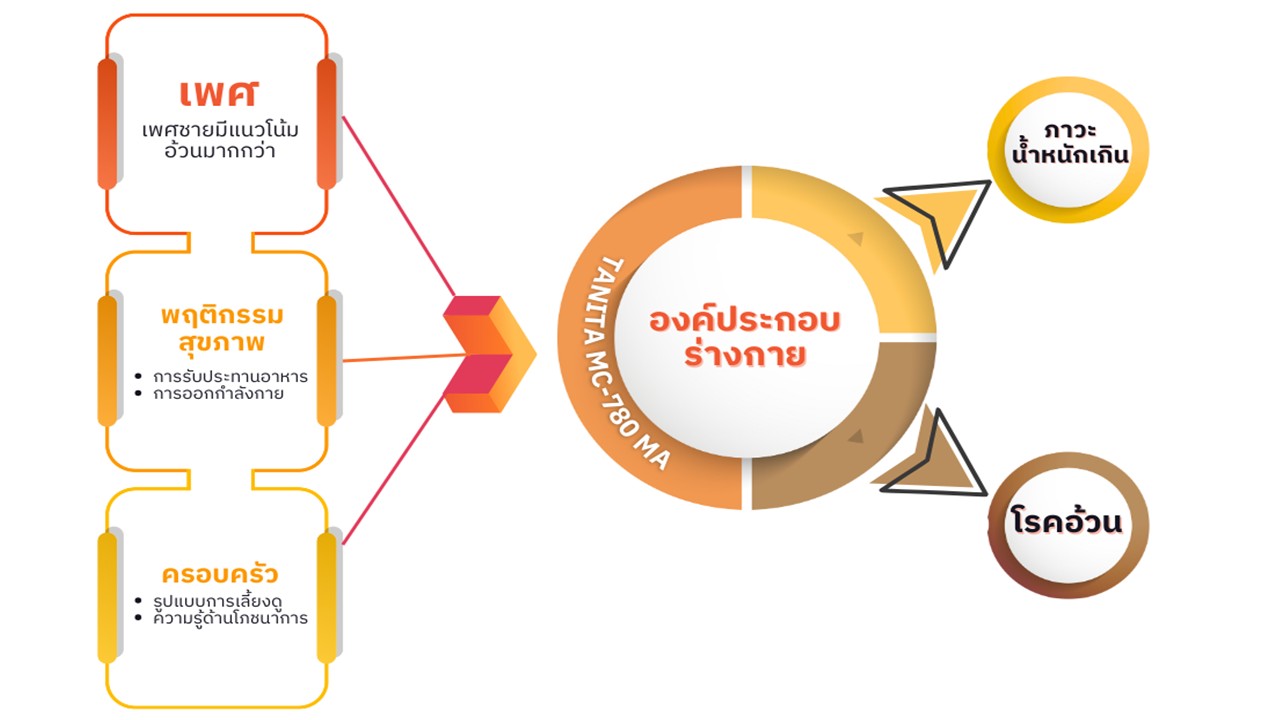
The objectives of this research were 1) to study body composition, 2) to investigate the prevalence of overweight and obesity, and 3) to evaluate the reliability of the body composition analyzer TANITA model MC-780 MA. The target group consisted of 123 Grade 6 students from the Demonstration School of Khon Kaen University, Primary Section (Faculty of Education), in the academic year 2024. The research design was a cross-sectional study. The research instruments included 1) the Body Composition Analyzer TANITA model MC-780 MA, and 2) a body composition recording form. Quantitative data were analyzed using mean and standard deviation for body composition variables, and the Intraclass Correlation Coefficient (ICC) was used to evaluate the reliability of the testing device. The results showed that 1) male students had higher levels of body fat and muscle mass than female students in both percentage and absolute weight; 2) the average Body Mass Index (BMI) of male students was 20.92 kg/m2, indicating a status of being overweight, while the average BMI of female students was 18.08 kg/m2, which was within the normal range; and 3) the TANITA MC-780 MA body composition analyzer demonstrated excellent test-retest reliability in measuring weight, fat mass, muscle mass, and BMI, with ICC values ranging from .998 to .999 across all variables. In conclusion, male students were at risk of being overweight compared to female students. It is recommended that schools implement nutritional surveillance, organize physical activity promotion programs, and provide appropriate nutrition education. In addition, the TANITA MC-780 MA analyzer demonstrated excellent precision. It can be applied as a reliable tool for health screening and continuous monitoring among students, supporting school-level health planning and related research in health sciences.
Keywords: Body Composition, Overweight and Obesity, Body Composition Analyzer
Article Details

This work is licensed under a Creative Commons Attribution-NonCommercial-NoDerivatives 4.0 International License.
References
กรมพลศึกษา. (2559). คู่มือแบบทดสอบและเกณฑ์มาตรฐาน สมรรถภาพทางกายของเด็ก เยาวชนและ
ประชาชนไทย. กรุงเทพฯ: สำนักวิทยาศาสตร์การกีฬา กรมพลศึกษา.
กองกีฬา สำนักสวัสดิการทหารไทย กองบัญชาการกองทัพไทย. (2564). เครื่องตรวจวัดองค์ประกอบ ภายในร่างกาย. ค้นเมื่อ 5 ธันวาคม 2566, จาก https://oowf.rtarf.mi.th/6.2.pdf
ทีมแพทย์มีดีคลินิก. (2566). การวิเคราะห์องค์ประกอบของร่างกาย. ค้นเมื่อ 5 ธันวาคม 2566, จาก https://midiclinic.com/
ปิยะวรรณ ยั่งยืน. (2561). ค่าดัชนีมวลกายและองค์ประกอบร่างกายของนักเรียนระดับประถมศึกษาในเขต กรุงเทพมหานคร. วิทยานิพนธ์ปริญญามหาบัณฑิต. มหาวิทยาลัยเกษตรศาสตร์.
เมธชนัน เลิศชุณหะเกียรติ. (2563). วิเคราะห์ไขมันของร่างกายอย่างแม่นยำด้วย BIA. ค้นเมื่อ
ธันวาคม 2566. จาก https://www.phyathai.com/th/
ศุภวรรณ วงศ์สร้างทรัพย์, มยุรี ถนอมสุข, และสมบุญ ศิลป์รุ่งธรรม. (2555). เกณฑ์สมรรถภาพทางกายที่
เกี่ยวข้องกับสุขภาพของนักเรียนโรงเรียนสาธิตแห่งมหาวิทยาลัยเกษตรศาสตร์ วิทยาเขตกำแพงแสน (รายงานผลการวิจัย). มหาวิทยาลัยเกษตรศาสตร์ วิทยาเขตกำแพงแสน. คณะศึกษาศาสตร์และพัฒนศาสตร์ ครั้งที่ 9.
สุภาณี รอดเจริญ. (2562). ภาวะโภชนาการในเด็กวัยเรียน. วารสารสุขภาพเด็กและเยาวชน, 14(3), 45-52.
สำนักงานกองทุนสนับสนุนการสร้างเสริมสุขภาพ. (2556). สถิติ 10 ปีที่ผ่านมา เด็กไทยอ้วนพุ่งอันดับหนึ่ง ของ โลก. ค้นเมื่อ 5 ธันวาคม 2566. จาก https://accuniqthailand.com
สำนักวิทยาศาสตร์การกีฬา กรมพลศึกษา กระทรวงการท่องเที่ยวและกีฬา. (2555). การศึกษาสมรรถภาพ ทางกายนักกีฬาแบดมินตันเยาวชนด้วยแบบทดสอบเฉพาะ. กรุงเทพฯ: กรมพลศึกษา กระทรวงการ ท่องเที่ยวและกีฬา.
Koo and Li. (2016). A Guideline of Selecting and Reporting Intraclass Correlation
Coefficients for Reliability Research. Journal of Chiropractic Medicine, 15(2), 155-163.
Lu et al. (2023). Body water percentage from childhood to old age. Kidney research and clinical practice, 42(3), 340–348. Retrieved from https://doi.org/10.23876/j.krcp.22.062
Puwanant et al. (2023). Body-Fat-Percentile Curves for Thai Children and Adolescents. Nutrients, 15(2), 448. Retrieved from https://doi.org/10.3390/nu15020448
Rusek, W., Baran, J., Leszczak, J., Adamczyk, M., Baran, R., Weres, A., Inglot, G., Czenczek-Lewandowska, E., & Pop, T. (2021). Changes in Children's Body Composition and Posture during Puberty Growth. Children (Basel, Switzerland), 8(4), 288.
Retrieved from https://doi.org/10.3390/children8040288
Shah et al. (2020). Sex and gender differences in childhood obesity: contributing to the research agenda. BMJ nutrition, prevention & health, 3(2), 387–390. Retrieved from
https://doi.org/10.1136/bmjnph-2020-000074
Talma et al. (2013). Bioelectrical impedance analysis to estimate body composition in children and adolescents: a systematic review and evidence appraisal of validity, responsiveness, reliability and measurement error. Obesity reviews: an official journal of the International Association for the Study of Obesity, 14(11), 895–905. Retrieved from https://doi.org/10.1111/obr.12061
Thajer et al. (2021). Comparison of Bioelectrical Impedance-Based Methods on Body Composition in Young Patients with Obesity. Children (Basel, Switzerland), 8(4), 295. Retrieved from https://doi.org/10.3390/children8040295
Verhs et al. (2022). Trends in BMI Percentile and Body Fat Percentage in Children 12 to 17 Years of Age. Children (Basel, Switzerland), 9(5), 744. Retrieved from https://doi.org/10.3390/children9050744
Verney et al. (2016). Bioelectrical impedance is an accurate method to assess body composition in obese but not severely obese adolescents. Nutrition research (New York, N.Y.), 36(7), 663–670. Retrieved from https://doi.org/10.1016/j.nutres.2016.04.003
World Health Organization. (2007). Growth reference data for 5–19 years: BMI-for- age (boys). Retrieved May 15, 2025, from http://www.who.int/
_______. (2018). Social determinants of health. Retrieved March 15, 2024, from
