
A Model for Developing Teacher Leadership in the Digital Era in Secondary Schools under the Provincial Administrative Organization in the Northeastern Region
Article Sidebar
Main Article Content
Abstract
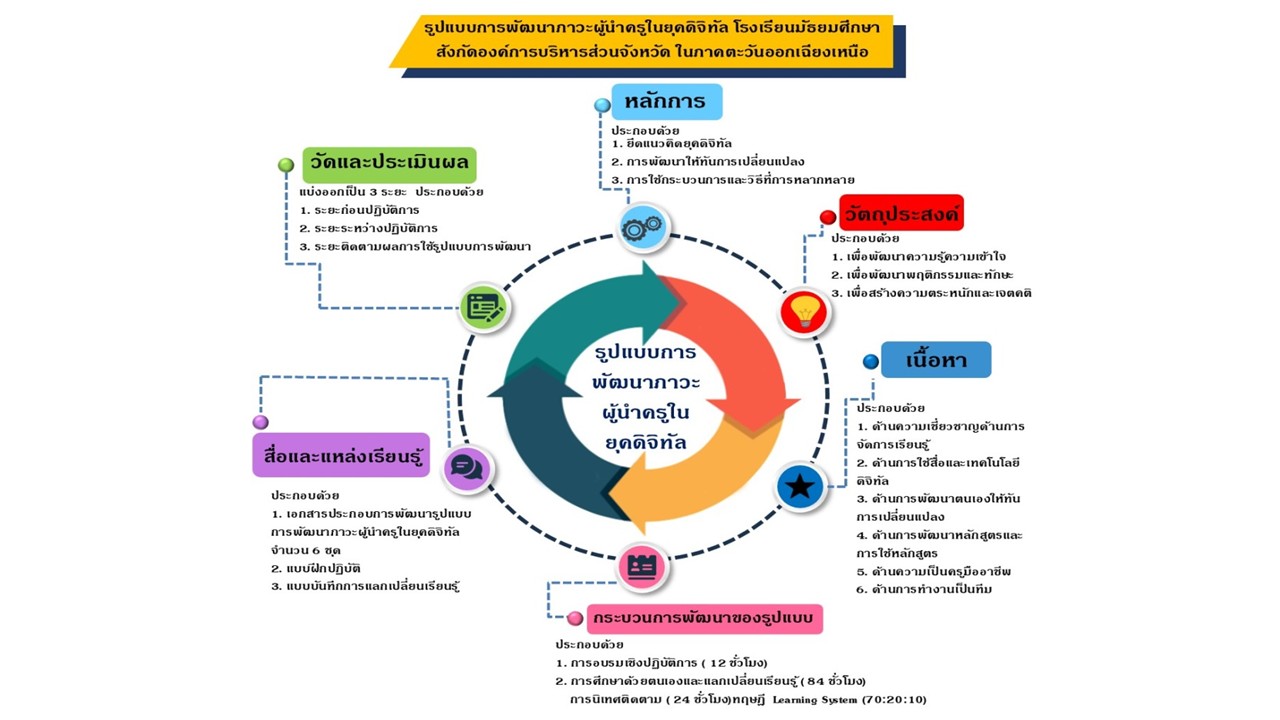
This research aimed to 1) study the components of teacher leadership in the digital era, 2) examine the current state, expected state, and essential needs for developing teacher leadership in the digital era, 3) create and develop a model for developing teacher leadership in the digital era, and 4) study the effectiveness of developing teacher leadership in the digital era. The research employs a research and development approach, divided into four phases with a total of nine steps. The sample group used in this survey research consists of teachers from secondary schools under the provincial administrative organization for the 2024 academic year, totaling 46 schools and 368 teachers. The research tools include a questionnaire with a 5-point Likert scale, which has a Cronbach's alpha coefficient of 0.908. The statistical methods used for data analysis include frequency, percentage, mean, standard deviation, and importance of needs. The target group for testing the model consists of teachers from Phu Dindaeng Wittaya School, under the Sakon Nakhon Provincial Administrative Organization, for the 2024 academic year, totaling 30 participants. The research findings indicate that the components of teacher leadership in the digital era include: 1) expertise in learning management, 2) the use of digital media and technology, 3) self-development to keep up with changes, 4) curriculum development and implementation, 5) professionalism as a teacher, and 6) teamwork. The essential needs for developing teacher leadership in the digital era are ranked in order of importance as follows: 1) self-development to keep up with changes, 2) the use of digital media and technology, 3) expertise in learning management, 4) curriculum development and implementation, 5) professionalism as a teacher, and 6) teamwork. The model for developing teacher leadership in the digital era encompasses principles, objectives, content, development processes, resources, learning media, and measurement and evaluation methods. The assessment results of the effectiveness of the developed model for teacher leadership in the digital era show that 1) the model's appropriateness is rated very high overall, 2) secondary school teachers showed increased knowledge and understanding after participating in the trial of the model, with an effectiveness index value of 0.9158 or 91.58%, and 3) the average evaluation score of teacher leadership in the digital era increased by 1.58, indicating a progress rate of 94.44%.
Keywords: Development Model, Teacher Leadership, Digital Era
Article Details

This work is licensed under a Creative Commons Attribution-NonCommercial-NoDerivatives 4.0 International License.
References
กรมส่งเสริมการปกครองท้องถิ่น. (2566). แผนการพัฒนาการศึกษาท้องถิ่น พ.ศ.2566 – 2570. กรุงเทพฯ:
กษมน มังคละคีรี. (2557). รูปแบบการพัฒนาภาวะผู้นำครูเพื่อการประกันคุณภาพภายในสถานศึกษา สำนักงานคณะกรรมการการศึกษาขั้นพื้นฐานในเขตตรวจราชการที่ 11. วิทยานิพนธ์. ค.ด. สกลนคร: มหาวิทยาลัยราชภัฏสกลนคร.
ขจีนุช ดาโอภา. (2558). รูปแบบการพัฒนาภาวะผู้นำเชิงดิจิทัลของครูโรงเรียนมัธยมศึกษา ในภาคตะวันออกเฉียงเหนือ. วิทยานิพนธ์. ค.ด. สกลนคร : มหาวิทยาลัยราชภัฏสกลนคร.
จิณณวัตร ปะโคทัง. (2561). ภาวะผู้นำดิจิทัล สำหรับผู้บริหารสถานศึกษามืออาชีพ. อุบลราชธานี:
ศริธรรมออฟเซ็ท.
ชลันดา ประยูรเสาวภาคย์. (2568). รูปแบบการพัฒนาภาวะผู้นำเชิงนวัตกรรมของครูในโรงเรียนมัธยมศึกษา ภาคตะวันออกเฉียงเหนือ. วิทยานิพนธ์. ค.ด. สกลนคร : มหาวิทยาลัยราชภัฏสกลนคร.
ไชยา ภาวะบุตร. (2560). ภาวะผู้นำทางวิชาการ. สกลนคร: มหาวิทยาลัยราชภัฏสกลนคร. (2565). ภาวะผู้นำทางวิชาการ Academic leadership.(พิมพ์ครั้งที่ 3). สกลนคร: มหาวิทยาลัยราชภัฏสกลนคร.
ฐปนีย์ นารี (2561). รูปแบบการพัฒนาภาวะผู้นำครู เพื่อการดำเนินการตามหลักปรัชญาของเศรษฐกิจพอเพียง โรงเรียนมัธยมศึกษา สังกัดสำนักงานศึกษาธิการภาค 11. วิทยานิพนธ์. ค.ด. สกลนคร :มหาวิทยาลัยราชภัฏสกลนคร.
ฐิติมา ไชยมหา. (2562). รูปแบบการพัฒนาภาวะผู้นำครูด้านการจัดการเรียนรู้ โรงเรียนมัธยมศึกษา สังกัดองค์การบริหารส่วนจังหวัด ในภาคตะวันออกเฉียงเหนือ.วิทยานิพนธ์. ค.ด. สกลนคร : มหาวิทยาลัยราชภัฏสกลนคร.
ณิรดา เวชญาลักษณ์ (2566). การศึกษาภาวะผู้นำการจัดการเรียนรู้ยุคดิจิทัลของบุคลากรในสถานศึกษา. พิษณุโลก: มหาวิทยาลัยราชภัฏพิบูลสงคราม
ประภาดา คนคล่อง. (2560). การพัฒนาภาวะผู้นำครูเพื่อการจัดการเรียนรู้ในศตวรรษที่ 21 : กรณีโรงเรียอนุบาลคำชะอี. วิทยานิพนธ์. ค.ด. สกลนคร : มหาวิทยาลัยราชภัฎสกลนคร.
พิชญ์พิมล สุนทะวงศ์. (2565). แนวทางการพัฒนาภาวะผู้นำเชิงดิจิทัลของครู สังกัดสำนักงานเขตพื้นที่การศึกษามัธยมศึกษามหาสารคาม. วิทยานิพนธ์. มหาสารคาม: มหาวิทยาลัยราชภัฏมหาสารคาม.
ไพฑูรย์ สินลารัตน์. (2560). ความเป็นผู้นำทางการศึกษา. กรุงเทพฯ: เอส.อาร์.พริ้นติ้ง.
รสสุคนธ์ คำสุข. (2568). รูปแบบการพัฒนาสมรรถนะมัธยมศึกษาในศตวรรษที่ 21 โรงเรียนสังกัดเทศบาล
ในภาคตะวันออกเฉียงเหนือ. วิทยานิพนธ์ ค.ด. สกลนคร : มหาวิทยาลัยราชภัฏสกลนคร.
วิษณุ อ๋องสกุล. (2558). การพัฒนาภาวะผู้นำผู้ประกอบการในวิทยาลัยอาชีวศึกษาสกลนครพัฒนศิลป์. วิทยานิพนธ์. ค.ด. สกลนคร:มหาวิทยาลัยราชภัฏสกลนคร.
ศิริพร กุลสานต์. (2557). รูปแบบการพัฒนาภาวะผู้นำครูในการจัดการเรียนรู้ในโรงเรียนขยายโอกาสทางการศึกษา ภาคตะวันออกเฉียงเหนือ. วิทยานิพนธ์. ค.ด. สกลนคร: มหาวิทยาลัยราชภัฏสกลนคร.
สร้อยสุดา กรีน. (2563). รูปแบบการพัฒนาภาวะผู้นำครูในการจัดการเรียนรู้ ในโรงเรียนมัธยมศึกษา สังกัดสำนักงานศึกษาธิการภาค 11. วิทยานิพนธ์. ค.ด. สกลนคร:มหาวิทยาลัยราชภัฏสกลนคร.
อิทธิฤทธิ์ กลิ่นเดช. (2560). ความสัมพันธ์ระหว่างภาวะผู้นำเชิงเทคโนโลยีกับการบริหารงานวิชาการของผู้บริหารสถานศึกษา สังกัดสำนักงานส่งเสริมการศึกษานอกระบบและการศึกษาตามอัธยาศัยจังหวัดสระบุรี. วิทยานิพนธ์. ศษ.ม. ปทุมธานี: มหาวิทยาลัยเทคโนโลยีราชมงคลธัญบุรี.
อุไรรัก พันโกฏิ. (2567). ได้ทำการวิจัยเรื่องรูปแบบการพัฒนาภาวะผู้นำทางวิชาการของครู กลุ่มโรงเรียนวิทยาศาสตร์จุฬาภรณราชวิทยาลัย. วิทยานิพนธ์. ค.ด. สกลนคร: มหาวิทยาลัยราชภัฏสกลนคร.
