
การศึกษาปัจจัยความผูกพันทางด้านอารมณ์ระหว่างเจ้าของสัตว์เลี้ยงกับสัตว์เลี้ยง ปัจจัยด้านการรับรู้สื่อจากชุมชนสื่อสังคมออนไลน์ ผู้ทรงอิทธิพลทางความคิดส่งผลต่อความตั้งใจซื้ออาหาร BARF สำหรับสัตว์เลี้ยง
Article Sidebar
Main Article Content
บทคัดย่อ
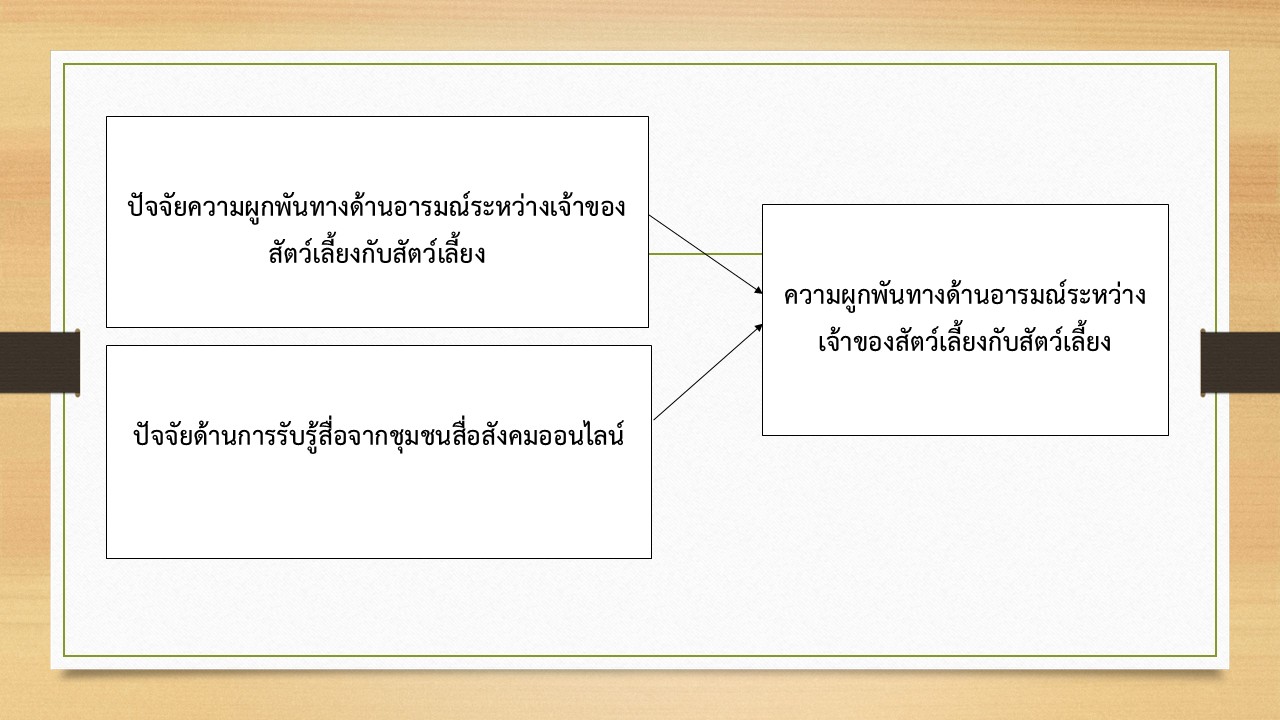
การวิจัยครั้งนี้มีวัตถุประสงค์ได้แก่ การวิเคราะห์ตัวแปรสำคัญที่มีอิทธิพลต่อความตั้งใจซื้ออาหาร BARF ได้แก่ ความผูกพันทางอารมณ์ การรับรู้ข้อมูลจากชุมชนออนไลน์ และบทบาทของ Influencers โดยการวิจัยนี้ใช้วิธีการเชิงปริมาณ เก็บข้อมูลปฐมภูมิจากกลุ่มตัวอย่าง 385 คนที่เป็นเจ้าของสัตว์เลี้ยง ผ่านแบบสอบถามออนไลน์ที่ออกแบบมาเพื่อวัดตัวแปรเหล่านี้อย่างละเอียด ข้อมูลที่ได้ถูกวิเคราะห์ด้วยสถิติเชิงพรรณนาและเชิงอนุมาน รวมถึงการทดสอบสมมติฐานด้วยโมเดลสมการโครงสร้าง (Structural Equation Modeling: SEM) เพื่อประเมินความสัมพันธ์ระหว่างตัวแปร นอกจากนี้ยังใช้ข้อมูลทุติยภูมิจากรายงานการตลาดและงานวิจัยที่เกี่ยวข้องเพื่อสนับสนุนการวิเคราะห์ ผลการวิจัยพบว่า การรับรู้ข้อมูลจากชุมชนออนไลน์ ซึ่งมีบทบาทสำคัญในการสร้างความเชื่อมั่นและแรงจูงใจให้เจ้าของสัตว์เลี้ยงตัดสินใจซื้อสินค้าเป็นปัจจัยที่มีอิทธิพลสูงสุดต่อความตั้งใจซื้ออาหาร BARF ซึ่งมีบทบาทสำคัญในการสร้างความเชื่อมั่นและแรงจูงใจให้เจ้าของสัตว์เลี้ยงตัดสินใจซื้อสินค้า รองลงมาคือความผูกพันทางอารมณ์ระหว่างเจ้าของและสัตว์เลี้ยง โดยผู้ที่มีความผูกพันสูงมักเลือกผลิตภัณฑ์ที่ส่งเสริมสุขภาพสัตว์เลี้ยงในระยะยาว ทั้งนี้ Influencers ยังมีอิทธิพลในแง่ของการแนะนำสินค้าใหม่ แต่ไม่ได้ส่งผลต่อความตั้งใจซื้อ ข้อมูลเพิ่มเติมชี้ให้เห็นว่าเจ้าของสัตว์เลี้ยงที่มีรายได้ปานกลางถึงสูงมีแนวโน้มที่จะซื้ออาหาร BARF มากกว่า เนื่องจากเห็นถึงคุณประโยชน์เชิงสุขภาพและพร้อมจ่ายในราคาที่สูงกว่าอาหารทั่วไป ผลการศึกษาได้ตอกย้ำความสำคัญของการใช้กลยุทธ์การตลาดที่เชื่อมโยงอารมณ์และความสัมพันธ์ของผู้บริโภคกับแบรนด์อย่างมีประสิทธิภาพ เพื่อตอบโจทย์ตลาดพรีเมียมที่กำลังเติบโตในประเทศไทย
คำสำคัญ: ความผูกพันทางด้านอารมณ์ สัตว์เลี้ยง สื่อสังคมออนไลน์ ผู้ทรงอิทธิพลทางความคิด อาหารBARF
Article Details

อนุญาตภายใต้เงื่อนไข Creative Commons Attribution-NonCommercial-NoDerivatives 4.0 International License.
เอกสารอ้างอิง
ตรัยรัตน์ ปลื้มปิติชัยกุล. (2566). การรับรู้สื่อในยุคดิจิทัล: ความเชื่อและการเลือกเปิดรับข้อมูล. วารสารการสื่อสารสังคม, 22(2), 45-67.
ญาณิกา ตันอุดม และนพรัตน์ บุญเพียรผล. (2024). การเปลี่ยนแปลงพฤติกรรมผู้บริโภคในยุคดิจิทัล: บทบาทของสื่อสังคมออนไลน์. วารสารการตลาดดิจิทัล, 15(2), 78-94.
ปภัสราภา ศิริสุนทร. (2565). ความสัมพันธ์ระหว่างพฤติกรรมการเลี้ยงสัตว์เลี้ยงและคุณภาพชีวิตของเจ้าของ. วารสารจิตวิทยาและพฤติกรรม, 28(1), 12-34.
วศิกา กระเทศ. (2563). พฤติกรรมการใช้บริการร้านสัตว์เลี้ยงของกลุ่มคนโสดที่นิยมเลี้ยงสัตว์ [วิทยานิพนธ์ปริญญามหาบัณฑิต]. มหาวิทยาลัยมหิดล.
ศิวกร อินภูษา และ ปัทมา สุวรรณภักดี. (2564). ปัจจัยที่ส่งผลต่อการรับรู้และการตอบสนองต่อสื่อในยุคดิจิทัล. วารสารนิเทศศาสตร์, 12(3), 123-140.
Ajzen, I. (1991). The theory of planned behavior. Organizational Behavior and Human Decision Processes, 50(2), 179–211. https://doi.org/10.1016/0749-5978(91)90020-T
Archer, J. (1997). Why do people love their pets? Evolution and Human Behavior, 18(4), 237–259. https://doi.org/10.1016/S1090-5138(99)00032-6
Bandura, A. (1977). Social learning theory. Englewood Cliffs, NJ: Prentice Hall.
Bowlby, J. (1969). Attachment and loss: Vol. 1. Attachment. New York, NY: Basic Books.
Brown, W., & Bevill, S. (2018). Effects of raw food diets on oral health in domestic dogs and cats. Journal of Veterinary Dentistry, 35(3), 167–173. https://doi.org/10.1177/0898756418789872
Chae, J. (2021). How social media influencers drive consumer decisions: The role of emotional attachment in pet humanization. Journal of Business Research, 134, 204–215. https://doi.org/10.1016/j.jbusres.2021.04.056
Chen, H., & Volsche, S. L. (2012). Emotional bonds in pet ownership: A psychological perspective. Journal of Human-Animal Interaction Studies, 9(4), 56-67.
Freberg, K., Graham, K., McGaughey, K., & Freberg, L. A. (2011). Who are the social media influencers? A study of public perceptions of personality. Public Relations Review, 37(1), 90–92. https://doi.org/10.1016/j.pubrev.2010.11.001
Freeman, L. M., Chandler, M. L., Hamper, B. A., & Weeth, L. P. (2013). Current knowledge about the risks and benefits of raw meat–based diets for dogs and cats. Journal of the American Veterinary Medical Association, 243(11), 1549–1558. https://doi.org/10.2460/javma.243.11.1549
Grand View Research. (2023). Pet food market size, share & trends analysis report by animal type, by food type, by sales channel, by region, and segment forecasts, 2023–2030. Retrieved from https://www.grandviewresearch.com/industry-analysis/pet-food-market
Herzog, H. (2011). The impact of pets on human life: Emotional, physical, and psychological perspectives. Human-Animal Interaction Journal, 10(2), 15-26.
Hoyer, W. D., & MacInnis, D. J. (1997). Consumer behavior. Boston: Houghton Mifflin.
McLuhan, M. (1964). Understanding media: The extensions of man. New York: McGraw-Hill.
Phuong, N. T., & Dat, N. T. (2017). Factors influencing customer purchase intention: The case of pet food products in emerging markets. International Journal of Business and Economics Research, 6(5), 100–108. https://doi.org/10.11648/j.ijber.20170605.12
Schlesinger, D. P., & Joffe, D. J. (2011). Raw food diets in companion animals: A critical review. Canadian Veterinary Journal, 52(1), 50–54. https://www.ncbi.nlm.nih.gov/pmc/articles/PMC3003575/
Serpell, J. A. (1996). In the company of animals: A study of human-animal relationships. Cambridge University Press.
Taylor, M. B., Wood, B., & Johnston, S. (2020). Behavioral and physiological outcomes of biologically appropriate raw food (BARF) diets in domestic dogs and cats: A comparative study. Veterinary Sciences, 7(3), 105. https://doi.org/10.3390/vetsci7030105
Tuncer, G. (2021). Social media marketing and consumer purchase intentions: The mediating role of trust in the pet food industry. Journal of Marketing Communications, 27(7), 706–723. https://doi.org/10.1080/13527266.2021.1872437
Venkatesh, V. (2020). Technology adoption and diffusion: The role of user experience. Journal of Information Systems Research, 31(2), 233-250.
Volsche, S. L. (2021). The humanization of pets: Emotional and social implications in contemporary society. Journal of Human-Animal Studies, 12(3), 56-78.
