
Organizing Educational Games with Content-Related Activities to Develop Basic Mathematics Skills for Early Childhood Children Aged 3-4 Years
Article Sidebar
Main Article Content
Abstract
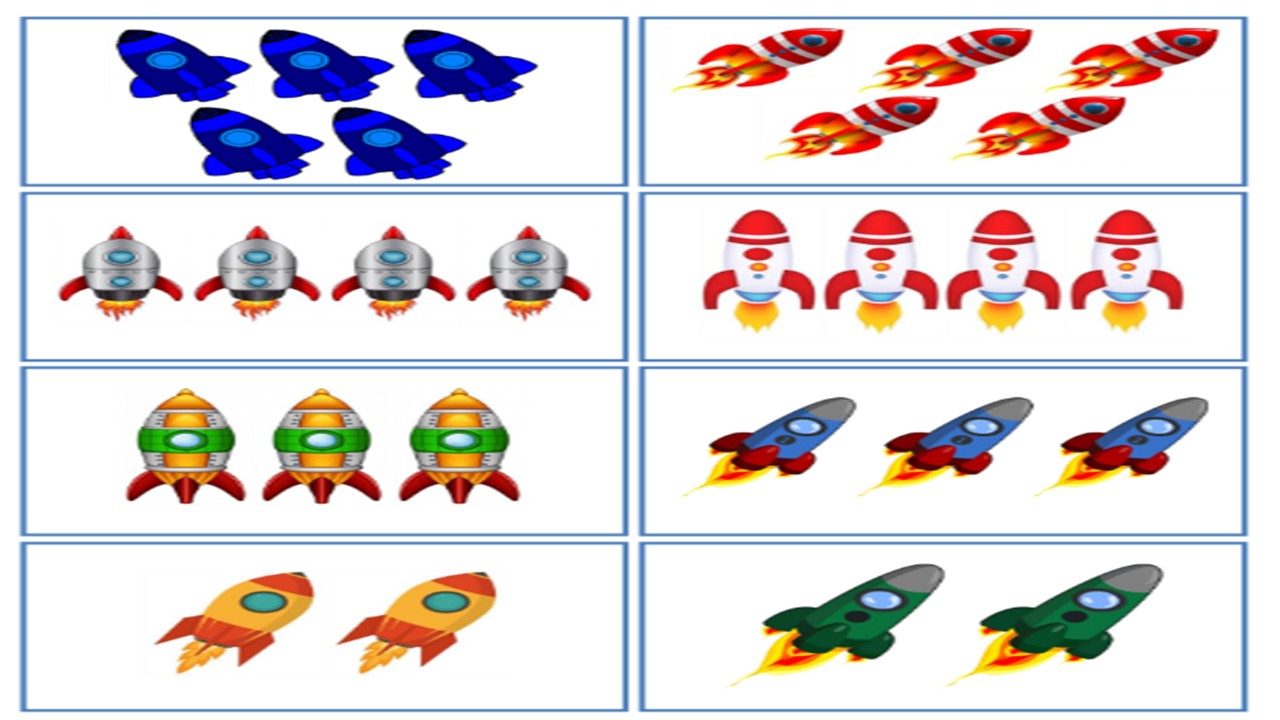
This research aimed to compare basic mathematical skills in early childhood children before and after engaging in content-related educational games. The target group for this research consists of kindergarten children in the first year, aged 3-4 years, at Taksin Rajanusorn School, under the jurisdiction of the Primary Education Service Area Office, Tak, District 1, for the academic year 2025. A total of 12 students were selected through purposive sampling. The research design is a preliminary experimental study (Pre-Experimental Design) using a one-group pretest-posttest design. The research tools include: 1. A content-related educational game called "Matching Images of Equal Numbers," 2. A plan for organizing content-related educational game activities, and 3. A test to measure basic mathematical skills. The experimental implementation lasted for eight weeks, five days a week, for 20 minutes each day, totaling 32 sessions (including the time for the pre-test and post-test on the content-related educational games). The statistical analyses used include basic descriptive statistics, such as percentages, means, and standard deviations. The research findings indicated that the comparison of basic mathematical skills before and after conducting the content-related educational game activities showed higher results after the activities. The difference in average scores before and after the activities was 5.75, with a standard deviation of 1.96, corresponding to a percentage of 29.08.
Keywords: Educational Games with Interconnected Content, Basic Mathematical Skills, Early Childhood
Article Details

This work is licensed under a Creative Commons Attribution-NonCommercial-NoDerivatives 4.0 International License.
References
กระทรวงศึกษาธิการ. (2560). หลักสูตรการศึกษาปฐมวัย พุทธศักราช 2560. กรุงเทพฯ: โรงพิมพ์ชุมนุมสหกรณ์การเกษตรแห่งประเทศไทย.
กัญญาณัฐคงสา และขวัญใจ จริยาทัศน์กร. (2564). การพัฒนาทักษะพื้นฐานทางคณิตศาสตร์ของเด็กนักเรียนชั้นอนุบาล 3/3โรงเรียนเทศบาล 4 (อุดมวิทย์สมใจ) โดยใช้กิจกรรมเกมการศึกษา. วารสารการจัดการทางการศึกษาปฐมวัย, 3(2), 11-21.
กุลยา ตันติผลาชีวะ. (2561). การสอนคณิตศาสตร์เด็กปฐมวัย. กรุงเทพฯ: เอดิสันเพรสโปรดักส์.
คมขวัญ อ่อนบึงพร้าว. (2559). การพัฒนาทักษะพื้นทางคณิตศาสตร์เด็กปฐมวัยโดยใช้รูปแบบกิจกรรมศิลปะสร้างสรรค์เพื่อการเรียนรู้. การศึกษามหาบัณฑิต สาขาวิชาหลักการศึกษาปฐมวัย มหาวิทยาลัยศรีนครินทรวิโรฒ.
จาริณี วงษ์นาค, อรพรรณ บุตรกตัญญู และชลาธิป สมาหิโต. (2566). การประเมินความต้องการจําเป็นและแนวทางการพัฒนาทักษะทางคณิตศาสตร์ของเด็กปฐมวัย. วารสารสหวิทยาการ วิจัยและวิชาการ, 3 (6), 899-914.
ชนวัฒน์ ศรีสอ้าน. (2560). การพัฒนาทักษะทางคณิตศาสตร์โดยใช้กิจกรรมศิลปะแบบบูรณาการสำหรับนักเรียนชั้นอนุบาลปีที่ 2. การศึกษามหาบัณฑิต สาขาวิชาหลักสูตรและการสอน มหาวิทยาลัยมหาสารคาม.
ทิศนา แขมมณี. (2562). หลักการและรูปแบบการพัฒนาเด็กปฐมวัยตามวิถีชีวิตไทย. พิมพ์ครั้งที่ 2. กรุงเทพฯ: จุฬาลงกรณ์มหาวิทยาลัย.
นิตยา ประพฤติกิจ. (2561). คณิตศาสตร์สำหรับเด็กปฐมวัย. กรุงเทพฯ: โอเดียนสโตร์.
เยาวพา เดชะคุปต์. (2562). การบริหารและการนิเทศการศึกษาปฐมวัย.กรุงเทพฯ: แม็ค.
วรรณี วัจนสวัสดิ์. (2552). ทักษะพื้นฐานทางคณิตศาสตรของเด็กปฐมวัยดวยกิจกรรมเกมการศึกษาลอตโต. http://thesis.swu.ac.th/swuthesis/Ear_Chi_Ed/Wannee_W.pdf
สำนักงานสภาพัฒนาการเศรษฐกิจและสังคมแห่งชาติ. (2568). แผนพัฒนาเศรษฐกิจและสังคมแห่งชาติ ฉบับที่ 13 พ.ศ. 2566-2570. https://www.nesdc.go.th/the-national-economic-and-social-development-plan/the-thirteenth-plan-2023-2027/
สำนักนายกรัฐมนตรี. (2559). แผนพัฒนาเศรษฐกิจและสังคมแห่งชาติฉบับที่ 12 พ.ศ. 2560-2564. สำนักงานคณะกรรมการพัฒนาเศรษฐกิจและสังคมแห่งชาติ.
สุมารีย์ ไชยประสพ. (2558). การพัฒนาทักษะทางคณิตศาสตร์สำหรับปฐมวัยโดยใช้กิจกรรมเกมการศึกษา โรงเรียนโป่งน้ำร้อนวิทยา. วิทยานิพนธ์ครุศาสตรมหาบัณฑิต สาขาวิชาหลักสูตรและการสอน มหาวิทยาลัยราชภัฏเชียงใหม่.
เสาวภาพ เครือวัง. (2560).ผลการจัดกิจกรรมเกมการศึกษาแบบผู้ปกครองมีส่วนร่วมที่มีต่อทักษะทางคณิตศาสตร์ของเด็กปฐมวัย ศูนย์พัฒนาเด็กเล็กองค์การบริหารส่วนตำบลหัวเสือ สังกัดองค์การบริหารส่วนตำบลหัวเสือ จังหวัดลำปาง. ปริญญาศึกษาศาสตรมหาบัณฑิต แขนงวิชาหลักสูตรและการสอน สาขาวิชาศึกษาศาสตร์ มหาวิทยาลัยสุโขทัยธรรมธิราช.
Clements, D. H., & Sarama, J. (2020). Learning and teaching early math: The learning trajectories approach (3rd ed.). Routledge.
Dillon, M.R., Kannan, H., Dean, J.T., Spelke, E.S., & Duflo, E. (2017). Cognitive science in the field: A preschool intervention durably enhances intuitive but not formal mathematics. https://www.harvardlds.org/wp-content/uploads/2018/01/Dillon-et-al-2017.pdf
Kamii, C. (1985). Leading primary education toward excellence: Beyond worksheets and drill. Young Children, 40(6), 3–9.
National Association for the Education of Young Children, & National Council of Teachers of Mathematics. (2010). Early childhood mathematics: Promoting good beginnings (Joint position statement). chrome-extension://efaidnbmnnnibpcajpcglclefindmkaj/https://www.naeyc.org/sites/default/files/globally-shared/downloads/PDFs/resources/position-statements/psmath.pdf?utm_source=chatgpt.com
National Council of Teachers of Mathematics. (n.d.). Mathematics in early childhood learning (Position statement). https://www.nctm.org/Standards-and-Positions/Position-Statements/Mathematics-in-Early-Childhood-Learning/?utm_source=chatgpt.com
Onpan, S. (2024). Developing mathematical skills in first-year preschoolers with a dough modeling activity. https://so19.tci-thaijo.org/index.php/sjhs/article/view/1834/1293
Ramani, G. B., & Siegler, R. S. (2008). Promoting broad and stable improvements in low-income children's numerical knowledge through playing number board games. Child Development, 79(2), 375-394.
