
The Results of Developing Small-Muscle Readiness Using Group Creative Art Activities for Kindergarten 2 Students
Article Sidebar
Main Article Content
Abstract
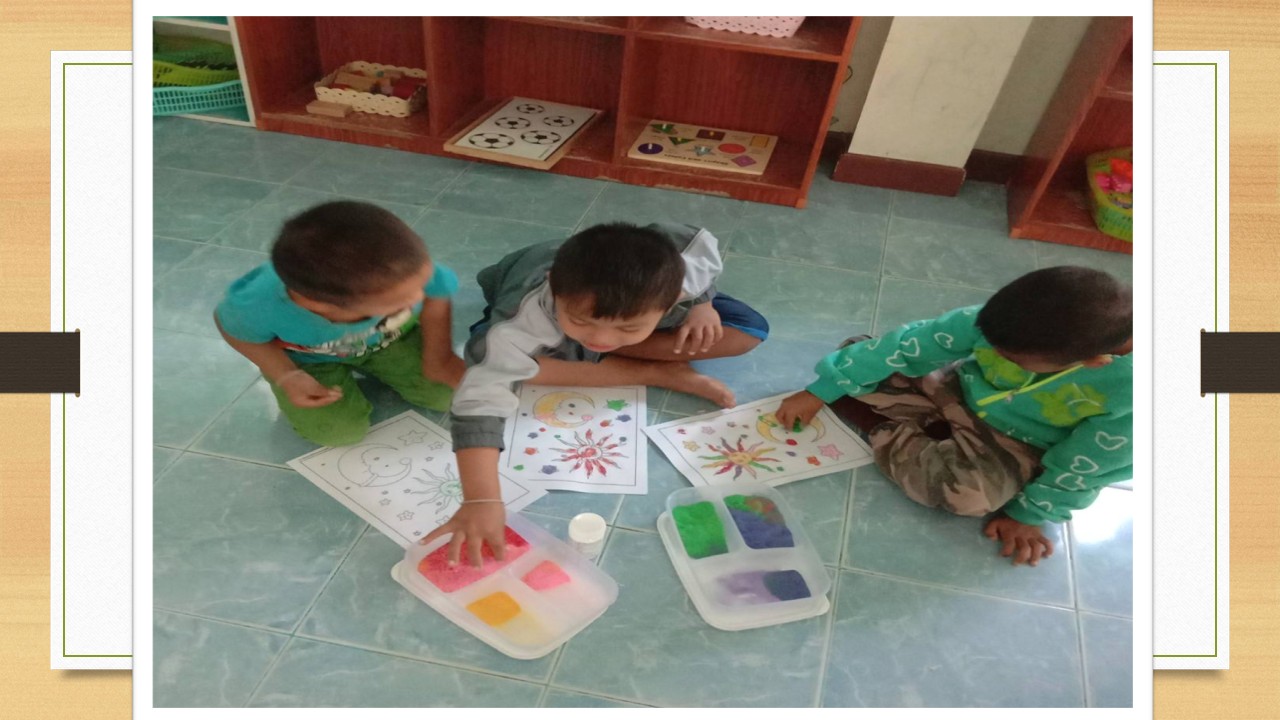
The objective of this research was to compare the readiness of fine motor skills among kindergarten students in the 2nd preparatory class at the Phop Phra Sub-district Municipality Child Development Center, supervised by the Office of Education, Religion, and Culture of Phop Phra Sub-district Municipality in Tak Province. The study focused on children aged 3 to 4 years, both male and female, who were enrolled in the 2nd preparatory class for the first semester of the 2025 academic year. The class consisted of 36 students, and the research was conducted over 8 weeks, meeting 3 days a week for 45 minutes each session, totaling 24 sessions. The research utilized a plan for organizing group creative art activities and an assessment form to evaluate students' fine motor skill development. The researchers analyzed the data using mean values, standard deviations, and the t-test for dependent samples. The findings revealed that the students in the 2nd preparatory class showed significant improvement in their fine motor skills after participating in the group creative art activities, with statistical significance at the .05 level. Upon analysis of the results, the average level of development in fine motor skills increased. Notable improvements were observed in readiness, dexterity, flexibility, control, and coordination between the eyes and hands, with all aspects trending upward.
Keywords: Small Muscles, Group Creative Art Activities, Kindergarten 2 Students
Article Details

This work is licensed under a Creative Commons Attribution-NonCommercial-NoDerivatives 4.0 International License.
References
กระทรวงศึกษาธิการ. (2560). แผนพัฒนาการศึกษาของกระทรวงศึกษาธิการฉบับที่ 11 กรุงเทพฯ: โรงพิมพ์คุรุสภา.
กุลยา ตันติผลาชีวะ. (2561). การจัดกิจกรรมการเรียนรู้สำหรับเด็กปฐมวัย. กรุงเทพฯ: เบรน-เบส.
ญาณิศา บุญพิมพ์. (2560). การส่งเสริมพัฒนาการทางด้านกล้ามเนื้อเล็กของเด็กปฐมวัยโดยใช้กิจกรรมประกอบอาหารประเภทขนมไทย. ปริญญานิพนธ์ ก.ศม. (การศึกษาปฐมวัย)
เบญจา แสงมะลิ. (2560). การพัฒนาเด็กปฐมวัย. กรุงเทพฯ : ศูนย์ส่งเสริมวิชาการ.
รุ่งรวี กนกวิบูลย์ศรี. (2563). อนุบาล 2 แล้วยังเขียนหนังสือไม่ค่อยได้. นิตยสารรักลูก, 30(357) : 199.
สรวงพร กุศลส่ง. (2563). สุนทรียภาพทางศิลปะระดับปฐมวัย. เพชรบูรณ์ : ดีดีการพิมพ์.
สิริมา ภิญโญอนันตพงษ์. (2559). การวัดและการประเมินแนวใหม่. กรุงเทพฯ: โอเดียนสโตร์
Astawa, I. M. S. (2020). Techniques of developing fine motor skill through art collage activities (paper). Atlantis Press.
Clements, D. H., & Sarama, J. (2014). Learning and teaching early math: The learning trajectories approach (2nd ed.). Routledge.
Kusolkomol, P., & Chantana, S. (2022). Ability development in using fine-motor skills of early childhood through creative art activities. Journal of Buddhistic Sociology, 7(3).
O’Brien, J. C., & Kuhaneck, H. (2019). Case-Smith’s occupational therapy for children and adolescents (8th ed.). Elsevier.
O’Brien, J. C., & Kuhaneck, H. (Eds.). (2019). Case-Smith’s occupational therapy for children and adolescents (8th ed.). Elsevier.
Piaget, J. (1964). Development and learning. Journal of Research in Science Teaching, 2(3), 176–186.
Potipatsa, G. (2019). การส่งเสริมพัฒนาการเด็กปฐมวัยโดยใช้ภูมิปัญญาท้องถิ่น [Promoting early childhood development using local wisdom]. วารสารสุขภาพ/สาธารณสุขในฐานข้อมูล ThaiJO/ThaiDJ.
Ratcliffe, I., Reeve, R., & colls. (2011). Development of a scissors skills programme for Grade 0 learners (article). South African Journal of Occupational Therapy, 41(2).
Vygotsky, L. S. (1978). Mind in society: The development of higher psychological processes. Harvard University Press.
