
The results of developing spatial skills using integrated activities for mixed-age kindergarten children aged 2-3 years
Article Sidebar
Main Article Content
Abstract
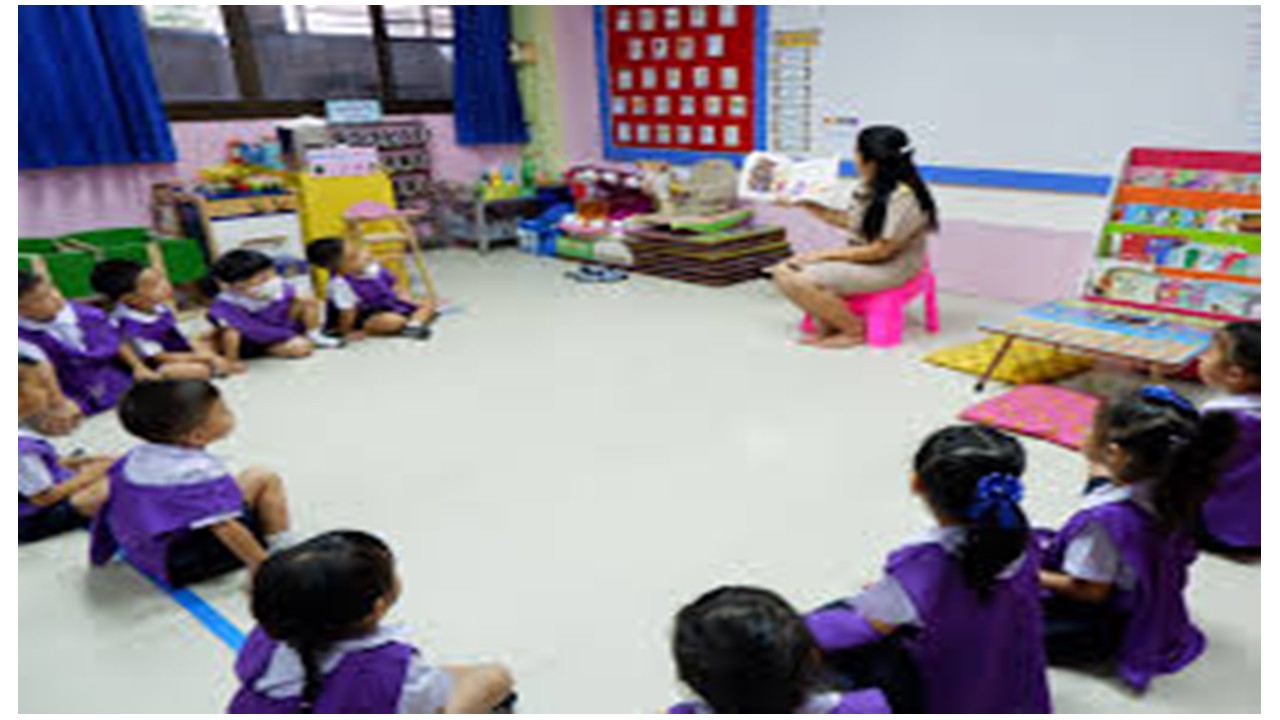
The purpose of this study was to examine the effects of developing spatial skills using integrated activities for mixed-age kindergarten children aged 2–3 years. The participants were 15 boys and girls studying at Ban Tee Nue De Child Development Center, Mae La Subdistrict Administrative Organization, Tha Song Yang District, Tak Province, in the second semester of the 2024 academic year, selected through purposive sampling. The research employed a quasi-experimental design using a one-shot case study. Research instruments included (1) integrated activity plans and (2) a 20-item spatial skills assessment. Content validity was verified by three experts, yielding IOC values ranging from 0.67 to 1.00, and the assessment's reliability coefficient was 0.86. Data were analyzed using percentages, means, and standard deviations. The results revealed that all participants (100%) achieved spatial skills scores exceeding 80% of the full score, indicating that integrated activities effectively enhanced spatial skills in early childhood.
Keywords: Spatial Skills Development, Integrated Activities, Mixed-age Kindergarten Children Aged 2–3 Years
Article Details

This work is licensed under a Creative Commons Attribution-NonCommercial-NoDerivatives 4.0 International License.
