
Educational Administration Model Towards Modern Quality Schools According to the Four Iddhipada principles under the Saraburi Primary Educational Service Area Office
Article Sidebar
Main Article Content
Abstract
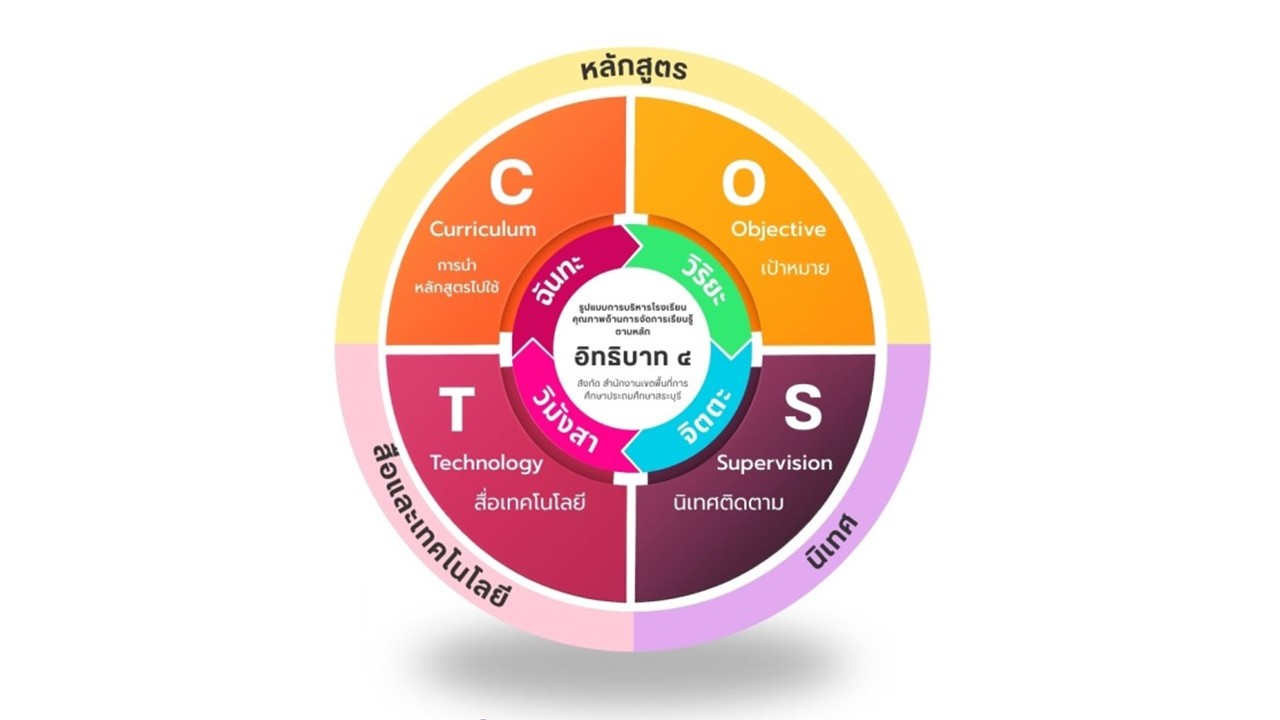
This study aimed to 1) examine the needs for quality school administration in learning management in schools under the Saraburi Primary Educational Service Area Office; 2) develop a quality school administration model for learning management based on the Four Iddhipada principles; 3) implement the developed model; and 4) evaluate the model. A mixed-methods research design was employed. In the quantitative phase, the sample comprised 152 participants, including school administrators, teachers, and school board members, in the 2024 academic year. In the qualitative phase, data were collected from 10 experts through semi-structured interviews and from 9 experts through focus group discussions. The research instruments included questionnaires, interview protocols, and focus group discussion guides. The model was implemented with teachers at Wang Muang Kindergarten School, and the evaluation was conducted with 30 school administrators between June and July 2025. Data were analyzed using frequency, percentage, mean, standard deviation, and qualitative content analysis. The findings revealed that: 1) the overall level of needs for quality school administration in learning management based on the Four Iddhipada principles was high, with the highest priority given to school curriculum development, educational supervision, and the development and use of educational technology media; 2) the developed model consisted of principles, objectives, systems and mechanisms, implementation procedures, evaluation guidelines, success conditions, and the integration of the Four Iddhiopada principles; 3) the implementation results indicated that participants demonstrated a high level of engagement in the activities, with the highest-performing project being the development of a digital learning resource on local wisdom through a participatory process, and overall satisfaction with the model was at the highest level; and 4) the model evaluation showed that appropriateness, feasibility, and usefulness were all rated at the highest level, with usefulness receiving the highest mean score. The findings confirmed that the developed model could be effectively applied to quality school administration in learning management based on the Four Iddhipada principles.
Keywords: Administration Model, Quality school, Learning Management, Four Iddhipada
Article Details

This work is licensed under a Creative Commons Attribution-NonCommercial-NoDerivatives 4.0 International License.
References
ธีรศักดิ์ อุปไมยอธิชัย. (2560). พื้นฐานการจัดการศึกษา. พิมพ์ครั้งที่ 2. กรุงเทพมหานคร: โรงพิมพ์จุฬาลงกรณ์มหาวิทยาลัย.
บุญชม ศรีสะอาด.(2545). การวิจัยเบื้องต้น, พิมพ์ครั้งที่ 5 กรุงเทพมหานคร: ชมรมเด็ก.
ประจวบ หนูเลี่ยง.(2559). “การพัฒนารูปแบบการจัดการศึกษา แบบมีส่วนร่วมของจังหวัดพัทลุง”, ดุษนิพนธ์ปรัชญาดุษฎีบัณฑิต สาขาการบริหารการศึกษา, บัณฑิตวิทยาลัย: มหาวิทยาลัยเวสเทิร์น.
ปรียาพร วงศ์อนุตรโรจน์. (2553). การบริหารงานวิชาการ. กรุงเทพฯ: ศูนย์สื่อเสริมกรุงเทพ.
พันเอกจารุมาศ เรืองสุวรรณ. (2548). “การสังเคราะห์แบบจำลองการสอนวิชาชีพช่างตามหลักอิทธิบาท 4 ของพลทหารในส่วนสนับสนุนกองบัญชาการทองทัพบก”, ดุษฎีนิพนธ์, บัณฑิตวิทยาลัยมหาวิทยาลัยเกษตรศาสตร์.
พระมหาวิทวัฒน วิวฑฺฒนเมธี (วราบำรุงกุล). (2562). การประยุกต์ใช้หลักอิทธิบาท 4 ที่ส่งผลต่อการ
บริหารสถานศึกษาสู่ความเป็นเลิศ สังกัดสำนักงานเขตพื้นที่การศึกษาประถมศึกษาตราด. วารสารมนุษยศาสตร์และสังคมศาสตร์ มหาวิทยาลัยราชภัฏรำไพพรรณี, 11(1), 89-100.
มนต์นภัส มโนการณ์.(2561). การปฏิรูปการศึกษาขั้นพื้นฐานกับการจัดการศึกษาเชิงพื้นที่.วารสารวิชาการศึกษาศาสตร์.
มลวิภา สิขเรศ.(2559).“การบริหารสถานศึกษาเชิงพุทธบูรณาการของผู้บริหารสถานศึกษา”, พุทธศาสตรดุษฎีนิพนธ์ สาขาวิชาพุทธบริหารการศึกษา, บัณฑิตวิทยาลัย: มหาวิทยาลัยมหาจุฬาลงกรณราชวิทยาลัย.
รุ่งชัชดาพร เวหะชาติ. (2564). การบริหารงานวิชาการสถานศึกษาขั้นพื้นฐาน. สงขลา: นำศิลป์โฆษณา.
สุรพงษ์ ฦๅชา, สัญญา เคณาภูมิ, และ ภักดี โพธิ์สิงห์. (2563). แนวทางการพัฒนาภาวะผู้นำทางวิชาการตาม
หลักอิทธิบาท 4 ของผู้บริหารสถานศึกษา สังกัดสำนักงานเขตพื้นที่การศึกษามัธยมศึกษา เขต 26. วารสารวิชาการธรรมทัศน์, 20(1), 141-150
สุวิมล ติรกานันท์. (2550).การสร้างเครื่องมือวัดตัวแปรในการวิจัยทางสังคมศาสตร์: แนวทางสู่การปฏิบัติ, กรุงเทพมหานคร: โรงพิมพ์จุฬาลงกรณ์มหาวิทยาลัย.
สำนักงานคณะกรรมการการศึกษาขั้นพื้นฐาน.(2566). คู่มือการจัดตั้งงบประมาณประจำปี งบประมาณ พ.ศ.2564.กรุงเทพมหานคร: สำนักงานคณะกรรมการการศึกษาขั้นพื้นฐาน.
สำนักงานคณะกรรมการการศึกษาขั้นพื้นฐาน. สพฐ-วิถีใหม่-วิถีคุณภาพ, 2563, [ออนไลน์]. สืบค้นจาก
http://www.obec.go.th/wp-content/uploads/2024/26/
สำนักงานเลขาธิการสภาการศึกษา.(2562). สภาวะการศึกษาไทย 2561/2562 การปฏิรูปการศึกษาในยุคดิจิทัล.กรุงเทพมหานคร: สำนักงานคณะกรรมการการศึกษาขั้นพื้นฐาน.
ศรีจันทร์ หอมหวล, พระครูสุเมธปริยัติคุณ, และ กาญจนา ศรีสุวรรณ. (2567). การบริหารงานวิชาการสู่
ความเป็นเลิศตามหลักอิทธิบาท 4 ของโรงเรียนก้างปลาวิทยาคม สำนักงานเขตพื้นที่การศึกษามัธยมศึกษานครศรีธรรมราช. วารสารเสฏฐวิทย์ปริทัศน์, 4(3), 95–110
Joyce, B., Weil, M., & Calhoun, E. (2004). Models of Teaching (7th ed.). Boston: Allyn & Bacon.
Krejcie, R.V. and Morgan, D.W. (1970). Determining Sample Size for Research Activities. Educational and Psychological Measurement, 30, 607-610.
Likert, R., (1967). The Method of Constructing and Attitude Scale,” in Attitude Theory and Measurement. New York: Wiley & Son.
Nicolai, D. (1971). The Administrative Behavior of the Superintendent of School as Perceived by High School Principals. Dissertation Abstracts International. 1971, pp. 3214-A.
