
Knowledge Management in 21st Century Affecting Learning Management Effectiveness In Schools under the Secondary Educational Service Area Office Nakhon Phanom
Article Sidebar
Main Article Content
Abstract
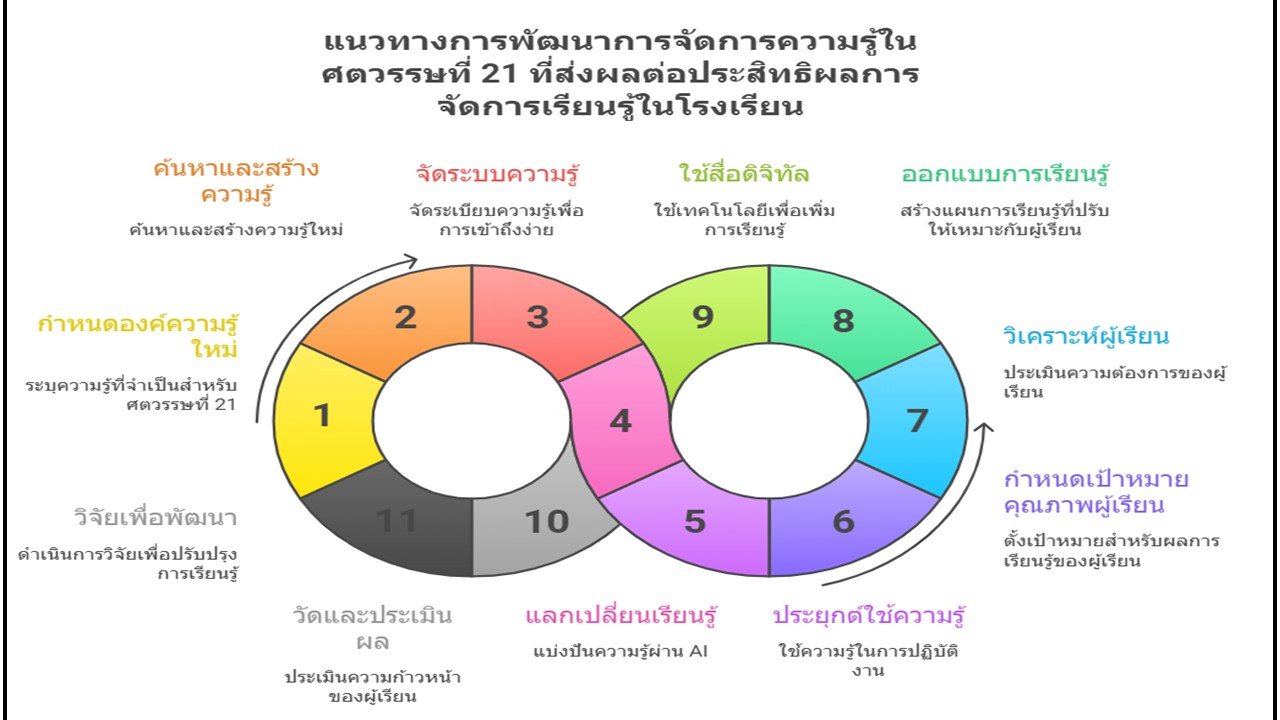
The purposes of this research were to study, compare, determine the relationship, find the predictive power, and establish guidelines for elevating 21st-century knowledge management affecting the effectiveness of learning management in schools under the Secondary Educational Service Area Office Nakhon Phanom. The sample used in this research comprised school directors, deputy directors of academic affairs, and teachers under the Secondary Educational Service Area Office Nakhon Phanom for the academic year 2025, totaling 318 participants. The instrument used for data collection was a 5-level rating scale questionnaire. The discrimination power for 21st-century knowledge management ranged from .734 to .901 with a reliability coefficient of .985, and for the effectiveness of learning management in schools, the discrimination power ranged from .250 to .929 (assuming 250 is a typo for .250 in the original text) with a reliability coefficient of .941. The statistics used for data analysis were frequency, percentage, mean, standard deviation, Independent Samples t-test, One-Way ANOVA, Pearson's product-moment correlation coefficient, and Stepwise multiple regression analysis. The research findings were as follows: 1) The 21st-century knowledge management, overall, was at the highest level. 2) The effectiveness of learning management, overall, was at the highest level. 3) When classified by position, the 21st-century knowledge management was, overall, significantly different at the .05 statistical level; however, when classified by work experience and school size, there were no differences both overall and in individual aspects. 4) The effectiveness of learning management, when classified by position, work experience, and school size, showed no differences both overall and in individual aspects. 5) There was a high level of relationship between 21st-century knowledge management and the effectiveness of learning management in schools, with statistical significance at the .01 level. 6) Four aspects of 21st-century knowledge management could jointly predict the effectiveness of learning management in schools with statistical significance. 7) Guidelines for developing 21st-century knowledge management affecting the effectiveness of learning management include: establishing common standards, definitions, indicators, and rubrics/workpieces so that teachers can manage learning and evaluate in the same direction; developing critical information searching and screening skills; creating data governance and a sustainable collaborative support system; establishing a system to support the appropriate and safe use of AI; and transforming knowledge into practical guidelines or tools that teachers can apply immediately.
Keywords: Knowledge Management, 21st Century, Learning Management Effectiveness
Article Details

This work is licensed under a Creative Commons Attribution-NonCommercial-NoDerivatives 4.0 International License.
References
จิติยาภรณ์ เชาวรากุล. (2564). การวิเคราะห์องค์ประกอบการจัดการความรู้ภูมิปัญญาท้องถิ่นของสถานศึกษาในเขตพื้นที่การศึกษาประถมศึกษาพระนครศรีอยุธยา. Rajapark Journal, 15(40), 214–227.
ชญาดา ฝ่ายไทย. (2568). การบริหารงานวิชาการของผู้บริหารสถานศึกษาเพื่อพัฒนาทักษะการเรียนรู้ของนักเรียนในยุคดิจิทัล สังกัดสำนักงานเขตพื้นที่การศึกษาประถมศึกษาอุบลราชธานี เขต 5. วารสารมหาจุฬาคชสาร, 16(2), 274-294.
ณัฐชยา ชนะกุล. (2566). การพัฒนารูปแบบการเสริมสร้างสมรรถนะการจัดการเรียนรู้เชิงรุกของครูโรงเรียนเอกชนในจังหวัดนครศรีธรรมราช (วิทยานิพนธ์ดุษฎีบัณฑิต). มหาวิทยาลัยราชภัฏนครศรีธรรมราช.
คุณาพร โฉมจิตร, ณรงค์ สมพงษ์, และกฤษณาวัจน์ โคตรชัย. (2567). บทบาทของผู้บริหารโรงเรียนในการส่งเสริมการทำวิจัยในชั้นเรียน โรงเรียนประถมศึกษา อำเภอบางกรวย สังกัดสำนักงานเขตพื้นที่การศึกษาประถมศึกษานนทบุรี เขต 1. Journal of MCU Research and Academic Review, 7(4), 264–287.
ดวงดาว มงคลสวัสดิ์, และคณะ. (2568). ภาวะผู้นำเชิงกลยุทธ์ของผู้บริหารสถานศึกษาที่ส่งผลต่อการบริหารงานวิชาการในสถานศึกษา สังกัดสำนักงานเขตพื้นที่การศึกษามัธยมศึกษามุกดาหาร. วารสารนวัตกรรมการศึกษาและการวิจัย, 9(1), 468-460.
ธงชัย สันติวงษ์. (2550). การบริหารจัดการศึกษา. สำนักพิมพ์มหาวิทยาลัยรามคำแหง.
บุญชม ศรีสะอาด. (2560). การวิจัยเบื้องต้น (พิมพ์ครั้งที่ 10 ฉบับปรับปรุงใหม่). สุวีริยาสาส์น.
บุญรัตน์ แผลงศร และคณะ. (2565). การจัดกิจกรรมการเรียนรู้โดยใช้ M Learning สำหรับวิชาภาษาอังกฤษ. วารสารการศึกษาและนวัตกรรมการเรียนรู้, 2(3), 285–302.
พิทักษ์ หารบัวคำ, วันเพ็ญ นันทะศรี, และวัลนิภา ฉลากบาง. (2567). การจัดการความรู้ของครูที่ส่งผลต่อคุณภาพผู้เรียนในโรงเรียนสังกัดสำนักงานเขตพื้นที่การศึกษาประถมศึกษาสกลนคร เขต 2. วารสารวิทยาการจัดการ มหาวิทยาลัยราชภัฏสกลนคร, 4(2), 731-748.
ภัทรินภร พันเดช. (2566). บทบาทผู้บริหารสถานศึกษาในการพัฒนาสู่การเป็นโรงเรียนคุณภาพ สังกัดสำนักงานเขตพื้นที่การศึกษาประถมศึกษาขอนแก่น เขต 2 [สารนิพนธ์ปริญญามหาบัณฑิต, มหาวิทยาลัยมหามกุฏราชวิทยาลัย].
เรณู บุญเสรฐ. (2561). รูปแบบการบริหารหลักสูตรสู่ประสิทธิผลการจัดการเรียนรู้ของโรงเรียนมัธยมศึกษาขนาดเล็ก [วิทยานิพนธ์ปริญญาดุษฎีบัณฑิต, มหาวิทยาลัยนเรศวร].
วิภาพร บึงลี, และสุทธิพงศ์ บุญผดุง. (2567). การจัดการความรู้ของผู้บริหารสถานศึกษากับการปฏิบัติงานของครูในยุคดิจิทัล สังกัดสำนักงานเขตพื้นที่การศึกษาประถมศึกษากรุงเทพมหานคร. Journal of Social Science Research and Innovation, 2(2), 1–14.
สำนักงานเขตพื้นที่การศึกษามัธยมศึกษานครพนม. (2568). แผนการบริหารและพัฒนาทรัพยากรบุคคล ประจำปีงบประมาณ พ.ศ. 2568. สำนักงานเขตพื้นที่การศึกษามัธยมศึกษานครพนม.
สำนักงานเลขาธิการสภาการศึกษา. (2562). การจัดการเรียนรู้ในศตวรรษที่ 21. พริกหวานกราฟฟิค.
สำนักงานเลขาธิการสภาการศึกษา. (2567). รายงานประจำปี 2567. สำนักงานเลขาธิการสภาการศึกษา.
สำนักงานสภาพัฒนาการเศรษฐกิจและสังคมแห่งชาติ. (2565). แผนพัฒนาเศรษฐกิจและสังคมแห่งชาติ ฉบับที่ 13 พ.ศ. 2566–2570. สำนักนายกรัฐมนตรี.
สุภัทรา แก้วมูล. (2566). การพัฒนากระบวนการจัดการเรียนรู้ที่ส่งเสริมทักษะการคิดวิเคราะห์ของผู้เรียนระดับมัธยมศึกษา. วารสารศึกษาศาสตร์ มหาวิทยาลัยขอนแก่น, 46(1), 112–125.
สุวัชชัย อาจวิเชียร, และคณะ. (2567). ปัจจัยการบริหารที่ส่งผลต่อสมรรถนะการจัดการเรียนรู้ของครูในสถานศึกษา สังกัดสำนักการศึกษา กรุงเทพมหานคร. วารสารศึกษาศาสตร์ มหาวิทยาลัยศิลปากร, 22(1), 249–264.
หยาดทิพย์ ซีซอง. (2564). ปัจจัยภาวะผู้นำทางวิชาการของผู้บริหารโรงเรียนที่ส่งผลต่อประสิทธิผลการจัดการเรียนรู้ของครูผู้สอนในโรงเรียน สังกัดสำนักงานเขตพื้นที่การศึกษาประถมศึกษามุกดาหาร. วารสารการบริหารการศึกษาและภาวะผู้นำ มหาวิทยาลัยราชภัฏสกลนคร, 9(36), 165–175.
อภิชญา กิ่งแก้ว, และณัฐวุฒิ สัพโส. (2568). การศึกษาบทบาทของผู้บริหารในการส่งเสริมงานวิจัยในชั้นเรียนของครูโรงเรียนสังกัดกรุงเทพมหานคร. Journal of Social Sciences Mahamakut Buddhist University, 8(1), 299–308.
แสงเพชร คูณประเสริฐ, บุญรัตน์ แผลงศร, และสูติเทพ ศิริพิพัฒนกุล. (2567). การพัฒนาชุดฝึกอบรมแบบผสมผสานตามแนวคิดการปฏิบัติเป็นฐาน เพื่อส่งเสริมความสามารถการจัดการเรียนการสอนออนไลน์ของครู โรงเรียนมัธยมสมบูรณ์เทศบาลแขวงอุดมไซ สาธารณรัฐประชาธิปไตยประชาชนลาว. วารสารศึกษาศาสตร์ มหาวิทยาลัยศรีนครินทรวิโรฒ.
Argote, L. (2024). Knowledge transfer within organizations: Mechanisms, moderators, and future directions. Annual Review of Psychology, 75, 393–417. https://doi.org/10.1146/annurev-psych-022123-105424
Athanatou, M., Kotsis, K. T., & Mikropoulos, T. A. (2023). Data-driven decision making as a model to improve in primary education. Journal of Education and E-Learning Research, 10(1), 15–23.
Bueno-Broterson, P., Araya-Guzmán, S., & Salazar-Concha, C. (2025). Knowledge management and organizational performance: Analysis in the Chilean educational context. Prometeica, 35, 105–119.
Çevik, M. S., & Doğan, E. (2023). The mediating and moderating effects of knowledge management in the relationship between technological leadership behaviors of school principals and data-driven decision-making. Educational Policy Analysis and Strategic Research, 18(1), 50–76.
Chinowsky, P., & Carrillo, P. (2007). Knowledge management to learning organization connection. Journal of Management in Engineering, 23(3), 122–130. https://doi.org/10.1061/(ASCE)0742-597X(2007)23:3(122)
Creswell, J.W. (2022). A Concise Introduction to Mixed Methods Research (2nd ed.). Thousand Oaks, CA: SAGE.
Dalkir, K. (2023). Knowledge management in theory and practice (4th ed.). The MIT Press.
Gleeson, J., Nelson, J., Johnson, B., Spurling, N., & West, K. (2022). Teachers’ use of research evidence: A case study of United Learning schools. National Foundation for Educational Research.
Hoy, W. K., & Miskel, C. G. (2001). Educational administration: Theory, research, and practice (6th ed.). McGraw-Hill.
Kasneci, E., Sessler, K., Küchemann, S., Bannert, M., Dementieva, D., Fischer, F., Gasser, U., Groh, G., Günnemann, S., Hüllermeier, E., Krusche, S., Kutyniok, G., Michaeli, T., Nerdel, C., Pfeiffer, F., Poquet, O., Sailer, M., Schmidt, A., Seidel, T., ... Kasneci, G. (2023). ChatGPT for good? On opportunities and challenges of large language models for education. Learning and Individual Differences, 103, Article 102274. https://doi.org/10.1016/j.lindif.2023.102274
López-Meza, E., Bautista-Díaz, M. L., & Ruiz-Ledesma, E. F. (2024). SECI model of knowledge management: A thematic analysis from the Web of Science core collection. International Journal of Sustainable Management and Corporate Social Responsibility, 9(1), 1–17.
Michael, S. W., Alexander, K., & Kimani, S. (2024). The impact of knowledge management on teacher performance in English-medium schools in Musoma Diocese, Tanzania, with a focus on the moderating role of professional development. CUEA Journal of Business and Economics, 1(2).
OECD. (2021). Teachers getting the best out of their students: From primary to upper secondary education. OECD Publishing.
OECD. (2023). OECD digital education outlook 2023: Towards an effective digital education ecosystem. OECD Publishing. https://doi.org/10.1787/c74f03de-en
Özkul, R., & Varol Yildizbaş, Y. (2025). The relationship between school principals’ leadership styles, organisational climate and organisational depression. South African Journal of Education, 45(2).
Prachagool, V., & Nuangchalerm, P. (2021). Perspectives of Thai educators toward 21st century instruction. Journal of Education and Learning, 10(4), 432–437.
Sriklaub, K., & Ruengtrakul, A. (2022). Teachers’ experiences in a professional learning community: Insights on policy delivery and characteristics of the PLC in schools. Kasetsart Journal of Social Sciences, 43(2), 303–310.
UNESCO. (2023). Guidance for generative AI in education and research. UNESCO.
