
A Needs Assessment of Learning Management in the Digital Age for Secondary Schools
Article Sidebar
Main Article Content
Abstract
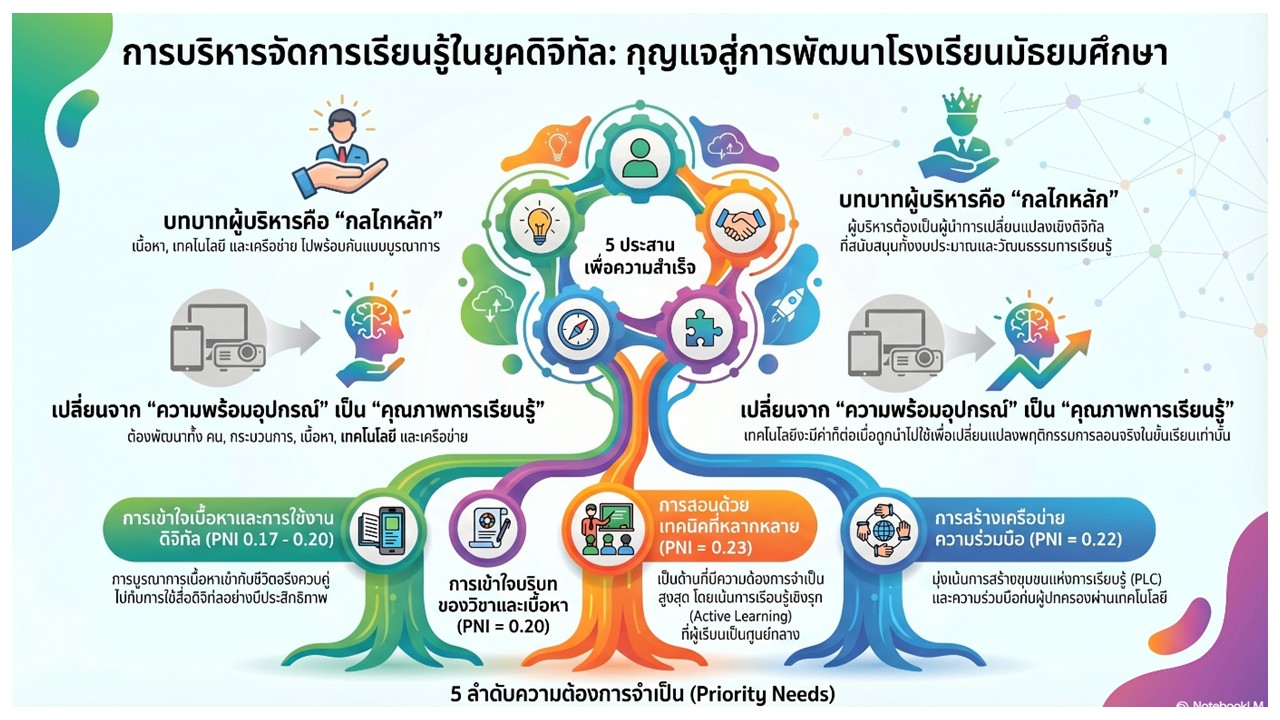
The objectives of this research were: 1) to assess the needs for developing learning management administration in the digital age for secondary schools, and 2) to propose guidelines for such development. The informants consisted of 214 administrators under the Secondary Educational Service Area Offices in the Northern region, derived from a total population of 471 using the Krejcie & Morgan sampling table. The research instrument was a 5-point Likert scale questionnaire, validated for Content Validity (IOC) by five experts, with a total reliability coefficient of 0.93. Data were analyzed using percentage, mean, standard deviation, and the Modified Priority Needs Index (PNI_{modified}). The development guidelines were synthesized through content analysis of open-ended suggestions and prioritized based on high-need index items. The research findings revealed that the overall priority needs index was PNI_{modified} = 0.20. The dimension with the highest need was the implementation of diverse instructional techniques (PNI_{modified} = 0.23), followed by the establishment of collaborative networks (PNI_{modified} = 0.22), comprehensive understanding of subject context and content (PNI_{modified} = 0.20), personnel self-learning and development (PNI_{modified} = 0.18), and the utilization of digital technology media (PNI_{modified} = 0.17), respectively. The proposed development guidelines encompass these five dimensions, emphasizing student impact, evidence-based decision-making, continuous improvement through data analysis, and a primary focus on student quality outcomes.
Keywords: Model, Learning Management, Digital Age
Article Details

This work is licensed under a Creative Commons Attribution-NonCommercial-NoDerivatives 4.0 International License.
References
กนกอร สมปราชญ์. (2560). ภาวะผู้นำกับคุณภาพการศึกษา. ขอนแก่น: คณะศึกษาศาสตร์ มหาวิทยาลัยขอนแก่น.
เกียรติศักดิ์ ลำพองชาติ. (2563). ทักษะการทำงานในโลกยุคดิจิทัล. กรุงเทพฯ: สำนักงานเลขาธิการวุฒิสภา. สืบค้นจาก https://www.senate.go.th/document/ Ext23317/23317851_0002.PDF
กระทรวงศึกษาธิการ. (2553). พระราชบัญญัติการศึกษาแห่งชาติ พ.ศ. 2542 แก้ไขเพิ่มเติม (ฉบับที่ 2) พ.ศ.2545 และ (ฉบับที่ 3) พ.ศ. 2553. กรุงเทพมหานคร
จิติมา วรรณศรี. (2563). นวัตกรรมสู่การพัฒนาสถานศึกษา. พิษณุโลก: รัตนสุวรรณการพิมพ์.
จิติมา วรรณศรี. (2564). การบริหารจัดการศึกษายุคดิจิทัล. พิษณุโลก: รัตนสุวรรณการพิมพ์.
จีระนันท์ มูลมาตร และคณะ. (2564). การใช้เทคโนโลยีสารสนเทศเพื่อการบริหารของสถานศึกษา ในยุคดิจิทัลทรานฟอร์เมชั่น. วารสารคุณภาพชีวิตกับกฎหมาย, 17(2), 21-32.
ฉัตรชัย หวังมีจงมี, และองอาจ นัยพัฒน์. (2560). สมรรถนะของครูไทยในศตวรรษที่ 21: ปรับการเรียน เปลี่ยนสมรรถนะ. สถาบันเสริมศึกษาและทรัพยากรมนุษย์ มหาวิทยาลัยธรรมศาสตร์, 12(2), 47-63.
ชัชชญา พีระธรณิศร์. (2563). ความท้าทายการจัดการศึกษาในยุค Disruptive Change ของผู้บริหารสถานศึกษา. ศึกษาศาสตร์สาร มหาวิทยาลัยเชียงใหม่, 4(2), 126-139.
เชิดศักดิ์ ศุภโสภณ. (2553). การพัฒนารูปแบบการเปลี่ยนแปลงสู่ความเป็นเลิศของสถานศึกษาขั้นพื้นฐานของรัฐ (ปริญญานิพนธ์ปริญญาดุษฎีบัณฑิต). กรุงเทพฯ: จุฬาลงกรณ์ มหาวิทยาลัย.
ณัฐพิมล ธรรมสรางกูร. (2559). รูปแบบการบริหารเพื่อส่งเสริมการจัดการเรียนรู้ที่เน้นทักษะการคิด วิเคราะห์ของครูในสถานศึกษา สังกัดสำนักงานเขตพืน้ที่การศึกษาประถมศึกษา (ปริญญานิพนธ์ปริญญาดุษฎีบัณฑิต). พิษณุโลก: มหาวิทยาลัยนเรศวร.
ถนอมพร เลาหจรัสแสง. (2560). ครูพันธ์ C (C-Teachers.). http://sornorinno.blogspot.com/2010/09/c-c-teacher.html
ทิศนา แขมมณี. (2557). ศาสตร์การสอน: องค์ความรู้เพื่อการจัดกระบวนการเรียนรู้ที่มีประสิทธิภาพ (พิมพ์ครั้งที่ 18). กรุงเทพฯ: สำนักพิมพ์แห่งจุฬาลงกรณ์มหาวิทยาลัย.
บุษบา เสนีย์. (2563). รูปแบบการบริหารการจัดการเรียนรู้ โดยใช้เทคโนโลยีสารสนเทศ ของสถานศึกษาสังกัด กรุงเทพมหานคร (ปริญญานิพนธ์ปริญญาดุษฎีบัณฑิต). กรุงเทพฯ: มหาวิทยาลัยนอร์ทกรุงเทพ.
ประกอบ ตันมูล. (2559). การพัฒนารูปแบบการบริหารการเปลี่ยนแปลงของผู้บริหารที่ส่งผลต่อ ประสิทธิผลด้านวิชาการของสถานศึกษา สังกัดสานักงานเขตพืน้ที่การศึกษาประถมศึกษา สกลนคร เขต 1 (ปริญญานิพนธ์ปริญญาดุษฎีบัณฑิต). สกลนคร: มหาวิทยาลัยราชภัฏ สกลนคร.
ปรียาพร วงศ์อนุตรโรจน์. (2553). การบริหารงานวิชาการ. กรุงเทพฯ: ศูนย์สื่อเสริมกรุงเทพ.
ปัณณทัต กาญจนะวสิต. (2561). โลกยุค 4.0. สืบค้น 20 เมษายน 2563, http://www.dsdw2016.dsdw.go.th/doc_pr/ndc_2560-2561/8455m.html
พระราชวุธ ปญฺญาวชิโร. (2561). การบริหารสถานศึกษาในยุคดิจิทัล ตามหลักสัปปุริสธรรม 7 โรงเรียนพระปริยัติธรรม แผนกสามัญศึกษา จังหวัดขอนแก่น (วิทยานิพนธ์ปริญญา มหาบัณฑิต). อยุธยา: มหาวิทยาลัยมหาจุฬาลงกรณราชวิทยาลัย.
พิมพันธ์ เดชะคุปต์, และพเยาว์ ยินดีสุข. (2562). ทักษะ 7C ของครู 4.0 (พิมพ์ครั้งที่ 5). กรุงเทพฯ: สำนักพิมพ์แห่งจุฬาลงกรณ์มหาวิทยาลัย.
มหาวิทยาลัยราชภัฏวไลยอลงกรณ์ ในพระบรมราชูปถัมภ์. (2557). คู่มือการจัดระบบการเรียน การสอนที่เน้นผู้เรียนเป็นสำคัญ (พิมพ์ครั้งที่ 2). ปทุมธานี: ศูนย์เรียนรู้การผลิตและ การจัดการธุรกิจสิ่งพิมพ์ดิจิตอล มหาวิทยาลัยราชภัฏวไลยอลงกรณ์ ในพระบรมราชูปถัมภ์.
มานะ สินธุวงษานนท์. (2562). กลยุทธ์การพัฒนาผู้เรียนสู่ความเป็นพลเมืองในศตวรรษที่ 21. วารสารนาคบุตรปริทรรศน์ มหาวิทยาลัยราชภัฏนครศรีธรรมราช, 11(2), 118-129.
เยาวดี วิบูลย์ศรี. (2545). การวัดผลและการสร้างแบบสอบผลสัมฤทธิ์ (พิมพ์ครั้งที่ 3). กรุงเทพฯ: จุฬาลงกรณ์มหาวิทยาลัย.
รัตติกร จิตรไกรสร. (2559). องค์การและการจัดการ. กรุงเทพฯ: ศูนย์การเรียนรู้และผลิตสิ่งพิมพ์ ระบบดิจิตอล มหาวิทยาลัยราชภัฏพระนคร.
วิจารณ์ พาณิช. (2557). วิถีสร้างการเรียนรู้เพื่อศิษย์ (พิมพ์ครั้งที่ 3). กรุงเทพฯ: ตถาตา พับลิเคชั่น.
วิชัย ประสิทธิวุฒิเวชช์. (2542). การพัฒนาหลักสูตรสานต่อที่ท้องถิ่น. กรุงเทพฯ: เลิฟแอนด์ลิพ เพรส.
วิรัตน์ เกตุเรือง, สุกัญญา แช่มช้อย, และฉลอง ชาตรูประชีวิน. (2559). รูปแบบการบริหารการจัดการเรียนรู้ภาษาอังกฤษเพื่อการสื่อสารสำหรับนักเรียน ของโรงเรียนขยายโอกาสขนาดเล็ก. วารสารศึกษาศาสตร์ มหาวิทยาลัยนเรศวรปีที่, 19(3), 313-328. https://so06.tci-thaijo.org/index.php/edujournal_nu/article/view/100971/78430
วีระยุทธ ชาตะกาญจน์. (2556). เทคนิคการบริหารสำหรับนักบริหารการศึกษามืออาชีพ(พิมพ์ครั้งที่ 4). กรุงเทพฯ: สำนักพิมพ์แห่งจุฬาลงกรณ์มหาวิทยาลัย.
ศิธาชัย ศรีอุดม. (2557). รูปแบบการบริหารจัดการเรียนรู้ในสถานศึกษา สังกัดเทศบาล(ปริญญานิพนธ์ปริญญาดุษฎีบัณฑิต). พิษณุโลก: มหาวิทยาลัยนเรศวร.
สุกัญญา แช่มช้อย. (2558). ภาวะผู้นำทางเทคโนโลยี: การนำเทคโนโลยีสู่ห้องเรียน และโรงเรียนในศตวรรษที่ 21. วารสารศึกษาศาสตร์มหาวิทยาลัยนเรศวร, 17(4), 216-224.
สุกัญญา แช่มช้อย. (2560). การบริหารสถานศึกษาในยุคดิจิทัล. พิษณุโลก: พิษณุโลกดอทคอม.
สำนักงานเลขาธิการสภาการศึกษา. (2557). แนวทางการพัฒนาการศึกษาไทยกับการเตรียมความพร้อมสู่ศตวรรษที่ 21. กรุงเทพฯ: พริกหวานกราฟฟิค.
สำนักงานเลขาธิการสภาการศึกษา. (2563). รายงาน เรียนออนไลน์ยุคโควิด-19: วิกฤตหรือโอกาส การศึกษาไทย. กรุงเทพฯ: สืบค้นจาก http://backoffice.onec. go.th/uploads/Book/1779-file.pdf
สำนักงานเลขานุการของคณะกรรมการยุทธศาสตร์ชาติ และสำนักงานคณะกรรมการพัฒนาเศรษฐกิจ และสังคมแห่งชาติ. (2561). ยุทธศาสตร์แห่งชาติ. สืบค้นจาก http://nscr.nesdb.go.th/
เอกชัย กี่สุขพันธ์. (2559). การบริหารสถานศึกษาในยุคดิจิทัล. สืบค้น 25 มกราคม 2569, https://so13.tci-thaijo.org/index.php/SWU_JEd/article/view/1367
Ally, M. (2019). Competency profile of the digital and online teacher in future education. International Review of Research in Open and Distributed Learning, 20(2). https://www.irrodl.org/index.php/irrodl/article/view/4206/5017
Baglama, B., Evcimen, E., Altinay, F., Sharma, R.C., Tlili, A., Altinay, Z., … Celebi, M. (2022). Analysis of digital leadership in school management and accessibility of animation-designed game-based learning for sustainability of education for children with special needs. Sustainability, 14, 1-12.
Bazzano, D. (2011). Teaching skills: What 21st century educator need to learn to survive. Retrieved November 18, 2021, from https://www.masternewmedia. org/teaching-skills-what-21st-century-educators-need-to-learn-to-survive/
Carroll, J.B. (1974). Learning theory for the classroom teacher. In G.A. Jarvis (Ed.), The Challenge of Communication. Illinois: National Textbook Company.
Fanreza, R. (2018). The quality of teacher in digital era. In Proceedings of the 5th International Conference on Community Development (AMCA 2018) (pp. 461-463). N.P.: Atlantis.
Good, C.V. (1973). Dictionary of education. New York: McGraw-Hill.
Good, C.V. (1974). Dictionary of education. New York: McGraw-Hill.
Hills, P.J.A. (1982). Dictionary of education. London: Routledge & Kegan Payi.
Hough, J.B., & Duncan, J.K. (1970). Teaching description and analysis. N.P.: Addison- Westlu.
Hoy, W.K., & Miskel, C.G. (2001). Education and administration theory, research, and practice (6th ed.). New York: McGraw Hill.
International Society for Technology in Education. (2009). ISTE standards administrators. Retrieved from https://www.iste.org/standards/for-administrators
Jukes, I., McCain, T., Crockett, L. (2010). Understanding the digital generation: Teaching and learning in the new digital landscape. https://www.academia.edu/40796949/The_importance_of_visualization_in_e_learning_courses
Moore, K.D. (1992). Classroom teaching skills (2nd ed.). New York: McGraw-Hill.
Napate, S., Maity, P., & Baheti, P. (2020). Digital Transformation of Management Education. American International Journal of Business Management, 3(9), 19-23.
Prenksy, M. (2001). Digital natives, digital immigrants in the horizon. Retrieved from http://www.marcprensky.com/writing/prensky% 20%20digital%20natives,% 20digital%20immigrants%20- %20part1.pdf
Redecker, C., & Punie, Y. (2017). European framework for the digital competence of educators: Dig Comp Edu. Luxembourg: Office of the European Union.
Sharma, M. (2017). Teacher in a digital era. Global Journal of Computer Science and Technology, 17(3), 10-14.
Simmons, C. (2010). Teacher skills for 21st century. Retrieved from http://www.ehow.com/list_6593189_teacher-skills-21st-century.html
Smith, R.H. (1980). Measurement: Making organization perform. New York: Macmillan.
White, J. (2015). Digital literacy skills for FE teachers. London: SAGE.
Yusuf, H. (2019). Education management in the age of digitality and social media: Exploring the utilization of digitality and social media to improve the management of further education from a methodological perspective (Master’s thesis). U.S.A.: The University of Boston.
