
Operation according to Sufficient Economy Philosophy of Chaloem Phrakiat Nawaminthrachutit School in Thailand
Article Sidebar
Main Article Content
Abstract
The study, conducted in accordance with the Sufficient Economy Philosophy of Chaloem Phrakiat Nawaminthrachutit School in Thailand, aims to: 1) examine the application of the Sufficient Economy Philosophy in schools; 2) compare the application of the Sufficient Economy Philosophy from the perspectives of teachers, taking into account variables such as gender, age, work experience, educational background, and school location; and 3) provide recommendations for the implementation of the Sufficient Economy Philosophy. The research samples were 245 teachers, 97.55 percent of teachers working at 5 Chaloem Phrakiat Nawaminthrachutit schools throughout Thailand.
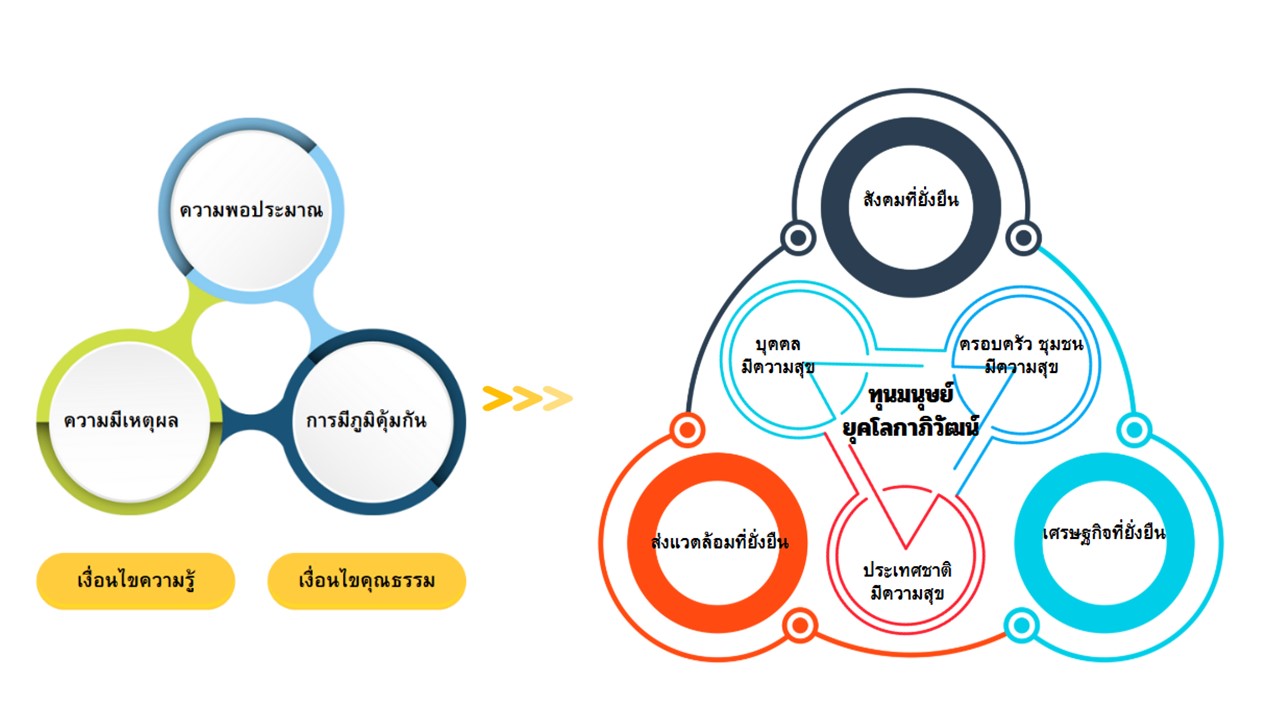
The research findings revealed that 1) the operation according to the Sufficient Economy Philosophy of Chaloem Phrakiat Nawaminthrachutit School in Thailand was holistically at a good level. When considering individual aspects, it found that there were two aspects got the highest mean scores, which were the aspects of ethics and good immunity; there were three aspects got high mean scores, which were the aspects of rationale, sufficiency, and knowledge conditions, respectively, 2) the comparison results showed that the opinions of teachers with different genders, ages, work experience, educational background, and school location towards the operation according to the Sufficient Economy Philosophy of Chaloem Phrakiat Nawaminthrachutit School in Thailand were not different, and 3) it was recommended that there should be the process of building mutual understanding among all sectors through academic seminars for the Chalermprakiat School Network across five regions, where the operational steps and outcomes are shared among stakeholders. This process fosters comprehension of all variables, resulting in efficient and sustainable management
Article Details
References
กลุ่มโรงเรียนเฉลิมพระเกียรติ 5 ภูมิภาค. (2566). รายงานผลการดำเนินงานกลุ่มโรงเรียนเฉลิมพระเกียรติ
นวมินทราชูทิศ สำนักงานการศึกษาขั้นพื้นฐาน กระทรวงศึกษาธิการประจำปีการศึกษา 2566.
กลุ่มโรงเรียนเฉลิมพระเกียรติ 5 ภูมิภาค.
จตุรงค์ อินทรรุ่ง และ นภาเดช บุญเชิดชู. (2564). การปฏิบัติตนตามหลักปรัชญาของเศรษฐกิจพอเพียงของนักศึกษาคณะครุศาสตร์ มหาวิทยาลัยราชภัฏนครปฐม. วารสารสังคมศาสตร์วิจัย, 12(1), 111–128.
จารุวรรณ ขจรอนันต์. (2562). การประยุกต์ใช้หลักปรัชญาของเศรษฐกิจพอเพียงในชีวิตประจำวันของนักเรียนโรงเรียนสีดาวิทยา อำเภอสีดา จังหวัดนครราชสีมา [วิทยานิพนธ์ปริญญาครุศาสตรมหาบัณฑิต]. มหาวิทยาลัยราชภัฏมหาสารคาม.
ชยางกูร ท้าวพรหม. (2564). การนำปรัชญาของเศรษฐกิจพอเพียงไปประยุกต์ใช้ในการจัดการเรียนการสอนของครูโรงเรียนอมก๋อยวิทยาคม สังกัดสำนักงานเขตพื้นที่การศึกษามัธยมศึกษา เขต 34 [ปริญญาวิทยาศาสตรมหาบัณฑิต]. มหาวิทยาลัยแม่โจ้.
ประธาน ขรรค์เจนการ และ ไตรรัตน์ สิทธิทูล. (2563). การบริหารกิจกรรมพัฒนาผู้เรียนตามหลักปรัชญาของเศรษฐกิจพอเพียง ของโรงเรียนในสังกัดสำนักงาน เขตพื้นที่การศึกษาประถมศึกษาสมุทรปราการ เขต 1. วารสารราชพฤกษ์ บัณฑิตวิทยาลัย มหาวิทยาลัยราชภัฏนครราชสีมา, 18(3), 68–78.
พิศาล เครือลิต. (2565). การพัฒนาหลักสูตรเสริมสร้างคุณลักษณะอยู่อย่างพอเพียงตามหลักปรัชญาของเศรษฐกิจพอเพียง สำหรับนักเรียนชั้นมัธยมศึกษาตอนต้น [วิทยานิพนธ์ปริญญาการศึกษาดุษฎีบัณฑิต]. มหาวิทยาลัยนเรศวร.
ไพรัช นิลวงศ์. (2562). การดําเนินชีวิตตามหลักปรัชญาของเศรษฐกิจพอเพียงของครูสังกัดสํานักการศึกษา เทศบาลนครหาดใหญ่ อําเภอหาดใหญ่ จังหวัดสงขลา [สารนิพนธ์ปริญญารัฐประศาสตรมหาบัณฑิต]. มหาวิทยาลัยสงขลานครินทร์.
มัลลิกา สีดาเดช. (2563). ประสิทธิผลการบริหารสถานศึกษาพอเพียงในสังกัดสำนักงานเขตพื้นที่การศึกษามัธยมศึกษา เขต 22 [ปริญญาครุศาสตรมหาบัณฑิต สาขาวิชาการบริหารการศึกษา]. มหาวิทยาลัยราชภัฏสกลนคร.
มูลนิธิชัยพัฒนา. (2563). เศรษฐกิจพอเพียงและทฤษฎีใหม่. สำนักประชาสัมพันธ์ สำนักงานมูลนิธิ ชัยพัฒนา.
วิรัลพัชร วงศ์วัฒน์เกษม, ธนภรณ์ แซ่ลิ่ม, ณัทปภา สุริยะ, สุวิจักขณ์ มั่นสารนียธรรม, และ พจน์ เจริญสันเทียะ. (2566). ศาสตร์พระราชา...สู่การบริหารการศึกษาที่ยั่งยืน. วารสารสหวิทยาการวิจัยและวิชาการ มหาวิทยาลัยมหาสารคาม, 3(6), 317–330.
สำนักงานคณะกรรมการพัฒนาการเศรษฐกิจและสังคมแห่งชาติ. (2565). ปรัชญาของเศรษฐกิจพอเพียงและการประยุกต์ใช้. สำนักยุทธศาสตร์ด้านนโยบายสาธารณะ.
สำนักงานคณะกรรมการพัฒนาการเศรษฐกิจและสังคมแห่งชาติ. (2566). แผนพัฒนาเศรษฐกิจและสังคมแห่งชาติ ฉบับที่ 13 (พ.ศ.2566 – 2570). สำนักงานคณะกรรมการพัฒนาการเศรษฐกิจและสังคมแห่งชาติ.
สุพรรณี บุญหนัก. (2564). การบริหารตามหลักปรัชญาเศรษฐกิจพอเพียงของโรงเรียนพระปริยัติธรรม แผนกสามัญศึกษา จังหวัดเลย. วารสารสังคมศาสตร์บูรณาการ, 1(1), 39–47.
สุเมธ ตันติเวชกุล. (2566). เศรษฐกิจพอเพียง: แนวทางการพัฒนาที่ยั่งยืน. มูลนิธิชัยพัฒนา.
อัษฎาวุธ สุวัตถี. (2565). กลยุทธ์การบริหารสถานศึกษาตามหลักปรัชญาของเศรษฐกิจพอเพียงของโรงเรียนประถมศึกษาในสามจังหวัดชายแดนภาคใต้ [วิทยานิพนธ์ปริญญาการศึกษาดุษฎีบัณฑิต]. มหาวิทยาลัยสงขลานครินทร์.
