
การบริหารงานกิจการนักเรียนตามหลักสังคหวัตถุ 4 ของผู้บริหารสถานศึกษา สังกัด สำนักงานคณะกรรมการการอาชีวศึกษาจังหวัดหนองบัวลำภู
Article Sidebar
Main Article Content
บทคัดย่อ
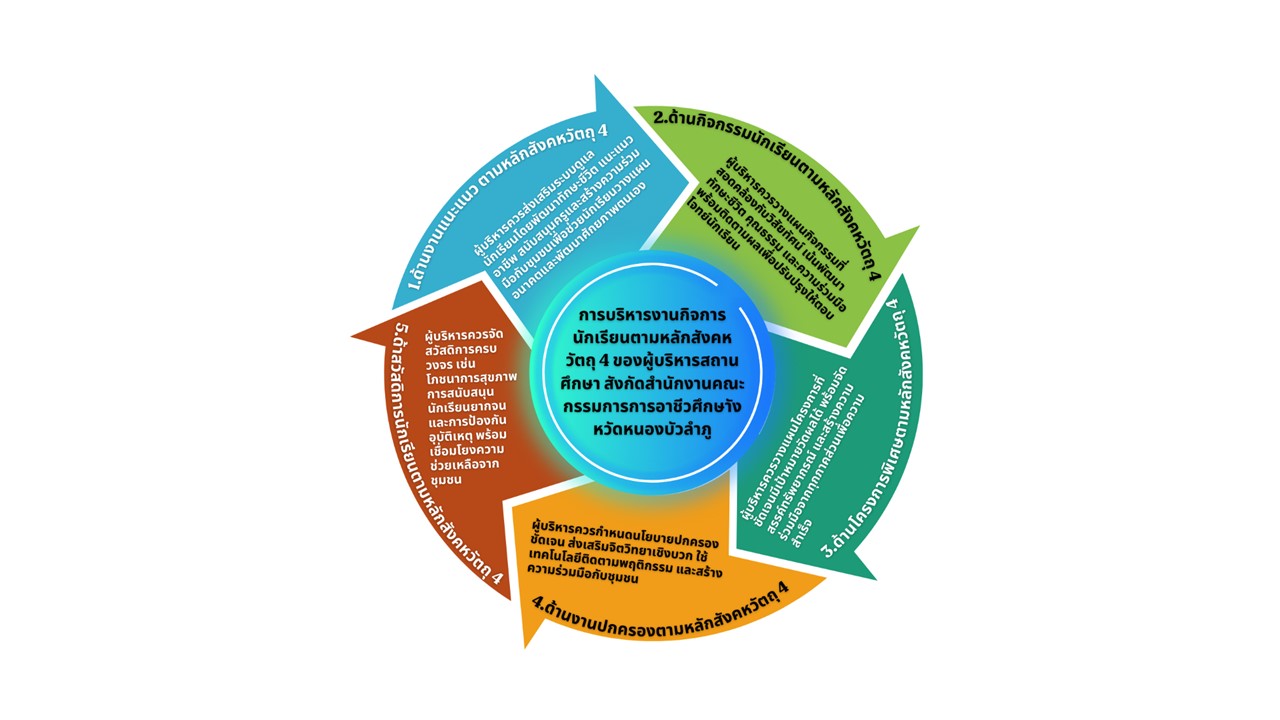
การวิจัยครั้งนี้มีวัตถุประสงค์เพื่อ 1) ศึกษาการบริหารงานกิจการนักเรียนตามหลัก สังคหวัตถุ 4 ของผู้บริหารสถานศึกษา 2) ศึกษาแนวทางการบริหารงานกิจการนักเรียนตามหลักสังคหวัตถุ 4 ของผู้บริหารสถานศึกษา สังกัดสำนักงานคณะกรรมการการอาชีวศึกษาจังหวัดหนองบัวลำภู ใช้การวิจัยแบบผสมวิธี โดยในการวิจัยเชิงปริมาณ เครื่องมือที่ใช้ คือ แบบสอบถาม ซึ่งมีค่าความเชื่อมั่นของแบบสอบถามทั้งฉบับเท่ากับ 0.92 กลุ่มตัวอย่าง ได้แก่ ผู้บริหารสถานศึกษา ครูและบุคลากรทางการศึกษา จำนวน 172 คน สถิติที่ใช้ คือ ค่าความถี่ ค่าร้อยละ ค่าเฉลี่ย และส่วนเบี่ยงเบนมาตรฐาน ส่วนการวิจัยเชิงคุณภาพ เครื่องมือที่ใช้ คือ แบบสัมภาษณ์ กลุ่มผู้ให้ข้อมูลสำคัญ ได้แก่ ผู้ทรงคุณวุฒิ จำนวน 9 รูป/คน โดยการเลือกแบบเจาะจง วิเคราะห์ข้อมูลโดยการวิเคราะห์เนื้อหาและนำเสนอเป็นความเรียง ผลการวิจัยพบว่า การบริหารงานกิจการนักเรียนตามหลักสังคหวัตถุ 4 สำหรับผู้บริหารสถานศึกษาในภาพรวม พบว่า มีค่าเฉลี่ยอยู่ในระดับมากที่สุด แนวทางการบริหารงานกิจการนักเรียน ตามหลักสังคหวัตถุ 4 สำหรับผู้บริหารสถานศึกษา พบว่า ในการบริหารงานด้านแนะแนวมีความโดดเด่นในการส่งเสริมศักยภาพนักเรียน ทั้งการแนะแนวอาชีพ การศึกษาต่อ และการพัฒนาทักษะชีวิต โดยได้รับการสนับสนุนจากครูและชุมชนอย่างมีประสิทธิภาพ ด้านโครงการพิเศษสามารถกำหนดเป้าหมายชัดเจนและจัดสรรทรัพยากรได้เหมาะสม ส่งผลให้โครงการต่าง ๆ ประสบความสำเร็จตามแผน ด้านงานปกครองมีการวางนโยบายที่ชัดเจน เน้นการใช้จิตวิทยาเชิงบวกและการสร้างความร่วมมือกับผู้ปกครองและชุมชน ด้านสวัสดิการนักเรียนได้รับการจัดการครอบคลุมทั้งด้านสุขภาพ โภชนาการ และการสนับสนุนนักเรียนยากจน และในด้านกิจกรรมนักเรียน สามารถจัดกิจกรรมที่หลากหลายเพื่อส่งเสริมคุณธรรม ทักษะชีวิต และสอดคล้องกับวิสัยทัศน์ของสถานศึกษา
Article Details
เอกสารอ้างอิง
กุสินา รอดทอง. (2567). การบริหารงานกิจการนักเรียนของโรงเรียนในสังกัดเทศบาลนครสุราษฎร์ธานี. http://ir.sru.ac.th/handle
เจ้าอธิการบุญช่วย โชติวํโส. (2563). การบริหารสถานศึกษาตามหลักอิทธิบาท 4 ในสถานศึกษาขั้นพื้นฐานอำเภอนาดูน สังกัดสำนักงานเขตพื้นที่การศึกษาประถมศึกษามหาสารคาม เขต 2. https://search.tci-thailand.org/article.html?b3BlbkFydGljbGUmaWQ9NjAwMjkz
พระครูวินัยธรวรวุฒิ เตชธมฺโม. (2565) รูปแบบการบริหารจัดการตามหลักสัปปุริสธรรม 7 ของโรงเรียนพระปริยัติธรรม แผนกสามัญศึกษา เขต 7. วิทยานิพนธ์ครุศาสตรดุษฎีบัณฑิต. มหาวิทยาลัยมหาจุฬาลงกรณราชวิทยาลัย.
พระธรรมโกศาจารย์, พุทธทาสภิกขุ. (2525). พุทธศาสนากับคนรุ่นใหม่และสังคมไทยในอนาคต. กรุงเทพมหานคร: สำนักพิมพ์สุขภาพใจ. https://bookonline.praphansarn.com/home/detail/44
พระธรรมปิฎก (ป. อ. ปยุตฺโต).(2564). พจนานุกรมพุทธศาสตร์ ฉบับประมวลธรรม. https://www.watnyanaves.net/uploads/File/books/pdf/dictionary_of_buddhism_pra-muan-dhaama.pdf
พระวีรวัฒน์ รอดสุโข. (2550). เปรียบเทียบผลสัมฤทธิ์ทางการเรียนและความคงทนในการเรียนรู้วิชา พระพุทธศาสนา เรื่อง สังคหวัตถุ 4 พรหมวิหาร 4 ไตรลักษณ์ 3 กลุ่มสร้างเสริมลักษณะนิสัย ชั้นประถมศึกษาปีที่ 4 ระหว่างการสอนด้วยหนังสือการ์ตูนและการสอนตามปกติ. วิทยานิพนธ์ศึกษาศาสตรมหาบัณฑิต สาขาวิชา หลักสูตรและการสอน. บัณฑิตวิทยาลัย: มหาวิทยาลัยมหาสารคาม.
พุทธทาสภิกขุ. (2563). บริหารธุรกิจแบบพุทธ. กรุงเทพฯ: อตัมมโย.
สมเด็จพระมหาวีรวงศ์ (พิมพ์ ธมฺมธโร), (2541). ธรรมะสร้างเยาวชน. กรุงเทพฯ: โรงพิมพ์มหามกุฏราชวิทยาลัย.
สมเด็จพระอริยวงศาคตญาณ วาศน์ วาสโน. (2538). สังคหวัตถุ 4. กรุงเทพฯ: โรงพิมพ์มหามกุฏราชวิทยาลัย.
สัมฤทธิ์ กางเพ็ง. (2560). ภาวะผู้นำทางหลักสูตร: กลยุทธ์การพัฒนาและนำหลักสูตรไปใช้. (พิมพ์ครั้งที่ 2). มหาสารคาม: อภิชาตการพิมพ์.
สำนักงานคณะกรรมการการศึกษาแห่งชาติ. (2567). นโยบายการศึกษาปัจจุบัน. https://moe360.blog/2023/12/06/p55122/
สิริวัฒน์ ศรีเครือดง. (2551). การสร้างมนุษยสัมพันธ์ตามแนวพระพุทธศาสนา: หลักธรรมสำหรับสั่งสอน สังคม. https://kku.world/9ep6en
สุนทร สายคำ, พระอธิการบุญช่วย โชติวํโส. (2560). ภาวะผู้นำของผู้บริหารในมุมมองของผู้ใต้บังคับบัญชา. วารสารสถาบันวิจัยพิมลธรรม. https://bri.mcu.ac.th/rsa/wp-content/uploads/elementor/forms/67288acf49abf.pdf
Kedsadup, Jatupron, Somkul Tharwonkit. (2024). แนวทางการประเมินการบริหารกิจการ นักเรียนของผู้บริหารสถานศึกษาเพื่อให้มีคุณลักษณะอันพึงประสงค์ โรงเรียนมัธยมศึกษา สังกัดสำนักงานเขต พื้นที่การศึกษามัธยมศึกษาเพชรบุรี. Journal of MCU Phetchaburi Review, 7(2), 326-314.
Kantasaro, P. N., Saikham, S., & Saengnont, K. (2024). การบริหารงานวิชาการตามหลักสังคหวัตถุ 4 ใน ศตวรรษที่ 21 ของโรงเรียนพระปริยัติธรรมสังกัดเขตพื้นที่การศึกษาพระปริยัติธรรมแผนกสามัญศึกษา เขต 8. Journal of Graduate MCU KhonKaen Campus, 11(2), 374-384.
Creswell, J.W. (2015). A Concise Introduction to Mixed Methods Research. Thousand Oaks, CA: SAGE.
