
รูปแบบการบริหารสถานศึกษาที่ให้ความสำคัญกับอิทธิพลของความร่วมมือสู่การปฏิบัติเพื่อความปลอดภัย ด้านอุบัติเหตุ อุบัติภัย ด้านการล่วงละเมิดทางเพศ ด้านการใช้ความรุนแรง และด้านสารเสพติด สำนักงานคณะกรรมการการศึกษาขั้นพื้นฐาน
Article Sidebar
Main Article Content
บทคัดย่อ
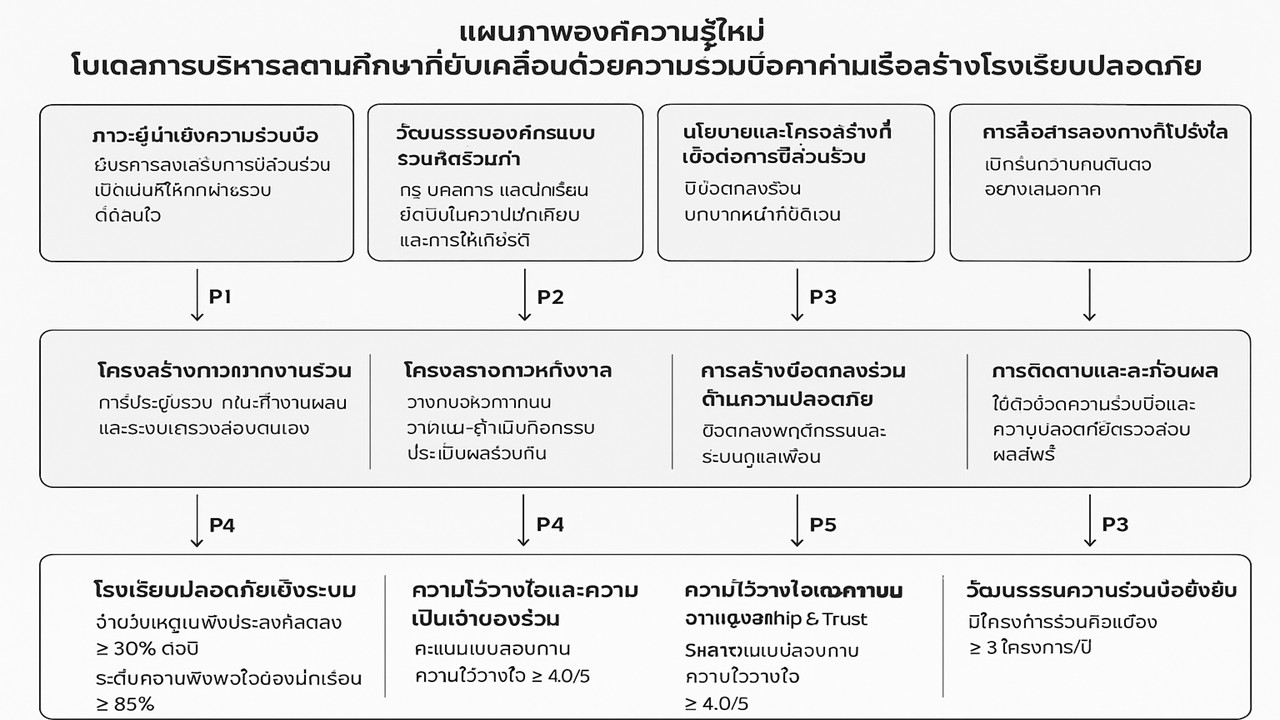
การวิจัยมีวัตถุประสงค์เพื่อ 1) ศึกษาปัจจัยและองค์ประกอบรูปแบบการบริหารสถานศึกษาที่ให้ความสำคัญกับอิทธิพลของความร่วมมือสู่การปฏิบัติเพื่อความปลอดภัยด้านอุบัติเหตุ อุบัติภัย ด้านการล่วงละเมิดทางเพศ ด้านการใช้ความรุนแรง และด้านสารเสพติด สำนักงานคณะกรรมการการศึกษาขั้นพื้นฐาน 2) พัฒนารูปแบบการบริหารสถานศึกษาที่ให้ความสำคัญกับอิทธิพลของความร่วมมือสู่การปฏิบัติเพื่อความปลอดภัยด้านอุบัติเหตุ อุบัติภัย ด้านการล่วงละเมิดทางเพศ ด้านการใช้ความรุนแรง และด้านสารเสพติด สำนักงานคณะกรรมการการศึกษาขั้นพื้นฐาน 3) ประเมินรูปแบบการบริหารสถานศึกษาที่ให้ความสำคัญกับอิทธิพลของความร่วมมือสู่การปฏิบัติเพื่อความปลอดภัยด้านอุบัติเหตุ อุบัติภัย ด้านการล่วงละเมิดทางเพศ ด้านการใช้ความรุนแรง และด้านสารเสพติด สำนักงานคณะกรรมการการศึกษาขั้นพื้นฐาน กลุ่มตัวอย่าง ได้แก่ ผู้อำนวยการสถานศึกษา 233 คน ครูแนะแนว 34 คน และผู้ปกครองนักเรียน 233 คน รวม 500 คน ได้มาจากการสุ่มแบบหลายขั้นตอน เครื่องมือที่ใช้ในการวิจัย ประกอบด้วย แบบสัมภาษณ์แบบกึ่งโครงสร้าง แบบสอบถาม และแบบประเมินรูปแบบ วิเคราะห์ข้อมูลโดยการ วิเคราะห์เนื้อหา การวิเคราะห์แบบซ้ำแล้วซ้ำเล่า การวิเคราะห์ข้อสรุปแบบอุปนัย สถิติที่ใช้ในการวิจัย ได้แก่ ความถี่ ร้อยละ มัธยฐาน พิสัยระหว่างควอไทล์ การวิเคราะห์องค์ประกอบ การถดถอยพหุคูณแบบขั้นตอน และการจัดหมวดหมู่ ผลวิจัยพบว่า 1) รูปแบบการบริหารสถานศึกษาที่ให้ความสำคัญกับอิทธิพลของความร่วมมือสู่การปฏิบัติเพื่อความปลอดภัยด้านอุบัติเหตุ อุบัติภัย ด้านการล่วงละเมิดทางเพศ ด้านการใช้ความรุนแรง และด้านสารเสพติด สำนักงานคณะกรรมการการศึกษาขั้นพื้นฐาน มีจำนวน 50 ตัวชี้วัด 7 องค์ประกอบ ได้แก่ ด้านนโยบายการจัดการศึกษา ด้านเทคโนโลยีนวัตกรรมที่ร่วมสมัย และสื่อออนไลน์ ด้านความร่วมมือและกระบวนการทำงาน ด้านการนำความรู้ทางทฤษฎีสู่การปฏิบัติ ด้านนิเวศวิทยาภายในและภายนอก ด้านแนวปฏิบัติการป้องกันอุบัติเหตุ อุบัติภัย ด้านแนวปฏิบัติจากสังคม 2) การพัฒนารูปแบบการบริหารสถานศึกษาที่ให้ความสำคัญกับอิทธิพลของความร่วมมือสู่การปฏิบัติเพื่อความปลอดภัยด้านอุบัติเหตุ อุบัติภัย ด้านการล่วงละเมิดทางเพศ ด้านการใช้ความรุนแรง และด้านสารเสพติด สำนักงานคณะกรรมการการศึกษาขั้นพื้นฐาน รูปแบบความร่วมมือที่สร้างขึ้นเป็นแบบพันธมิตรและการมีส่วนร่วมเครือข่ายตามความสามารถของตนและจากบุคคลต้นแบบในชุมชน ซึ่งประกอบด้วย หลักการความร่วมมือ เป้าหมาย หรือวัตถุประสงค์ โครงสร้างการทำงาน กิจกรรมบนความร่วมมือ การติดตามประเมินผล ตัวชี้วัดความสำเร็จ การสะท้อนผล และมีปัจจัยที่สนับสนุนให้เกิดความสำเร็จ คือ การประสานความร่วมมือ การทำความเข้าใจนโยบายทางการศึกษา การนำเทคโนโลยีนวัตกรรมที่ร่วมสมัย และสื่อออนไลน์ การเข้าใจนิเวศวิทยาภายในและภายนอกตัวนักเรียน 3) ประเมินรูปแบบการบริหารสถานศึกษาที่ให้ความสำคัญกับอิทธิพลของความร่วมมือสู่การปฏิบัติเพื่อความปลอดภัยด้านอุบัติเหตุ อุบัติภัย ด้านการล่วงละเมิดทางเพศ ด้านการใช้ความรุนแรง และด้านสารเสพติด สำนักงานคณะกรรมการการศึกษาขั้นพื้นฐาน โดยรวม อยู่ในระดับดีมาก ค่าเฉลี่ยเท่ากับ 4.57 ปัจจัยนำเข้า วิธีการ บทบาทหน้าที่ของผู้ปฏิบัติมีความเหมาะสม มีกระบวนการขั้นตอนในการดำเนินกิจกรรมที่มีความชัดเจน มีความเป็นไปได้ที่จะทำให้งานสำเร็จ
Article Details

อนุญาตภายใต้เงื่อนไข Creative Commons Attribution-NonCommercial-NoDerivatives 4.0 International License.
เอกสารอ้างอิง
กนกอร อุ่นสถานนท์. (2563). การบริหารสิ่งแวดล้อมและความปลอดภัยในสถานศึกษา. กรุงเทพฯ: สำนักพิมพ์มหาวิทยาลัย.
กระทรวงศึกษาธิการ.(2551). หลักสูตรแกนกลางการศึกษาขั้นพื้นฐาน พ.ศ. 2551. กรุงเทพฯ: กระทรวงศึกษาธิการ.
กุลชญา ชั้นเล็ก, พรศักดิ์ สุจริตรักษ์. (2567). การจัดสภาพแวดล้อมปลอดภัยในโรงเรียน. วารสารวิชาการศึกษา, 12(1), 45–60.
เฉลิมศักดิ์ บุญนา. (2560). ความร่วมมือระหว่างชุมชนและภาครัฐเพื่อความปลอดภัยในโรงเรียน. กรุงเทพฯ: สำนักพิมพ์มหาวิทยาลัย.
ช่อจิต หรั่งศิริ. (2560). แรงจูงใจและบรรยากาศความปลอดภัยในโรงเรียน. กรุงเทพฯ: สำนักพิมพ์มหาวิทยาลัย.
ธีรวุฒิ นิลเพ็ชร์. (2561). การป้องกันความรุนแรงในครอบครัวและชุมชน. กรุงเทพฯ: สำนักพิมพ์มหาวิทยาลัย.
นภาวรรณ อาชาเพ็ชร. (2560). การใช้เทคโนโลยีเพื่อป้องกันการรังแกทางไซเบอร์ในโรงเรียน. วารสารเทคโนโลยีการศึกษา, 8(2), 25–40.
บุญชม ศรีสะอาด. (2553). การพัฒนาความเชื่อมั่นของเครื่องมือวิจัยทางการศึกษา. วารสารวิจัยการศึกษา, 5(1), 22–33.
บุญธรรม กิจปรีดาบริสุทธิ์. (2553). สถิติสำหรับงานวิจัยทางการศึกษา. กรุงเทพฯ: สำนักพิมพ์แห่งจุฬาลงกรณ์มหาวิทยาลัย.
บุญเลี้ยง จอดนอก. (2561). รูปแบบเครือข่ายความร่วมมือเพื่อความปลอดภัยในโรงเรียน. สำนักพิมพ์มหาวิทยาลัย.
พรพจน์ โสภา. (2566). การพัฒนาทักษะการใช้ข้อมูลและการคิดวิเคราะห์สำหรับนักเรียนในศตวรรษที่ 21. สำนักพิมพ์มหาวิทยาลัย.
สมศักดิ์ ดลประสิทธิ์. (2559). การบริหารสถานศึกษายุคใหม่: การมีส่วนร่วมและความร่วมมือ. กรุงเทพฯ: โรงพิมพ์มหาวิทยาลัย.
สำนักงานกองทุนสนับสนุนการสร้างเสริมสุขภาพ. (2560). รายงานสถานการณ์สุขภาพและความปลอดภัยของเด็กและเยาวชนไทย. กรุงเทพฯ: สำนักงานกองทุน.
สำนักงานคณะกรรมการการศึกษาขั้นพื้นฐาน. (2556). คู่มือการบริหารจัดการสถานศึกษาเพื่อความปลอดภัย. กรุงเทพฯ: สพฐ.
สำนักงานคณะกรรมการการศึกษาขั้นพื้นฐาน. (2561). รายงานผลการประเมินสถานศึกษาไทย. กรุงเทพฯ: สพฐ.
สำนักงานคณะกรรมการการศึกษาขั้นพื้นฐาน. (2565). ข้อมูลสถิติและบริบทความปลอดภัยในสถานศึกษา. กรุงเทพฯ: สพฐ.
สำนักงานเลขาธิการสภาการศึกษา. (2560). รายงานสถานการณ์การศึกษาไทย. กรุงเทพฯ: สำนักงานเลขาธิการสภาการศึกษา.
สุชีรา ใจหวัง, จันทรัศม์ ภูติอริยวัฒน์. (2561). การสร้างความร่วมมือในโรงเรียนเพื่อความปลอดภัย. วารสารการศึกษาปฐมวัย, 15(1), 33–50.
Bandura, A. (1977). Social learning theory. Prentice-Hall.
Best, J., & Kahn, J. V. (2006). Research in education (10th ed.). Pearson.
Bogdan, R. C., & Biklen, S. K. (2007). Qualitative research for education: An introduction to theories and methods (5th ed.). Pearson.
Bronfenbrenner, U. (1979). The ecology of human development: Experiments by nature and design. Harvard University Press.
Cohen, L., Manion, L., & Morrison, K. (2011). Research methods in education (7th ed.). Routledge.
Comrey, A. L., & Lee, H. B. (1992). A first course in factor analysis (2nd ed.). Lawrence Erlbaum Associates.
Creswell, J. W. (2012). Educational research: Planning, conducting, and evaluating quantitative and qualitative research (4th ed.). Pearson.
Cronbach, L. J. (1951). Coefficient alpha and the internal structure of tests. Psychometrika, 16(3), 297–334. https://doi.org/10.1007/BF02310555
Erickson, F. (1986). Qualitative methods in research on teaching. In M. C. Wittrock (Ed.), Handbook of research on teaching (3rd ed., pp. 119–161). Macmillan.
Gallagher, S. (1991). Hermeneutics and education. State University of New York Press.
Hair, J. F., Anderson, R. E., Tatham, R. L., & Black, W. C. (1998). Multivariate data analysis (5th ed.). Prentice-Hall.
Hsu, C.-C., & Sandford, B. A. (2007). The Delphi technique: Making sense of consensus. Practical Assessment, Research & Evaluation, 12(10), 1–8.
Lincoln, Y. S., & Guba, E. G. (1985). Naturalistic inquiry. Sage.
Linstone, H. A., & Turoff, M. (2002). The Delphi method: Techniques and applications. Addison-Wesley.
Miles, M. B., Huberman, A. M., & Saldaña, J. (2014). Qualitative data analysis: A methods sourcebook (3rd ed.). Sage.
Okoli, C., & Pawlowski, S. D. (2004). The Delphi method as a research tool: An example, design considerations and applications. Information & Management, 42(1), 15–29. https://doi.org/10.1016/j.im.2003.11.002
Patton, M. Q. (1978). Utilization-focused evaluation. Sage.
Schmidt, R. C. (1997). Managing Delphi surveys using nonparametric statistical techniques. Decision Sciences, 28(3), 763–774. https://doi.org/10.1111/j.1540-5915.1997.tb01330
