
Research on Strategies to Enhance Kindergarten Teachers’ Self-Efficacy in Implementing Project Activities: A Case Study of Selected Kindergartens in Henan, China
Article Sidebar
Main Article Content
บทคัดย่อ
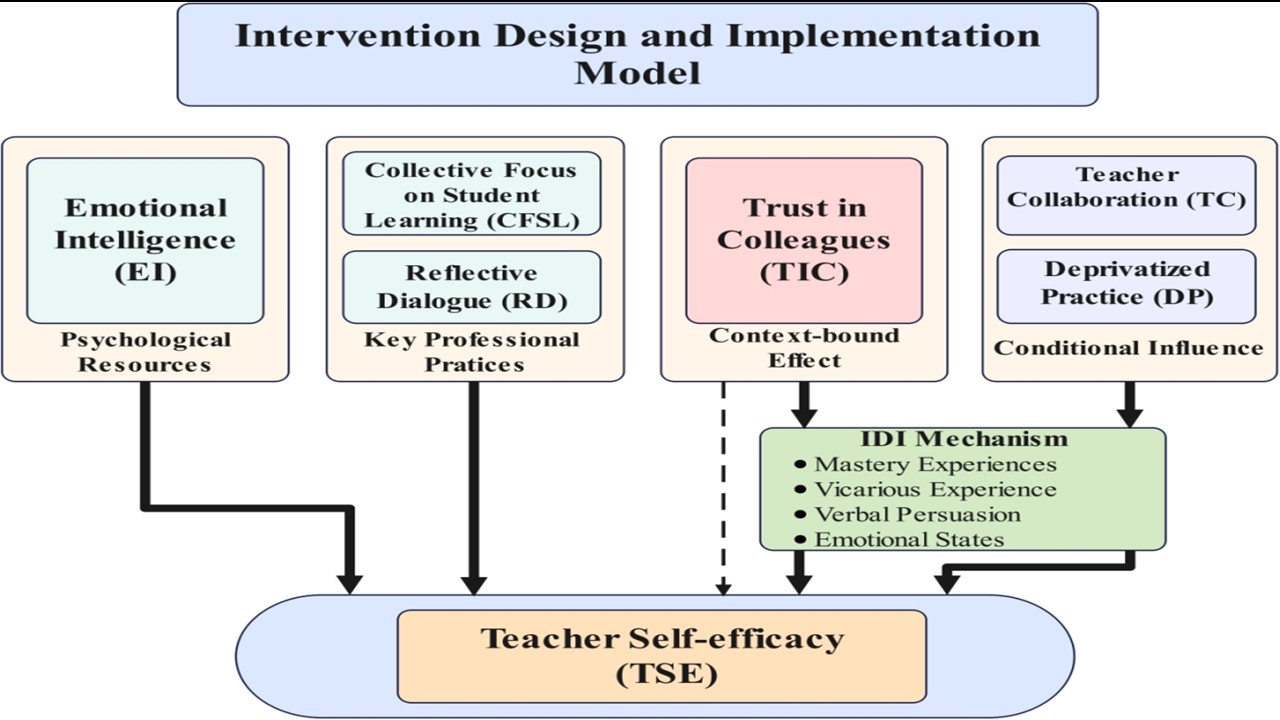
The purposes of this research were: 1) to explore the factors affecting kindergarten teachers’ self-efficacy in implementing project activities, based on the context of kindergartens in China, and 2) to enhance teachers’ self-efficacy in implementing project activities through an Intervention Design and Implementation (IDI) study. This study involved 203 teachers from three public kindergartens in Henan Province, China, employing an Intervention Design and Implementation (IDI) approach combined with a mixed-methods research paradigm. First, the questionnaire’s reliability and validity were assessed using Item-Objective Congruence (IOC) and a pilot test, and multiple linear regression (MLR) was used to analyze relationships among variables. Subsequently, 30 teachers were selected via convenience sampling to undergo a 16-week IDI intervention; 10 of them participated in semi-structured interviews. Finally, paired-sample t-tests were conducted to compare pre- and post-intervention data and verify the intervention effect. The study found that: 1) collective focus on student learning, reflective dialogue, colleague trust, and emotional intelligence have significant effects on teachers’ self-efficacy, whereas derivatized practice and teacher collaboration do not have significant effects. 2) After the IDI intervention, all independent variables in this study showed significant improvement (p < 0.05). Concurrently, there was a significant difference in teacher self-efficacy between the pre-IDI and post-IDI conditions, t (29) = -5.36, p < .001, with a mean difference of -0.775.
Keywords: Intervention Design and Implementation, Teacher Self-efficacy, Project Activities, Kindergarten Teachers, Professional Learning Community
Article Details

อนุญาตภายใต้เงื่อนไข Creative Commons Attribution-NonCommercial-NoDerivatives 4.0 International License.
เอกสารอ้างอิง
Ahn, J., & Bowers, A. J. (2024). Do teacher beliefs mediate leadership and teacher behaviors? Testing teacher self-efficacy’s mediation role between leadership for learning and teacher outcomes. Journal of Educational Administration, 62(2), 197–222. https://doi.org/10.1108/JEA-12-2022-0227
Algan, Y., Cahuc, P., & Shleifer, A. (2013). Teaching practices and social capital. American Economic Journal: Applied Economics, 5(3), 189–210. https://doi.org/10.1257/app.5.3.189
Bandura, A. (1977). Self-efficacy: Toward a unifying theory of behavioral change. Psychological Review, 84(2), 191–215. https://doi.org/10.1037/0033-295X.84.2.191
Bandura, A. (1997). Self-efficacy: The exercise of control (Vol. 11). NY: Freeman.
Borko, H. (2004). Professional development and teacher learning: mapping the terrain. Educational Researcher, 33(8), 3–15. https://doi.org/10.3102/0013189X033008003
Bradberry, T., & Greaves, J. (2009). Emotional Intelligence 2.0. TalentSmart.
Cai, Y., Wang, L., Bi, Y., & Tang, R. (2022). How can the professional community influence teachers’ work engagement? The mediating role of teacher self-Efficacy. Sustainability, 14(16), 10029. https://doi.org/10.3390/su141610029
Caprara, G. V., Barbaranelli, C., Borgogni, L., & Steca, P. (2003). Efficacy beliefs as determinants of teachers’ job satisfaction. Journal of Educational Psychology, 95(4), 821–832. https://doi.org/10.1037/0022-0663.95.4.821
Caprara, G. V., Barbaranelli, C., Steca, P., & Malone, P. S. (2006). Teachers’ self-efficacy beliefs as determinants of job satisfaction and students’ academic achievement: A study at the school level. Journal of School Psychology, 44(6), 473–490. https://doi.org/10.1016/j.jsp.2006.09.001
Choi, J., Lee, J. H., & Kim, B. (2019). How does learner-centered education affect teacher self-efficacy? The case of project-based learning in Korea. Teaching and Teacher Education, 85, 45–57. https://doi.org/10.1016/j.tate.2019.05.005
Cohen, J. (2013). Statistical power analysis for the behavioral sciences (2nd ed.). Routledge.
Curci, A., Lanciano, T., & Soleti, E. (2014). Emotions in the classroom: the role of teachers’ emotional intelligence ability in predicting students’ achievement. The American Journal of Psychology, 127(4), 431–445. https://doi.org/10.5406/amerjpsyc.127.4.0431
De Neve, D., Devos, G., & Tuytens, M. (2015). The importance of job resources and self-efficacy for beginning teachers’ professional learning in differentiated instruction. Teaching and Teacher Education, 47, 30–41. https://doi.org/10.1016/j.tate.2014.12.003
Dellinger, A. B., Bobbett, J. J., Olivier, D. F., & Ellett, C. D. (2008). Measuring teachers’ self-efficacy beliefs: Development and use of the TEBS-Self. Teaching and Teacher Education, 24(3), 751–766. https://doi.org/10.1016/j.tate.2007.02.010
Dolev, N., & Leshem, S. (2017). Developing emotional intelligence competence among teachers. Teacher Development, 21(1), 21–39. https://doi.org/10.1080/13664530.2016.1207093
Erozkan, A., Dogan, U., & Adiguzel, A. (2016). Self-efficacy, self-esteem, and subjective happiness of teacher candidates at the pedagogical formation certificate program. Journal of Education and Training Studies, 4(8), 72–82. https://doi.org/10.11114/jets.v4i8.1535
Guo, Y., Justice, L. M., Sawyer, B., & Tompkins, V. (2011). Exploring factors related to preschool teachers’ self-efficacy. Teaching and Teacher Education, 27(5), 961–968. https://doi.org/10.1016/j.tate.2011.03.008
Hammad, W., Hilal, Y. Y., & Bellibaş, M. Ş. (2024). Exploring the link between principal instructional leadership and differentiated instruction in an understudied context: The role of teacher collaboration and self-efficacy. International Journal of Educational Management, 38(4), 1184–1203. https://doi.org/10.1108/IJEM-09-2023-0441
Heaton, M. (2013). An examination of the relationship between professional learning community variables and teacher self-efficacy (Doctoral dissertation, University of Windsor). https://hdl.handle.net/20.500.14776/5209
Hord, S. M. (1997). Professional learning communities: Communities of continuous inquiry and improvement. Southwest Educational Development Laboratory.
Huang, S., Yin, H., & Lv, L. (2019). Job characteristics and teacher well-being: The mediation of teacher self-monitoring and teacher self-efficacy. Educational Psychology, 39(3), 313–331. https://doi.org/10.1080/01443410.2018.1543855
Jennings, P. A., & Greenberg, M. T. (2009). The prosocial classroom: Teacher social and emotional competence in relation to student and classroom outcomes. Review of Educational Research, 79(1), 491–525. https://doi.org/10.3102/0034654308325693
Kelchtermans, G. (2006). Teacher collaboration and collegiality as workplace conditions. A review. Zeitschrift für Pädagogik, 52(2), 220–237. https://doi.org/10.25656/01:4454
Keung, C. P. C., Yin, H., Tam, W. W. Y., Chai, C. S., & Ng, C. K. K. (2020). Kindergarten teachers’ perceptions of whole-child development: The roles of leadership practices and professional learning communities. Educational Management Administration & Leadership, 48(5), 875–892. https://doi.org/10.1177/1741143219864941
Klassen, R. M., Bong, M., Usher, E. L., Chong, W. H., Huan, V. S., Wong, I. Y. F., & Georgiou, T. (2009). Exploring the validity of a teachers’ self-efficacy scale in five countries. Contemporary Educational Psychology, 34(1), 67–76. https://doi.org/10.1016/j.cedpsych.2008.08.001
Leithwood, K., Patten, S., & Jantzi, D. (2010). Testing a conception of how school leadership influences student learning. Educational Administration Quarterly, 46(5), 671–706. https://doi.org/10.1177/0013161X10377347
Li, Y. (2012). The negotiated project-based learning: Understanding the views and practice of kindergarten teachers about the implementation of project learning in Hong Kong. Education 3-13, 40(5), 473–486. https://doi.org/10.1080/03004279.2010.544662
Liang, W., Song, H., & Sun, R. (2022). Can a professional learning community facilitate teacher well-being in China? The mediating role of teaching self-efficacy. Educational Studies, 48(3), 358–377. https://doi.org/10.1080/03055698.2020.1755953
Liu, Y., Bellibaş, M. Ş., & Gümüş, S. (2021). The effect of instructional leadership and distributed leadership on teacher self-efficacy and job satisfaction: Mediating roles of supportive school culture and teacher collaboration. Educational Management Administration & Leadership, 49(3), 430–453. https://doi.org/10.1177/1741143220910438
Lomos, C., Hofman, R. H., & Bosker, R. J. (2011). Professional communities and student achievement – a meta-analysis. School Effectiveness and School Improvement, 22(2), 121–148. https://doi.org/10.1080/09243453.2010.550467
Louis, K. S., Kruse, S., & Raywid, M. A. (1996). Putting teachers at the center of reform: Learning schools and professional communities. NASSP Bulletin, 80(580), 9–21. https://doi.org/10.1177/019263659608058003
Louis, K. S., Marks, H. M., & Kruse, S. (1996). Teachers’ professional community in restructuring schools. American Educational Research Journal, 33(4), 757–798. https://doi.org/10.3102/00028312033004757
Martin, J. J., Mccaughtry, N., Hodges-Kulinna, P., & Cothran, D. (2008). The influences of professional development on teachers’ self-efficacy toward educational change. Physical Education & Sport Pedagogy, 13(2), 171–190. https://doi.org/10.1080/17408980701345683
Morris, D. B., Usher, E. L., & Chen, J. A. (2017). Reconceptualizing the sources of teaching self-Efficacy: A critical review of emerging literature. Educational Psychology Review, 29(4), 795–833. https://doi.org/10.1007/s10648-016-9378-y
Morrissey, M. S. (2000). Professional Learning Communities: An Ongoing Exploration. Southwest Educational Development Laboratory.
Ngereja, B., Hussein, B., & Andersen, B. (2020). Does project-based learning (PBL) promote student learning? A performance evaluation. Education Sciences, 10(11), 330. https://doi.org/10.3390/educsci10110330
O’Brien, R. M. (2007). A caution regarding rules of thumb for variance inflation factors. Quality & Quantity, 41(5), 673–690. https://doi.org/10.1007/s11135-006-9018-6
Pan, B., Fan, S., Wang, Y., & Li, Y. (2022). The relationship between trait mindfulness and subjective wellbeing of kindergarten teachers: The sequential mediating role of emotional intelligence and self-efficacy. Frontiers in Psychology, 13, 973103. https://doi.org/10.3389/fpsyg.2022.973103
Porter, T. (2014). Professional Learning Communities and Teacher Self-Efficacy (Doctoral dissertation, George Fox University). https://digitalcommons.georgefox.edu/edd/25
Ronfeldt, M., Farmer, S. O., McQueen, K., & Grissom, J. A. (2015). Teacher collaboration in instructional teams and student ahievement. American Educational Research Journal, 52(3), 475–514. https://doi.org/10.3102/0002831215585562
Rousseau, D. M., Sitkin, S. B., Burt, R. S., & Camerer, C. (1998). Introduction to special topic forum: Not so different after all: A cross-discipline view of trust. The Academy of Management Review, 23(3), 393–404. http://www.jstor.org/stable/259285
Salovey, P., & Mayer, J. D. (1990). Emotional intelligence. Imagination, Cognition and Personality, 9(3), 185–211. https://doi.org/10.2190/DUGG-P24E-52WK-6CDG
Schaap, H., & De Bruijn, E. (2018). Elements affecting the development of professional learning communities in schools. Learning Environments Research, 21(1), 109–134. https://doi.org/10.1007/s10984-017-9244-y
Sehgal, P., Nambudiri, R., & Mishra, S. K. (2017). Teacher effectiveness through self-efficacy, collaboration and principal leadership. International Journal of Educational Management, 31(4), 505–517. https://doi.org/10.1108/IJEM-05-2016-0090
Spencer, J. (2020). The association between teacher self-efficacy, teacher motivation and the implementation of project-based learning (PBL) teaching methods (Doctoral dissertation, George Fox University). https://digitalcommons.georgefox.edu/edd/145
Tschannen-Moran, M. (2014). Trust matters: Leadership for successful schools. Wiley.
Tschannen-Moran, M., & Hoy, A. W. (2001). Teacher efficacy: Capturing an elusive construct. Teaching and Teacher Education, 17(7), 783–805. https://doi.org/10.1016/s0742-051x(01)00036-1
Valckx, J., Vanderlinde, R., & Devos, G. (2020). Departmental PLCs in secondary schools: The importance of transformational leadership, teacher autonomy, and teachers’ self-efficacy. Educational Studies, 46(3), 282–301. https://doi.org/10.1080/03055698.2019.1584851
Valente, S., & Lourenço, A. A. (2020). Conflict in the classroom: How teachers’ emotional intelligence influences conflict management. Frontiers in Education, 5, Article 5. https://doi.org/10.3389/feduc.2020.00005
Valente, S., Veiga-Branco, A., Rebelo, H., Lourenço, A. A., & Cristóvão, A. M. (2020). The relationship between emotional intelligence ability and teacher efficacy. Universal Journal of Educational Research, 8(3), 916–923. https://doi.org/10.13189/ujer.2020.080324
Wong, C. S., & Law, K. S. (2002). The effects of leader and follower emotional intelligence on performance and attitude: An exploratory study. The Leadership Quarterly, 13(3), 243–274. https://doi.org/10.1016/S1048-9843(02)00116-1
Wu, Y., Lian, K., Hong, P., Liu, S., Lin, R. M., & Lian, R. (2019). Teachers’ emotional intelligence and self-efficacy: Mediating role of teaching performance. Social Behavior and Personality: An International Journal, 47(3), 1–10. https://doi.org/10.2224/sbp.7869
Ye, X., Ahmad, N. A., Burhanuddin, N. A. N., Na, M., & Li, D. (2024). Preschool teachers’ emotional competence and teacher self-efficacy towards preschool performance in Zhejiang Province of China. Behavioral Sciences, 14(4), 280. https://doi.org/10.3390/bs14040280
Yin, H., Huang, S., & Lee, J. C. K. (2017). Choose your strategy wisely: Examining the relationships between emotional labor in teaching and teacher efficacy in Hong Kong primary schools. Teaching and Teacher Education, 66, 127–136. https://doi.org/10.1016/j.tate.2017.04.006
Yin, H., Lee, J. C. K., Jin, Y. L., & Zhang, Z. (2013). The effect of trust on teacher empowerment: The mediation of teacher efficacy. Educational Studies, 39(1), 13–28. https://doi.org/10.1080/03055698.2012.666339
Yin, H., To, K. H., Keung, C. P. C., & Tam, W. W. Y. (2019). Professional learning communities count: Examining the relationship between faculty trust and teacher professional learning in Hong Kong kindergartens. Teaching and Teacher Education, 82, 153–163. https://doi.org/10.1016/j.tate.2019.03.019
Zhang, L., & Ma, Y. (2023). A study of the impact of project-based learning on student learning effects: A meta-analysis study. Frontiers in Psychology, 14, 1202728. https://doi.org/10.3389/fpsyg.2023.1202728
Zheng, X., & Luo, Y. (2024). How do departmental professional learning communities and teacher leadership matter for teacher self-efficacy? A multi-level analysis. Journal of Professional Capital and Community, 9(1), 51–67. https://doi.org/10.1108/JPCC-07-2023-0051
Zheng, X., Yin, H., & Li, Z. (2019). Exploring the relationships among instructional leadership, professional learning communities and teacher self-efficacy in China. Educational Management Administration & Leadership, 47(6), 843–859. https://doi.org/10.1177/1741143218764176
