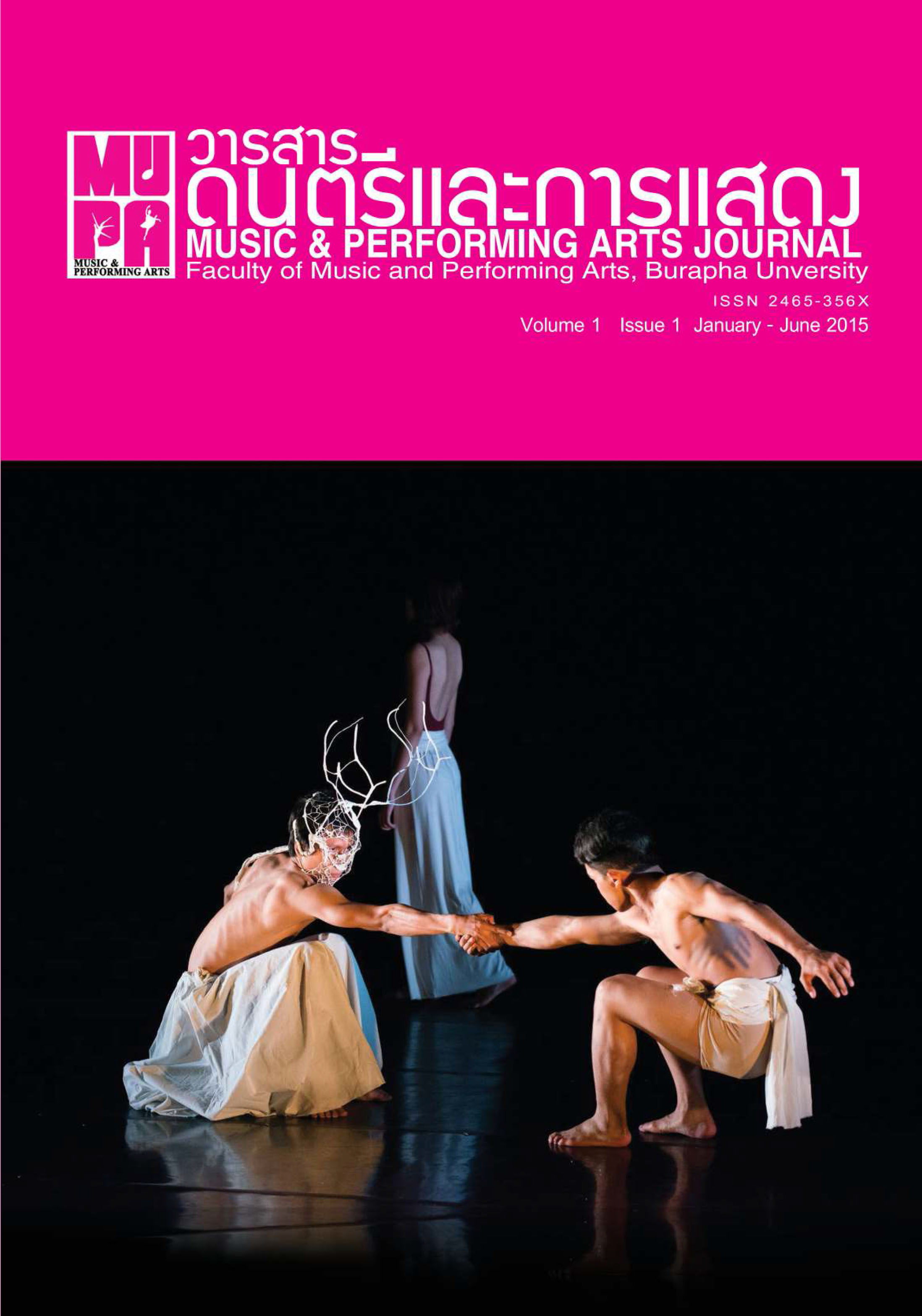
Postmodern Dance in Japan: History and Concept of Butoh
Keywords:
Butoh, Postmodern dance, Japanese dance, Avant-garde danceAbstract
The objective of this article is to study background and perspective of Butoh, the contemporary dance of Japan. Butoh Dance was highly admired by western scholars and
artists as avant-garde dance which refers to state-of-the-art dance that is comparable to postmodern dance. “Butoh” refers to dance of darkness and its history has begun after
World War 2, during 1950 decade. The pioneers of Butoh are Tatsumi Hijikata and Kazuo Ohno. Butoh’s philosophy is “Hidden beauty in ugliness” as it is likely to describe stories
of nightmares, poems, lust, dark side of human’s spirits. In term of concept, Butoh Danceapplies applies story and rationale of nature to identify body movement and uses colors to convey message. Mostly white is used as the color represents death or ending. Ugliness is presented through external expression such as twisted face or exotic movement. Actors are likely to improvise to express imagination, creating different movement. Occasionally, Butoh is performed without cloh or hair (shaved head). This concept can be concluded that Butoh Danve applies philosophy of human lives and nature as basic performance model.