
อิทธิพลของปัจจัยด้านความพึงพอใจ ความไว้วางใจ และความภักดีในแบรนด์ ของผู้บริโภคต่อความตั้งใจซื้อสินค้าตลาดออนไลน์
Article Sidebar
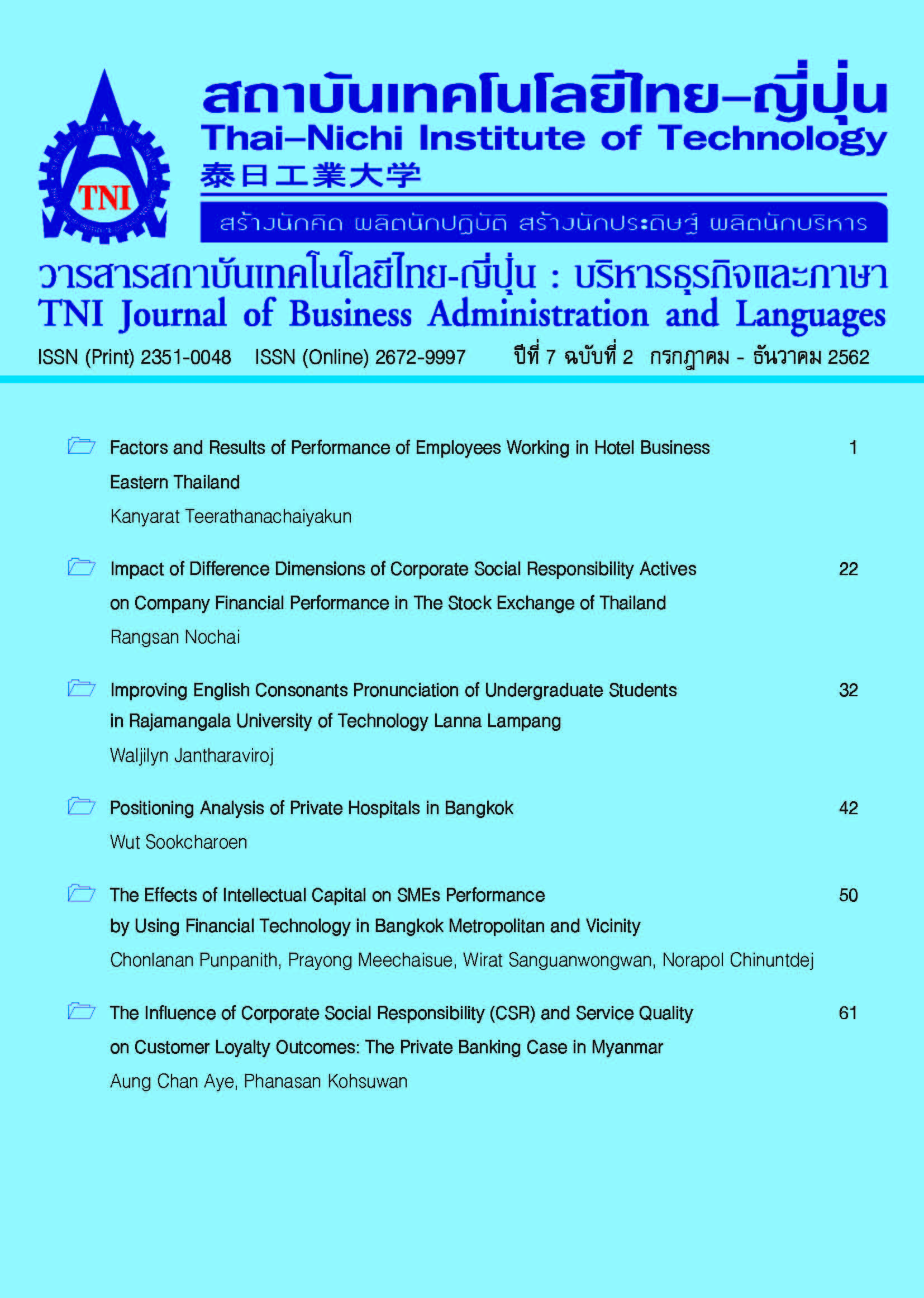
Main Article Content
บทคัดย่อ
งานวิจัยนี้มีวัตถุประสงค์เพื่อศึกษาอิทธิพลของปัจจัยด้านความพึงพอใจ ความไว้วางใจ และความภักดีในแบรนด์ของผู้บริโภคต่อความตั้งใจซื้อสินค้าตลาดออนไลน์ โดยใช้การวิจัยเชิงปริมาณ ด้วยการเก็บข้อมูลจากแบบสอบถามกลุ่มตัวอย่างในพื้นที่กรุงเทพมหานครที่เคยมีประสบการณ์ในการซื้อสินค้าทางการตลาดออนไลน์ จำนวน 400 คน โดยใช้การสุ่มตัวอย่างแบบแบ่งกลุ่ม และวิเคราะห์ข้อมูลด้วยจำนวน ร้อยละ ค่าเฉลี่ย และการวิเคราะห์การถดถอยพหุคูณ ผลการวิจัย พบว่า ปัจจัยด้านความภักดีของผู้บริโภค สามารถพยากรณ์การตัดสินใจซื้อสินค้าตลาดออนไลน์ในครั้งต่อไปได้มากที่สุด ประกอบด้วย 1) การเปลี่ยนความชื่นชอบของท่านเกี่ยวกับเว็บไซต์/แอพพลิเคชั่นตลาดออนไลน์ที่ท่านใช้อยู่ขณะนี้ เป็นการเปลี่ยนความคิดเห็นครั้งใหญ่ของท่าน 2) ท่านตั้งใจที่จะเลือกใช้สินค้าจากเว็บไซต์/แอพพลิเคชั่นตลาดออนไลน์ที่ท่านใช้อยู่ขณะนี้อย่างต่อเนื่อง สามารถพยากรณ์การตัดสินใจซื้อสินค้าตลาดออนไลน์ในครั้งต่อไป ได้ดีที่สุด ร้อยละ 46 (Adjusted R2 = 0.46) ส่วนปัจจัยด้านความไว้วางใจของผู้บริโภคต่อการตัดสินใจซื้อสินค้าตลาดออนไลน์ในครั้งต่อไป ประกอบด้วย 1) เว็บไซต์/ แอพพลิเคชั่นตลาดออนไลน์ที่ท่านเลือกซื้อสินค้าให้ความสำคัญและห่วงใยในความรู้สึกของลูกค้า 2) เว็บไซต์/ แอพพลิเคชั่นตลาดออนไลน์ที่ท่านเลือกซื้อสินค้าสามารถไว้วางใจได้ สามารถพยากรณ์การตัดสินใจซื้อสินค้าตลาดออนไลน์ในครั้งต่อไป ได้ดีที่สุด ร้อยละ 20 (Adjusted R2 = 0.20) และปัจจัยด้านความพึงพอใจของผู้บริโภคต่อการตัดสินใจซื้อสินค้าตลาดออนไลน์ในครั้งต่อไป ประกอบด้วย 1) ท่านเห็นว่าการเลือกใช้บริการซื้อสินค้าจากเว็บไซต์/แอพพลิเคชั่นตลาดออนไลน์ที่ท่านมักใช้บริการนั้น เป็นสิ่งถูกต้องแล้ว 2) เว็บไซต์/ แอพพลิเคชั่นตลาดออนไลน์ที่ท่านเลือกซื้อสินค้าสามารถสร้างความพึงพอใจให้ท่านได้มากกว่าที่คาดหวังไว้ สามารถพยากรณ์การตัดสินใจซื้อสินค้าตลาดออนไลน์ในครั้งต่อไป ได้ดีที่สุด ร้อยละ 24 (Adjusted R2 = 0.24)
Article Details
นโยบายการรับบทความ
กองบรรณาธิการวารสารสถาบันเทคโนโลยีไทย-ญี่ปุ่น มีความยินดีรับบทความจากอาจารย์ นักศึกษา และผู้ทรงคุณวุฒิในสาขาบริหารธุรกิจและภาษา ที่เขียนเป็นภาษาไทยหรือภาษาอังกฤษ ซึ่งผลงานวิชาการที่ส่งมาขอตีพิมพ์ต้องไม่เคยเผยแพร่ในสิ่งพิมพ์อื่นใดมาก่อน และต้องไม่อยู่ในระหว่างการพิจารณาของวารสารอื่นที่นำส่ง ดังนั้นผู้สนใจที่จะร่วมเผยแพร่ผลงานและความรู้ที่ศึกษามาสามารถนำส่งบทความได้ที่กองบรรณาธิการเพื่อเสนอต่อคณะกรรมการกลั่นกรองบทความพิจารณาจัดพิมพ์ในวารสารต่อไป ทั้งนี้บทความที่สามารถเผยแพร่ได้ประกอบด้วยบทความวิจัย ผู้สนใจสามารถศึกษาและจัดเตรียมบทความจากคำแนะนำสำหรับผู้เขียนบทความ
การละเมิดลิขสิทธิ์ถือเป็นความรับผิดชอบของผู้ส่งบทความโดยตรง บทความที่ได้รับการตีพิมพ์ต้องผ่านการพิจารณากลั่นกรองคุณภาพจากผู้ทรงคุณวุฒิและได้รับความเห็นชอบจาก กองบรรณาธิการ
ข้อความที่ปรากฏภายในบทความของแต่ละบทความที่ตีพิมพ์ในวารสารวิชาการเล่มนี้ เป็น ความคิดเห็นส่วนตัวของผู้เขียนแต่ละท่าน ไม่เกี่ยวข้องกับสถาบันเทคโนโลยีไทย-ญี่ปุ่น และคณาจารย์ท่านอื่น ๆ ในสถาบัน แต่อย่างใด ความรับผิดชอบด้านเนื้อหาและการตรวจร่างบทความแต่ละบทความเป็นของผู้เขียนแต่ละท่าน หากมีความผิดพลาดใด ๆ ผู้เขียนแต่ละท่านจะต้องรับผิดชอบบทความของตนเองแต่ผู้เดียว
กองบรรณาธิการขอสงวนสิทธิ์มิให้นำเนื้อหา ทัศนะ หรือข้อคิดเห็นใด ๆ ของบทความในวารสารวิชาการ สถาบันเทคโนโลยีไทย-ญี่ปุ่น ไปเผยแพร่ก่อนได้รับอนุญาตจากผู้นิพนธ์อย่างเป็นลายลักษณ์อักษร ผลงานที่ได้รับการตีพิมพ์ถือเป็นลิขสิทธิ์ของวารสารสถาบันเทคโนโลยีไทย-ญี่ปุ่น
หากต้องการสอบถามข้อมูลเพิ่มเติมที่
- กองบรรณาธิการ วารสารสถาบันเทคโนโลยีไทย-ญี่ปุ่น
- ฝ่ายวิจัยและนวัตกรรม สถาบันเทคโนโลยีไทย-ญี่ปุ่น
เลขที่ 1771/1 สถาบันเทคโนโลยีไทย-ญี่ปุ่น ซอยพัฒนาการ 37-39 ถนนพัฒนาการ แขวงสวนหลวง เขตสวนหลวง กรุงเทพมหานคร 10250 ติดต่อกับคุณพิมพ์รต พิพัฒนกุล (02) 763-2752 , คุณอาริสา จิระเวชถาวร (02) 763-2600 Ext. 2704 Fax. (02) 763-2754 หรือ E-mail: JBAL@tni.ac.th
เอกสารอ้างอิง
Araya Ongiem and Phongthara Vichitvejpaisal. (2018). Validation of the Tests. (In Thai). Thai J Anesthesiol, 44(1), 36-42.
Bagram, Mohammad, M. and Khan, S. (2012). Attaining Customer Loyalty! The Role of Consumer Attitude and Consumer Behavior. International Review of Management and Business Research, 1(1), 1-8.
Bangkok Office. (2017). Bangkok Statistics 2559. Bangkok: Department of Strategies and Evaluation.
Becerra, E., and Korgaonkar, P. (2011). Effects of trust beliefs on consumers' online intention. European Journal of Marketing, 45(6), 936-962.
Chinnawoot S. (2015). Impact of Website Characteristic, Online Trust, E-Loyalty, E-Satisfaction and Brand Image to Online Hotel Booking Intentions. (In Thai). (Master’s thesis, Thammasat University, Bangkok). Retrieved from https://ethesisarchive.library.tu.ac.th/thesis/2015/TU_2015_5702037218_3933_2533.pdf
Chow, C., and Zhang, L. (2008). Measuring Consumer Satisfaction and Dissatifaction Intensities to Identify Satisfiers and Dissatisfiers. Journal of Consumer Satisfaction, Dissatisfaction and Complaining Behavior, 21, 66-79.
Dixon, J., Bridson, K., Evans, J., and Morrison, M. (2005). An alternative perspective on relationships, loyalty and future store choice. The International Review of Retail, Distribution and Consumer Research, 15(4), 351-374.
Duncan, T. (2009). Principles of advertising and IMC. Boston: McGraw Hill.
Eid, M.I. (2011). Determinants of e-commerce customer satisfaction, trust and loyalty in Saudi Arabia. Journal of electronic commerce Research, 12(1), 78-93.
Electronic Transactions Development Agency. (2016). Value of E-Commerce Survey in Thailand 2016. Ministry of Digital Economy and Society. (In Thai) Retrieved from https://www.etda.or.th/publishing-detail/value-of-e- commerce-survey-2016.html.
Frambach, R. T., Roest, H. C. A., and Krishnan, T. V. (2007). The impact of consumer Internet experience on channel preference and usage intentions across the different stages of the buying process. Journal of Interactive Marketing, 21(2), 26-41.
Ganiyu, A.R., Uche I.I. and Elizabeth, A. (2012). Is customer satisfaction an indicator of customer loyalty?. Australian Journal of Business and Management Research, 2(70), 14-20.
Gefen, D., Karahanna, E. and Straub, D.W. (2003). Trust and TAM in Online Shopping: An Integrated Model. MIS Quarterly, 27, 51-90.
Guenzi, P., and Pelloni, O. (2004). The impact of interpersonal relationships on customer satisfaction and loyalty to the service provider. International Journal of Service Industry Management, 15(4), 365-384.
Hayeemad, M., and Polyorat, K. (2013). Brand Loyalty: The Attitudinal and Behavioral Dimensions. (In Thai). Journal of Business, Economics and Communications, 8(1), 67-73. Retrieved from https://www.tcithaijo.org/index.php/BECJournal/article/view/54860/45532
Jidapa, Thadhom. (2017). Social Media Marketing, Trust and Information System Quality Affecting Products’Purchase Decision through Facebook Live of Online Customers in Bangkok. (Master’s Thesis, Bangkok University, Bangkok). Retrieved from https://dspace.bu.ac.th/bitstream/123456789/2478/1/jidapa_thad.pdf
Julander, C., Soderlund, M., and Soderberg, R. (2003), Effects of switching barriers on satisfaction, repurchase intentions and attitudinal loyalty. SSE/EFI Working Paper Series in Business Administration, Stockholm School of Economics, Stockholm.
Khadka, K. and Maharjan, S. (2017). Customer Satisfaction and Customer Loyalty. (Master’s thesis), Centria University of Applied Sciences. Finland.
Kitti, Siripullop. (2000). Electronic Marketing. Journal of Business Administration, 87, 43-56.
Kritchanat Santawee. (2017). The Influence of Corporate Reputation on Brand Loyalty. Research Nakhon Phanom University Journal, (In Thai), 7(2), 81-89.
McKnight, D.H., Choudhury, V. and Kacmar, C. (2002). The Impact of Initial Consumer Trust on Intentions to Transact with a Web Site: A Trust Building Model. The Journal of Strategic Information Systems, 11, 297-323.
Mihelis, G., Grigoroudis, E., Siskos, Y. and Malandrakis, Y. (2001). Customer satisfaction measurement in the private bank sector. European Journal of Operational Research, 130(2), 347-360.
Mosavi, S. A. and Ghaedi, M. (2012). A survey on the relationship between trust, customer loyalty, commitment and repurchase intention. African Journal of Business Management, 6(36), 10089-10098.
PostToday. (2019). Thai’s Champion E-Commerce: The Top of CLMVT almost 3.1 Trillion. (In Thai). Retrieved from https://www.posttoday.com/aec/news/597032.
Reichheld, F., and Schefter, P. (2000). E-Loyalty Your Secret Weapon on the Web. Harvard Business Review, 78(4), 105-113.
Ring, P.S. and Van de Ven, A.H. (1994). Developmental process of cooperative interorganizational relationships. Academy of management review, 23(3), 90-118.
Thanyanan, Worasetthapong. (2015). Trust in LAZADA E-Commerce. (In Thai). (Doctoral Thesis, Rajamangala University of Technology Rattanakosin, Bangkok) Yamane, Taro. (1973). Statistics: An Introductory Analysis. (3rd ed.). New York: Harper and Row Publication.
