
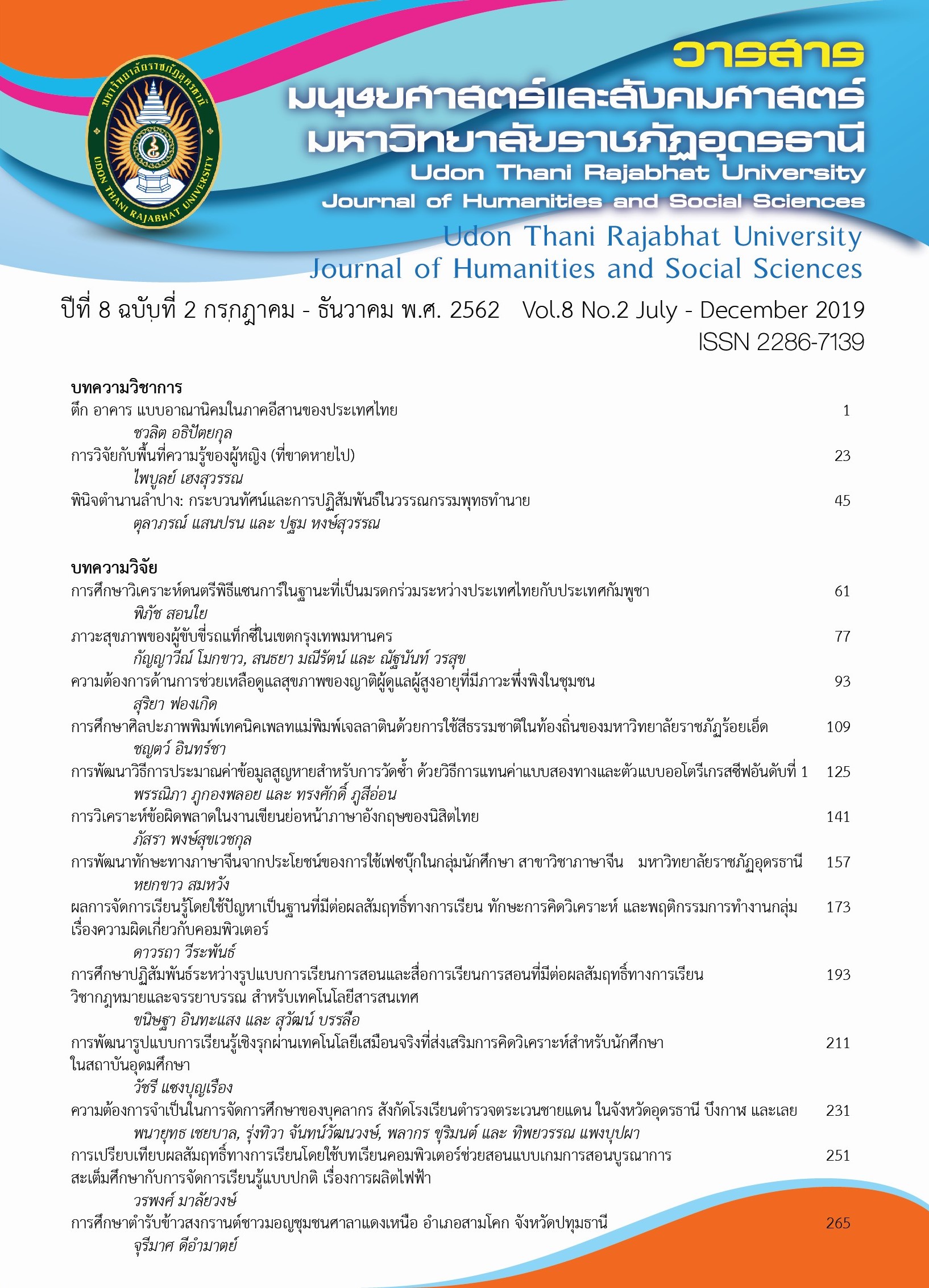
THE DEVELOPMENT OF CHINESE SKILL FROM FACEBOOK USAGE AMONG CHINESE STUDENT GROUPS IN UDON THANI RAJABHAT UNIVERSITY
Article Sidebar
Main Article Content
Abstract
The objectives of this research were to study Facebook behavior for developing Chinese knowledge and skill, Facebook use and gratification for developing Chinese knowledge and skill, to compare Facebook use and gratification for developing Chinese knowledge and skill classified by GPA and to study the correlation between Facebook behavior and Facebook use as well as gratification for developing Chinese skill and knowledge. This research study employed quantitative method using a survey questionnaire to collect data from 120 Chinese students of Udon Thani Rajabhat University. using descriptive analysis statistics such as frequency, percentage, mean, difference analysis of variables with one-way ANOVA and Pearson's product moment coefficient of correlation.
The results showed that most participants used Facebook to develop their Chinese knowledge followed by video clip, as For the behavior of Chinese language/culture Facebook page following, most participants followed the “pumpasajean” page, followed by Chinese for communication, speaking in daily life, Chinese message posting, and establishing of following movies, literatures and favorite artist.
The result of hypothesis testing showed that students in different GPA had different Facebook uses and gratification for developing Chinese knowledge and skill. It is also shown that the Facebook behavior correlated with Facebook use and gratification for developing Chinese skill and knowledge at the significant level of .01.
Article Details
References
กนกพร ศรีญาณลักษณ์. (2550). การประยุกต์ใช้อีเลิร์นนิงในการเรียนการสอนภาษาจีน.วารสารศึกษาศาสตร์, 18(2), 33-48.
Sriyanalug, K. (2008). Learning Styles of Chinese Language Students from the Faculty of Humanities and Social Sciences at Burapha University. Journal of Education, 19(3), 15-26. (in Thai).
กนกพร ศรีญาณลักษณ์. (2551). รูปแบบการเรียนภาษาจีนของนิสิตคณะมนุษยศาสตร์และสังคมศาสตร์ มหาวิทยาลัยบูรพา. วารสารศึกษาศาสตร์, 19(3), 15-26.
Boonmee, K. (2016). Online Social Network Use of Youths in the Northeastern Region of Thailand. Udon Thani Rajabhat University Journal of Humanities and Social Sciences, 5(1), 145-153. (in Thai).
กนกอร บุญมี. (2559). การใช้เครือข่ายสังคมออนไลน์ของเยาวชนในภาคตะวันออกเฉียงเหนือของประเทศไทย. วารสารมนุษยศาสตร์และสังคมศาสตร์ มหาวิทยาลัยราชภัฏอุดรธานี, 5(1), 145-153.
Na Nongkhai, K., Phankhawanich, N., & Pitiphat, S. (2015). Social Media Websites Using Behaviors of Udon Thani Province Residents. Udon Thani Rajabhat University Journal of Humanities and Social Sciences, 4(2), 129-150. (in Thai).
กฤษฎา ณ หนองคาย, ณิชา พันธุ์ควณิชย์ และสามารถ ปิติพัฒน์. (2558). พฤติกรรมการใช้เว็บไซต์สื่อสังคมของประชาชนในจังหวัดอุดรธานี. วารสารมนุษยศาสตร์และสังคมศาสตร์ มหาวิทยาลัยราชภัฏอุดรธานี, 4(2), 129-150.
Wannaphapha, T. (2017). Social Media with Education. Journal of Education, Mahasarakham University, 11(1),7-20. (in Thai).
ธนะวัฒน์ วรรณประภา. (2560). สื่อสังคมออนไลน์กับการศึกษา.วารสารศึกษาศาสตร์ มหาวิทยาลัยมหาสารคาม, 11(1),7-20.
Haphuriwat, N. (2012). The development of a Chinese language task-based instructional model using associative memory techniques for Chinese character recognition to enhance reading ability of undergraduate students. Ph.D. Dissertation, Faculty of Education, Chulalongkorn University. (in Thai).
นรินทชัย ฮะภูริวัฒน์. (2555). การพัฒนารูปแบบการเรียนการสอนภาษาจีนตามแนวคิดการเรียนรู้แบบเน้นงานปฏิบัติโดยใช้เทคนิคการจำอักษรจีนแบบเชื่อมโยงเพื่อเสริมสร้างความสามารถในการอ่านของนักศึกษาปริญญาตรี. วิทยานิพนธ์ครุศาสตรดุษฎีบัณฑิต คณะครุศาสตร์ จุฬาลงกรณ์มหาวิทยาลัย.
Kamaisom, N. (2016). TEACHING CHINESE LANGUAGE FOR HIGHER EDUCATIONIN THAILAND: NEW AND CHANGING ROLES OF TEACHERS IN 2st CENTURY. Phikanatesan Journal, 12(2), 187-197. (in Thai).
นันทนา กะหมายสม. (2559). บทบาทอาจารย์ผู้สอนในบริบทใหม่ที่เปลี่ยนไปในศตวรรษที่ 21 กับการสอนภาษาจีนในสถาบันอุดมศึกษาไทย. พิฆเนศวร์สาร, 12(2), 187-197.
Tophol, P. (1990). The study of English learning style preferences of mathayomsuksa 3 students in Nakhon Phanom. Master of Art in Teaching English, Graduate School, Kasetsart University. (in Thai).
พัชราวรรณ โทพล. (2533). การศึกษารูปแบบการเรียนภาษาอังกฤษที่ให้นักเรียนเป็นผู้เลือกเองในระดับมัธยมศึกษาปีที่ 3 จังหวัดนครพนม. วิทยานิพนธ์ปริญญาศิลปศาสตรมหาบัณฑิต บัณฑิตวิทยาลัย สาขาการสอนภาษาอังกฤษ มหาวิทยาลัย เกษตรศาสตร์.
Boonbandol, Y., & Soontornwipat, S. (2017). Using English Videos on YouTube to Develop Vocational Students’ Speaking Skills at Singburi Vocational College. Liberal Arts Review, 12(23) (Special Edition), 1-9. (in Thai).
ยุพิน บุญบันดล และสุธิดา สุนทรวิภาต. (2560). การใช้วีดีโอภาษาอังกฤษจากยูทูปพัฒนาทักษะการพูดภาษาอังกฤษของนักเรียนอาชีวศึกษาที่กําลังศึกษาอยู่ที่วิทยาลัยอาชีวศึกษาสิงห์บุรี. วารสารศิลปศาสตร์ปริทัศน์, 12(23) (ฉบับพิเศษ), 1-9.
Wansaman, W. (2015). Effects of using facebook as a medium for teaching esp reading for beginners. Master of Art in Teaching English as an International Language, Graduate School, Prince of Songkla University. (in Thai).
วัชรพงษ์ หวันสมาน. (2558). ผลของการใช้เฟซบุ๊กเป็นสื่อกลางในการสอนอ่านภาษาอังกฤษเฉพาะทางให้กับผู้เรียนที่มีความสามารถทางภาษาในระดับพื้นฐาน. วิทยานิพนธ์ปริญญาศิลปศาสตรมหาบัณฑิต บัณฑิตวิทยาลัย สาขาการสอนภาษาอังกฤษเป็นภาษานานาชาติ มหาวิทยาลัยสงขลานครินทร์.
Khattiya, S., & Intanaga, P. (2016). Potentiality of social network sites for language learning: A case study of Busuu. Journal of Human Sciences, 17(2), 51-83. (in Thai).
ศรินยา ขัติยะ และพัชรากราณต์ อินทะนาค. (2559). ความน่าจะเป็นในการเรียนรู้ภาษาผ่านเว็บเครือข่ายสังคมออนไลน์: กรณีศึกษาเว็บ Busuu. มนุษยศาสตร์สาร, 17(2), 51-83.
Jangjai, S. (2009). Factors Affecting Learning Chinese of International Business: China and Chinese Studies Students at the Faculty of International Studies, PSU, Phuket. Faculty of International Studies, Prince of Songkla University. (in Thai).
ศุภชัย แจ้งใจ. (2552). รายงานวิจัย ปัจจัยที่ส่งผลต่อการเรียนภาษาจีนของนักศึกษาสาขาวิเทศธุรกิจจีนและสาขาจีนศึกษา คณะวิเทศศึกษา มหาวิทยาลัยสงขลานครินทร์ วิทยาเขตภูเก็ต. สงขลา: มหาวิทยาลัยสงขลานครินทร์ สำนักวิจัยและพัฒนา.
Danklang, U., & Samphanwatthanachai, B. (2016). Factors Affecting the User’s Satisfaction of Video Content on Social Media. Journal of Humanities and Social Sciences Rajapruk University, 2(2), 78-90. (in Thai).
อุษณีย์ ด่านกลาง และบุญญรัตน์ สัมพันธ์วัฒนชัย. (2559). ปัจจัยที่ส่งผลต่อความพึงพอใจของผู้ชมวิดีโอคอนเทนท์บนสื่อสังคมออนไลน์. วารสารมนุษยศาสตร์และสังคมศาสตร์ มหาวิทยาลัยราชพฤกษ์, 2(2), 78-90.
We are social. (2018). Digital in 2018 in Southeast Asia. Retrieved September 26, 2018, from https://www.slideshare.net/wearesocial/digital-in-2018-in-southeast-asia-part-1-northwest-86866386.
