
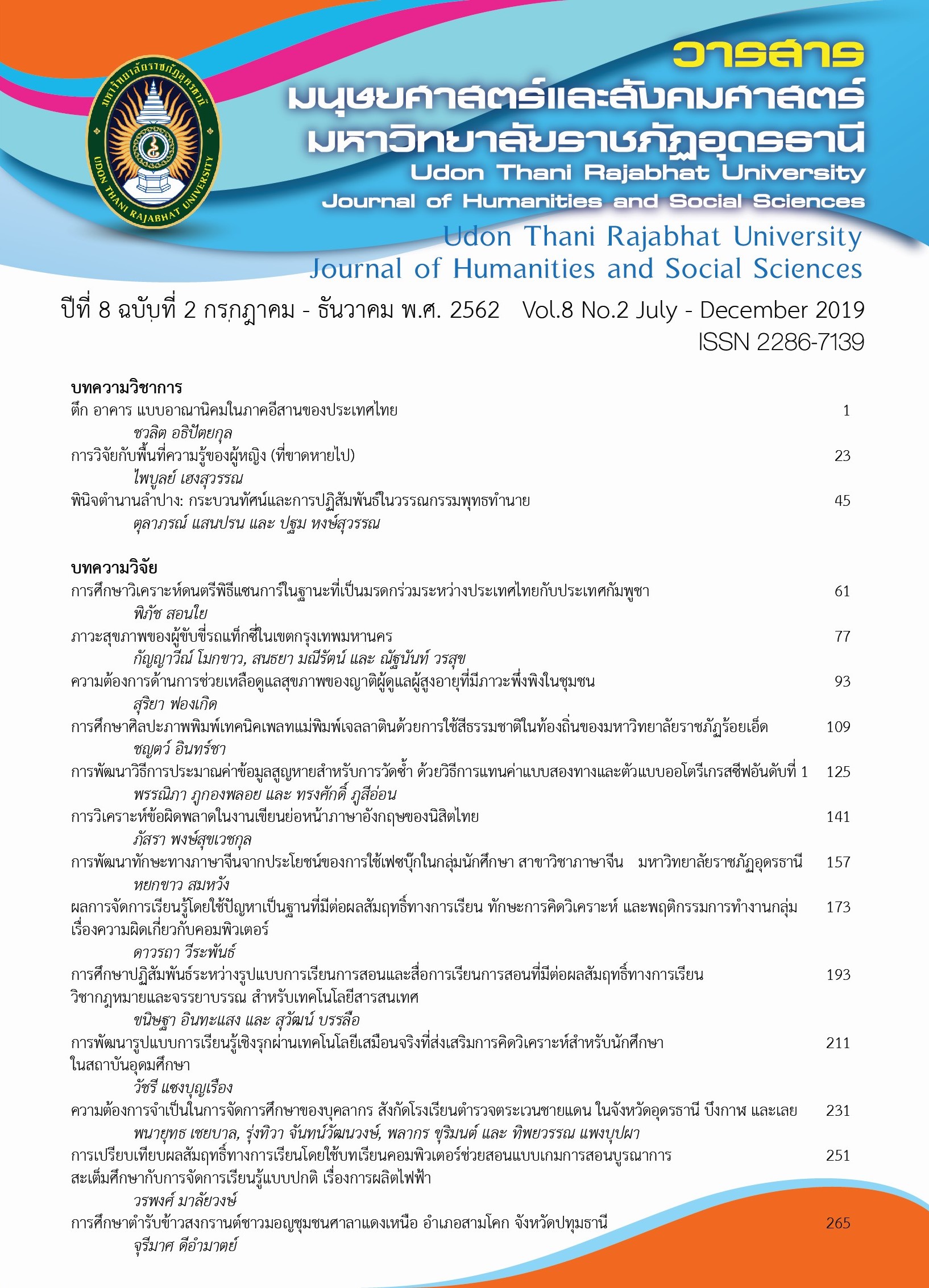
ERROR ANALYSIS IN ENGLISH PARAGRAPH WRITINGS OF THAI UNIVERSITY STUDENTS
Article Sidebar
Published:
Dec 27, 2019
Keywords:
การวิเคราะห์ข้อผิดพลาด การเขียนภาษาอังกฤษ งานเขียนระดับย่อหน้า
Main Article Content
Abstract
This research examined errors and causes of the errors in 116 English paragraph writings of the students majoring in the Logistics Management at the Faculty of Management Sciences, Kasetsart University, Sri-racha Campus. The results of the study indicated six groups of 664 writing errors. Errors of misformation were the most frequent, followed by errors of others, omission, addition, substitution, and misordering. The analysis also revealed that most writing errors were caused by ignorance of rule restrictions, followed by incomplete application of rules, false concepts hypothesized, overgeneralization, and interlanguage respectively.
Article Details
How to Cite
พงษ์สุขเวชกุล ภ. (2019). ERROR ANALYSIS IN ENGLISH PARAGRAPH WRITINGS OF THAI UNIVERSITY STUDENTS. Udon Thani Rajabhat University Journal of Humanities and Social Science, 8(2), 141–155. retrieved from https://so06.tci-thaijo.org/index.php/hsudru/article/view/187684
Section
Research Article
References
Bartram, M. & Walton, R. (2001). Correction: Mistake Management: A Positive Approach to Language Mistakes. England: Language Teaching Publications.
Bennui, P. (2008). A study of L1 interference in the writing of Thai EFL students. Malaysian Journal of ELT Research, 4, 72-102.
Brown, H. D. (2000). Principles of Language Learning and Teaching. 4th ed. NY: Pearson Education.
Brown, H. D. (2001). Teaching by Principles: An Interactive Approach to Language Pedagogy. 2nd ed. NY: Pearson Education.
Corder, S. P. (1974). The Significance of Learners’ Errors. In J. C. Richards (Ed.), Error Analysis: Perspectives on Second Language Acquisition (pp. 19-27). London: Longman.
Corder, S. P. (1981). Error Analysis and Interlanguage. Oxford: Oxford University Press.
Davies, A. & Widdowson, H.G. (1974). Reading and Writing. In J. P. B. Allen and S. PIT Corder (Ed.), Techniques in Applied Linguistics (pp. 155-201). England: Oxford University Press.
Lado, R. (1988). Teaching English across Cultures. Singapore: McGraw-Hill.
Mahamongkol, N. (2007). Error analysis of the writing of first year students taking course 0115102 English II, academic year 2005, Thaksin University. Parichart Journal, 20(1), 5-11.
Promsupa, P., Varasarin, P., & Brudhiprabha, P. (2017). An analysis of grammatical errors in English writing of Thai university students. HRD Journal, 8(1), 93-104.
Richards, J. C. (1974). A Non-Contrastive Approach to Error Analysis. In J. C. Richards (Ed.), Error Analysis: Perspectives on Second Language Acquisition (pp. 172-188). London: Longman.
Sermsook, K., Liamnimitr, J., & Pochakorn, R. (2017). An analysis of errors in written English sentences: A case study of Thai EFL students. English Language Teaching, 10(3), 101-110.
Sobahle, P. (1986). Error analysis and its significance for second language teaching and learning. Per Linguam, 2(2), 25-30.
Sun, J. & Shang, L. (2010). A Corpus-based study of errors in Chinese English majors' English Writing. Asian Social Science, 6(1), 86-94.
Watcharapunyawong, S. & Usaha, S. (2013). Thai EFL students’ writing errors in different text types: The interference of the first language. English Language Teaching, 6(1), 67-78.
Wu, H. & Garza, E. V. (2014). Types and attributes of English writing errors in the EFL context---A study of error analysis. Journal of Language Teaching and Research, 5(6), 1256-1262.
Zheng, C. & Park, T. (2013). An analysis of errors in English writing made by Chinese and Korean university students. Theory and Practice in Language Studies, 3(8), 1342-1351.
Bennui, P. (2008). A study of L1 interference in the writing of Thai EFL students. Malaysian Journal of ELT Research, 4, 72-102.
Brown, H. D. (2000). Principles of Language Learning and Teaching. 4th ed. NY: Pearson Education.
Brown, H. D. (2001). Teaching by Principles: An Interactive Approach to Language Pedagogy. 2nd ed. NY: Pearson Education.
Corder, S. P. (1974). The Significance of Learners’ Errors. In J. C. Richards (Ed.), Error Analysis: Perspectives on Second Language Acquisition (pp. 19-27). London: Longman.
Corder, S. P. (1981). Error Analysis and Interlanguage. Oxford: Oxford University Press.
Davies, A. & Widdowson, H.G. (1974). Reading and Writing. In J. P. B. Allen and S. PIT Corder (Ed.), Techniques in Applied Linguistics (pp. 155-201). England: Oxford University Press.
Lado, R. (1988). Teaching English across Cultures. Singapore: McGraw-Hill.
Mahamongkol, N. (2007). Error analysis of the writing of first year students taking course 0115102 English II, academic year 2005, Thaksin University. Parichart Journal, 20(1), 5-11.
Promsupa, P., Varasarin, P., & Brudhiprabha, P. (2017). An analysis of grammatical errors in English writing of Thai university students. HRD Journal, 8(1), 93-104.
Richards, J. C. (1974). A Non-Contrastive Approach to Error Analysis. In J. C. Richards (Ed.), Error Analysis: Perspectives on Second Language Acquisition (pp. 172-188). London: Longman.
Sermsook, K., Liamnimitr, J., & Pochakorn, R. (2017). An analysis of errors in written English sentences: A case study of Thai EFL students. English Language Teaching, 10(3), 101-110.
Sobahle, P. (1986). Error analysis and its significance for second language teaching and learning. Per Linguam, 2(2), 25-30.
Sun, J. & Shang, L. (2010). A Corpus-based study of errors in Chinese English majors' English Writing. Asian Social Science, 6(1), 86-94.
Watcharapunyawong, S. & Usaha, S. (2013). Thai EFL students’ writing errors in different text types: The interference of the first language. English Language Teaching, 6(1), 67-78.
Wu, H. & Garza, E. V. (2014). Types and attributes of English writing errors in the EFL context---A study of error analysis. Journal of Language Teaching and Research, 5(6), 1256-1262.
Zheng, C. & Park, T. (2013). An analysis of errors in English writing made by Chinese and Korean university students. Theory and Practice in Language Studies, 3(8), 1342-1351.
