
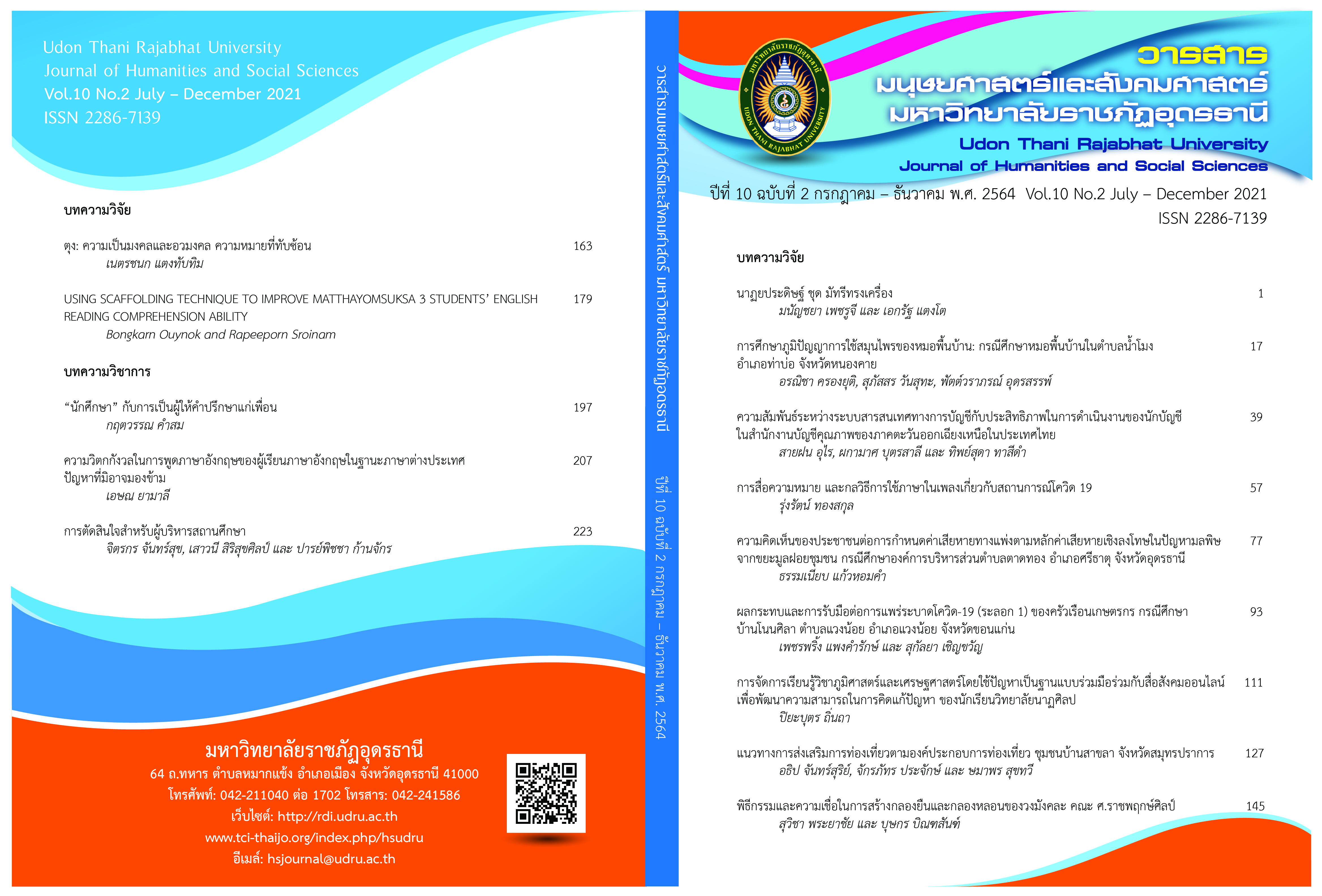
English Speaking Anxiety of English as a Foreign Language Students: Problem that should not be overlooked
Article Sidebar
Published:
Dec 31, 2021
Keywords:
English Development English Speaking Anxiety
Main Article Content
Abstract
Speaking skill is very important skill to improve your English, but one of the causes that leads to inappropriate development of the English as a foreign language learners is English speaking anxiety. Though a lot of instructors have put so much effort for the students to practice or try to persuade them to speak more English, it is still difficult to reduce the speaking anxiety sufficiently. The major factors that lead to English speaking anxiety are comprised of communication apprehension, fear of negative evaluation, and test anxiety. The instructors can alleviate English speaking anxiety of learners by implementing cooperative learning, realizing teachers’ role, and organizing role-play activity
Article Details
How to Cite
ยามาลี เ. (2021). English Speaking Anxiety of English as a Foreign Language Students: Problem that should not be overlooked. Udon Thani Rajabhat University Journal of Humanities and Social Science, 10(2), 207–221. retrieved from https://so06.tci-thaijo.org/index.php/hsudru/article/view/247683
Section
Academic Article
References
ทิศนา แขมมณี (2550). รูปแบบการเรียนการสอนทางเลือกที่หลากหลาย. กรุงเทพฯ:
จุฬาลงกรณ์มหาวิทยาลัย
อารีย์ มีแจ้ง และคณะ (2559). การวิจัยเพื่อการประเมินการดำเนินงานของศูนย์พัฒนาการ
เรียนการสอนภาษาอังกฤษในประเทศไทย. วารสารศึกษาศาสตร์ มหาวิทยาลัยนเรศวร, 12(2), 17-31.
Al Hasni, S. (2014). Speaking difficulties encountered by young EFL Learners.
International Journal on Studies in English Language Literature (IJSELL), 2(6), 22-30.
Ansari, M.S. (2015). Speaking Anxiety in ESL/EFL Classrooms: A holistic
approach and practical study. International Journal of Educational Investigations, 2(4), 38-46.
Azhar, R. (2017). The correlation between students speaking anxiety and their
speaking ability. Malang.
Chen, T.Y., & Chang, G.B. (2004). The relationship between foreign language
anxiety and learning difficulties. Foreign Language Annals, 37(2), 278-289.
Dorneyei, Z. (2003). Attitudes, orientations, an motivations in language
learning: advances in theory, research, applications. Language Learning, 53(1), 3-32.
Gregerson, T.S. (2003). To Err is Human: A Reminder to teachers of Language-
Anxious Students. Foreign Language Annals, 36(1), 25-32.
Hadi, K,L. (2015). Using The Role-Play Technique to Improve the Speaking
Skills of Grade XI Students of SMAN 1 PANGANG in the Academic Year 2014/2015, Master Degree Thesis, English Education Department, Faculty of Language and Arts, Yogyakarta State University.
Horwitz, E.K., Horwitz, M.B. & Cope, J. (1986). Foreign language classroom
anxiety. The Modern Language Journal, 70(2), 112-126.
Indrianty, S. (2016). Students’ anxiety in speaking English (a case study in one
hotel an tourism college in Bandung). ELTIN Journal, 28-40.
Kratochwill, T.R., & Morris, R.J. (1985). Conceptual and Methodological issues
in the behavioral assessment and treatment of children’s fears and phobias. School Psychology Review,14(1), 94-107.
Kusnierek, A. (2015). Developing Students’ Speaking Skills through Role-
Playing. World Scientific News,7, 73-111.
Ladousse, G.P. (1987). Resources Books for Teachers: ROLE PLAY. New York,
Oxford University Press.
Lee, E.J. (2013). Corrective Feedback preferences and learner repair among
advanced ESL Students. System, 4(1), 217-230.
Mirhassani, A., & Ghaemi, F. (2007). Language teaching theories, methods, and
skills. Tehran. Kasa Kavosh.
Pattanapichet, F., & Changpueng, P. (2014). Cooperative learning: an approach
to reduce students’ anxiety in learning English. Exclusive Journal, 61-66.
Philips, E.M. (1991). Anxiety an oral competence: Classroom dilemma. The
French Review, 65(1), 1-14.
Sarkis, R. (2012). Using Cognitive Strategies to Improve English Skill an Self-
confidence. American Journal of Education Sciences, 2(4), 19-23.
Speilberger, C.D. (1980). Preliminary professional manual for the Test Anxiety
Inventory. Palo Alto: Consulting Psychologists Press.
Tribolet, S. (2012). Using Cognitive Strategies to Improve English Speaking Skill
a Self-Confidence. American Journal of Education Sciences, 2(3), 36-40.
Yoshida, R. (2008). Teachers’ Choice and Learners’ Preference of Corrective
Feedback Types, Language Awareness, 17(1), 78-93.
จุฬาลงกรณ์มหาวิทยาลัย
อารีย์ มีแจ้ง และคณะ (2559). การวิจัยเพื่อการประเมินการดำเนินงานของศูนย์พัฒนาการ
เรียนการสอนภาษาอังกฤษในประเทศไทย. วารสารศึกษาศาสตร์ มหาวิทยาลัยนเรศวร, 12(2), 17-31.
Al Hasni, S. (2014). Speaking difficulties encountered by young EFL Learners.
International Journal on Studies in English Language Literature (IJSELL), 2(6), 22-30.
Ansari, M.S. (2015). Speaking Anxiety in ESL/EFL Classrooms: A holistic
approach and practical study. International Journal of Educational Investigations, 2(4), 38-46.
Azhar, R. (2017). The correlation between students speaking anxiety and their
speaking ability. Malang.
Chen, T.Y., & Chang, G.B. (2004). The relationship between foreign language
anxiety and learning difficulties. Foreign Language Annals, 37(2), 278-289.
Dorneyei, Z. (2003). Attitudes, orientations, an motivations in language
learning: advances in theory, research, applications. Language Learning, 53(1), 3-32.
Gregerson, T.S. (2003). To Err is Human: A Reminder to teachers of Language-
Anxious Students. Foreign Language Annals, 36(1), 25-32.
Hadi, K,L. (2015). Using The Role-Play Technique to Improve the Speaking
Skills of Grade XI Students of SMAN 1 PANGANG in the Academic Year 2014/2015, Master Degree Thesis, English Education Department, Faculty of Language and Arts, Yogyakarta State University.
Horwitz, E.K., Horwitz, M.B. & Cope, J. (1986). Foreign language classroom
anxiety. The Modern Language Journal, 70(2), 112-126.
Indrianty, S. (2016). Students’ anxiety in speaking English (a case study in one
hotel an tourism college in Bandung). ELTIN Journal, 28-40.
Kratochwill, T.R., & Morris, R.J. (1985). Conceptual and Methodological issues
in the behavioral assessment and treatment of children’s fears and phobias. School Psychology Review,14(1), 94-107.
Kusnierek, A. (2015). Developing Students’ Speaking Skills through Role-
Playing. World Scientific News,7, 73-111.
Ladousse, G.P. (1987). Resources Books for Teachers: ROLE PLAY. New York,
Oxford University Press.
Lee, E.J. (2013). Corrective Feedback preferences and learner repair among
advanced ESL Students. System, 4(1), 217-230.
Mirhassani, A., & Ghaemi, F. (2007). Language teaching theories, methods, and
skills. Tehran. Kasa Kavosh.
Pattanapichet, F., & Changpueng, P. (2014). Cooperative learning: an approach
to reduce students’ anxiety in learning English. Exclusive Journal, 61-66.
Philips, E.M. (1991). Anxiety an oral competence: Classroom dilemma. The
French Review, 65(1), 1-14.
Sarkis, R. (2012). Using Cognitive Strategies to Improve English Skill an Self-
confidence. American Journal of Education Sciences, 2(4), 19-23.
Speilberger, C.D. (1980). Preliminary professional manual for the Test Anxiety
Inventory. Palo Alto: Consulting Psychologists Press.
Tribolet, S. (2012). Using Cognitive Strategies to Improve English Speaking Skill
a Self-Confidence. American Journal of Education Sciences, 2(3), 36-40.
Yoshida, R. (2008). Teachers’ Choice and Learners’ Preference of Corrective
Feedback Types, Language Awareness, 17(1), 78-93.
