
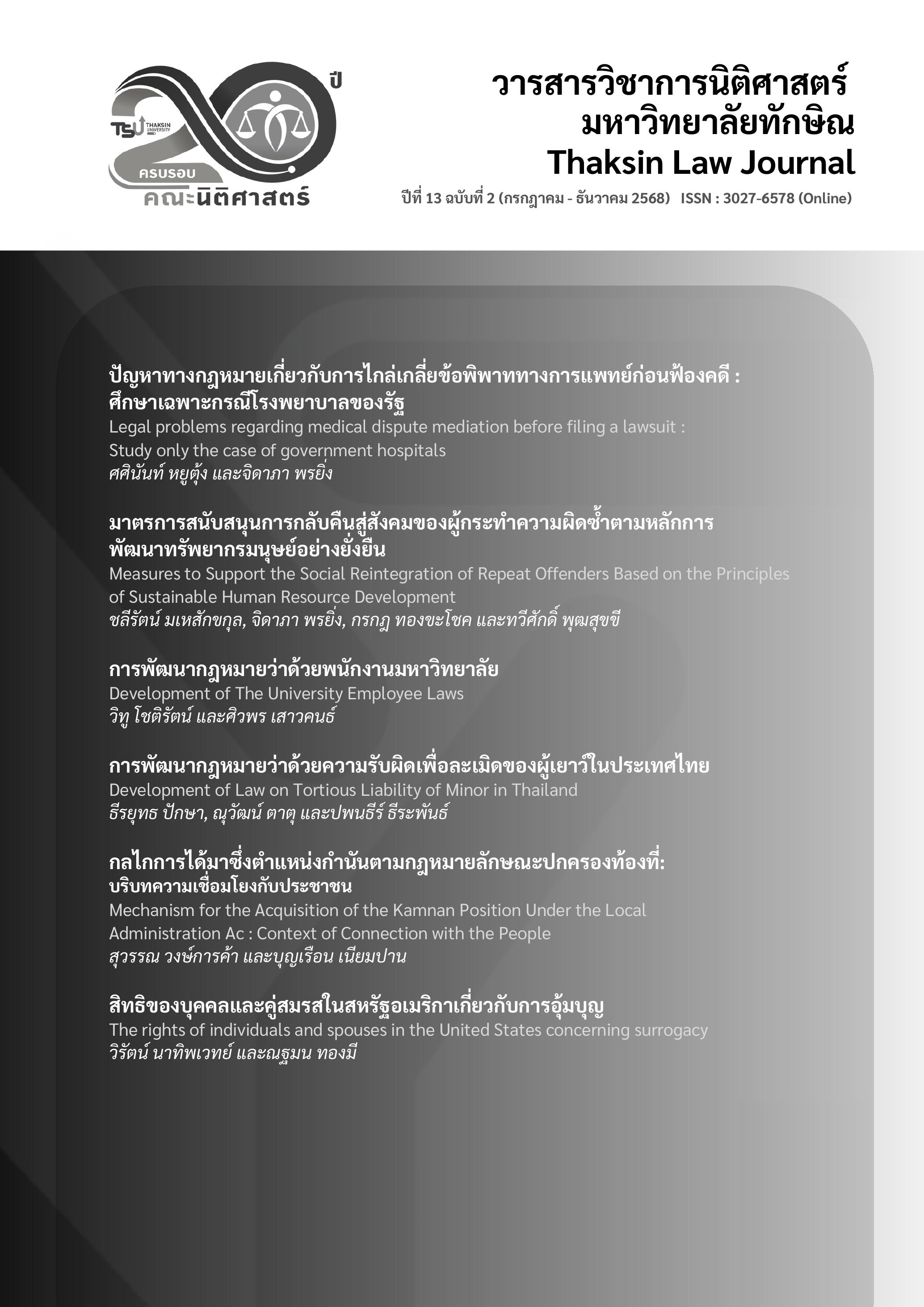
กลไกการได้มาซึ่งตำแหน่งกำนันตามกฎหมายลักษณะปกครองท้องที่: บริบทความเชื่อมโยงกับประชาชน
คำสำคัญ:
กฎหมายลักษณะปกครองท้องที่, ความเชื่อมโยงกับประชาชน , ตำแหน่งกำนันบทคัดย่อ
การปกครองที่เรียกว่าระบอบประชาธิปไตยนั้น ต้องให้ประชาชนเป็นใหญ่ กล่าวคือประชาชนเป็น
ผู้มีอำนาจสูงสุดของประเทศ แต่ในความเป็นจริงนั้นประชาชนทุกคนไม่สามารถที่จะใช้อำนาจของตนได้จริงทุกเรื่องเนื่องจากประชาชนมีจำนวนมาก ดังนั้น จึงได้มีการมอบอำนาจของตนเองผ่านให้องค์กรหรือหน่วยงานต่าง ๆ ตามที่รัฐธรรมนูญกำหนดให้ใช้อำนาจแทน
บทความนี้ได้กล่าวถึงการได้มาของตำแหน่งกำนัน ซึ่งถือว่าเป็นบุคคลหรือตำแหน่งที่มีความสำคัญและมีอำนาจหน้าที่มากในทางปกครองท้องที่ เพื่อบำบัดทุกข์ บำรุงสุข ให้กับประชาชนภายในเขตพื้นที่ตำบล โดยหลักในความเป็นอิสระของกำนันนั้นน่าจะเป็นหลักที่ให้ความคุ้มครองมิให้ต้องถูกแทรกแซงจาก
ฝ่ายการเมืองต่าง ๆ
อย่างไรก็ตาม ที่ผ่านมาประชาชนมีความตื่นตัวมากในกระบวนการมีส่วนร่วมภายใต้ระบอบประชาธิปไตย ซึ่งกระบวนการเข้าสู่ตำแหน่งกำนันจะมีความสอดคล้องกับหลักประชาธิปไตยเพียงใด ซึ่งถือว่าประชาชนผู้เป็นเจ้าของอำนาจอันเป็นอำนาจสูงสุดของประเทศจะมีส่วนร่วมหรือไม่ หากมีโดยตรงก็เห็นว่ามีความสอดคล้องมากเป็นประชาธิปไตยโดยแท้ แต่กระบวนการเข้าสู่ตำแหน่งกำนันในปัจจุบันนี้ใช้วิธีการเลือกตั้งจากผู้ใหญ่บ้านเพียงไม่กี่คน ซึ่งถือว่ายังเป็นกระบวนการเข้าสู่ตำแหน่งที่มีจุดยึดโยงกับประชาชนอยู่บ้างโดยผ่านตัวแทน
แต่หากจะให้ดีเห็นว่ากระบวนการเข้าสู่ตำแหน่งกำนันควรให้ประชาชนมีส่วนร่วมในการเลือกตั้งโดยตรง
อันเป็นวิถีทางแห่งประชาธิปไตยอย่างแท้จริง
เอกสารอ้างอิง
รัฐธรรมนูญแห่งราชอาณาจักรไทย พุทธศักราช 2560.
ภูมิ มูลศิลป์. (2559). ความเชื่อมโยงของอำนาจตุลาการกับประชาชน:การได้มาซึ่งบุคคลมาดำรงตำแหน่งผู้พิพากษาในศาลยุติธรรม, กรุงเทพฯ: บริษัท เอ.พี. กราฟิคแอนด์ดีไซน์และการพิมพ์ จำกัด. หน้า 2.
บุญเรือน เนียมปาน. (2564). การมีส่วนร่วมทางการเมืองของประชาชนในจังหวัดปทุมธานี. ดุษฎีนิพนธ์. ปริญญาดุษฎีบัณฑิต. สาขารัฐประศาสนศาสตรดุษฎีบัณฑิต. มหาวิทยาลัยปทุมธานี. หน้า 14.
พระราชบัญญัติภาษีที่ดินและสิ่งปลูกสร้าง พุทธศักราช 2562.
ส่วนบริหารงานกำนัน ผู้ใหญ่บ้าน. (2556). คู่มือการฝึกอบรมกำนันผู้ใหญ่บ้านที่ได้รับเลือกใหม่ประจำปี.สำนักบริหารงานปกครองท้องที่. กรมการปกครอง, กรุงเทพฯ: กรมการปกครอง. หน้า 1.
ฉัตรชัย ศรีเมืองกาญนา. (2566). ความเป็นมาของกำนัน ผู้ใหญ่บ้านของประเทศไทย. บทความร้อยเรื่องเมืองไทย. สืบค้น 21 ตุลาคม 2567 จาก https://library.parliament.go.th/radioscript/rr2566-mar2.
พระราชบัญญัติลักษณะปกครองท้องที่ พระพุทธศักราช 2457.
ดาวน์โหลด
เผยแพร่แล้ว
ฉบับ
ประเภทบทความ
สัญญาอนุญาต
ลิขสิทธิ์ (c) 2025 วารสารวิชาการนิติศาสตร์ มหาวิทยาลัยทักษิณ

อนุญาตภายใต้เงื่อนไข Creative Commons Attribution-NonCommercial-NoDerivatives 4.0 International License.
บทความที่ได้รับการตีพิมพ์เป็นลิขสิทธิ์ของวารสารวิชาการนิติศาสตร์ มหาวิทยาลัยทักษิณ
ข้อความที่ปรากฏในบทความแต่ละเรื่องในวารสารวิชาการเล่มนี้เป็นความคิดเห็นส่วนตัวของผู้เขียนแต่ละท่านไม่เกี่ยวข้องกับคณะนิติศาสตร์ มหาวิทยาลัยทักษิณ และคณาจารย์ท่านอื่นๆในมหาวิทยาลัยฯ แต่อย่างใด ความรับผิดชอบองค์ประกอบทั้งหมดของบทความแต่ละเรื่องเป็นของผู้เขียนแต่ละท่าน หากมีความผิดพลาดใดๆ ผู้เขียนแต่ละท่านจะรับผิดชอบบทความของตนเองแต่ผู้เดียว

