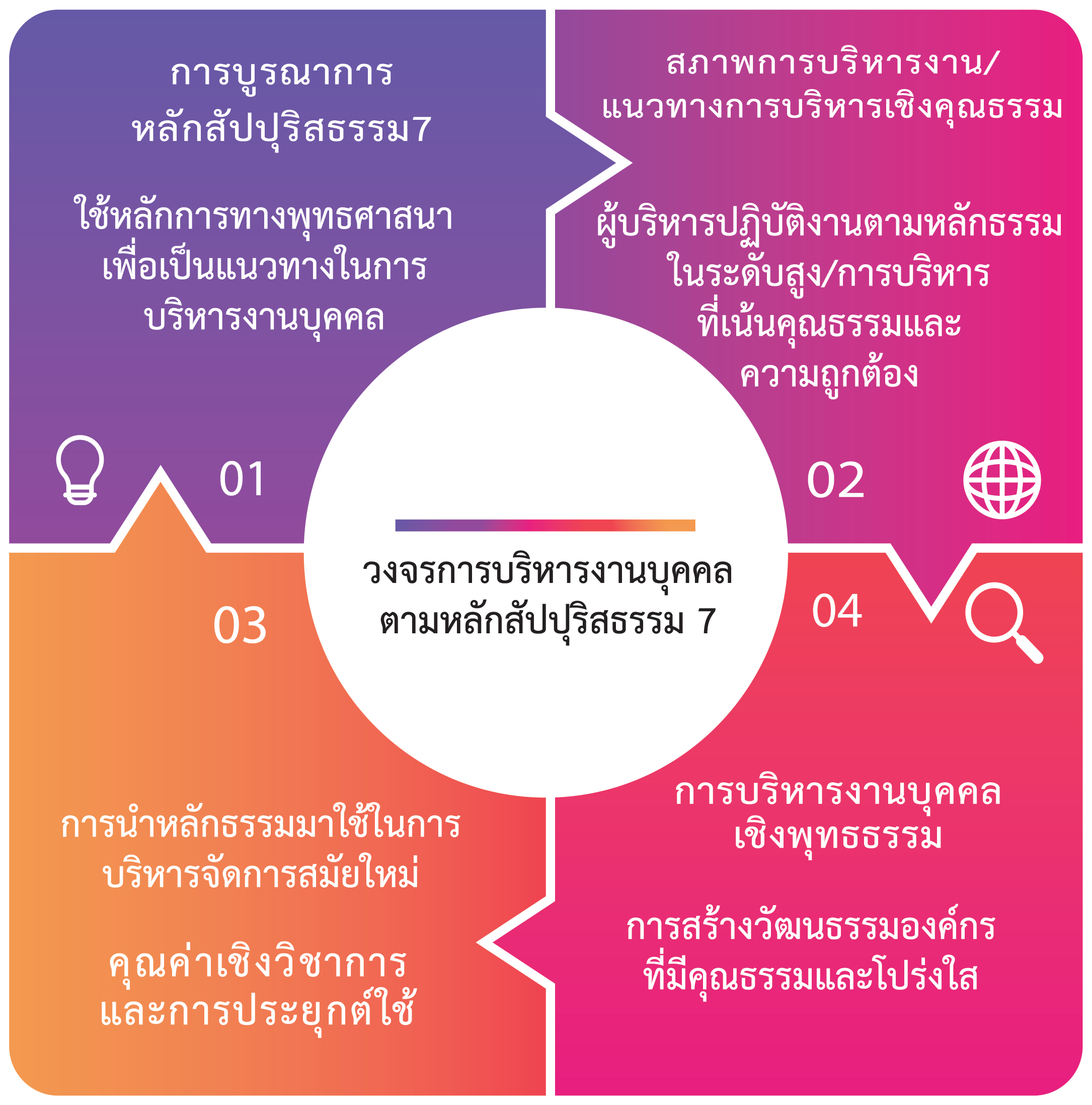
การบริหารงานบุคคลตามหลักสัปปุริสธรรม 7 ของผู้บริหารสถานศึกษา สังกัดสำนักงานเขตพื้นที่การศึกษาประถมศึกษาขอนแก่น เขต 3
คำสำคัญ:
การบริหารงานบุคคล;, หลักสัปปุริสธรรม 7;, ผู้บริหารสถานศึกษาบทคัดย่อ
การวิจัยครั้งนี้ มีวัตถุประสงค์เพื่อ 1) ศึกษาสภาพการบริหารงานบุคคลตามหลักสัปปุริสธรรม 7 ของผู้บริหารสถานศึกษา และ 2) ศึกษาแนวทางการบริหารงานบุคคลตามหลักสัปปุริสธรรม 7 ของผู้บริหารสถานศึกษา เป็นการวิจัยแบบผสมผสานระหว่างการวิจัยเชิงปริมาณกับเชิงคุณภาพ กลุ่มตัวอย่าง ได้แก่ ผู้บริหารและครูผู้สอน จำนวน 293 คน โดยใช้การสุ่มตัวอย่างแบบง่าย ผู้ให้ข้อมูลสำคัญ จำนวน 9 รูป/คน เครื่องมือที่ใช้ในการวิจัย ได้แก่ แบบสอบถาม ซึ่งมีค่าความเชื่อมั่นเท่ากับ .96 และแบบสัมภาษณ์ การวิเคราะห์ข้อมูลเชิงปริมาณใช้สถิติเชิงพรรณนา ได้แก่ ค่าร้อยละ ค่าเฉลี่ย และค่าเบี่ยงเบนมาตรฐาน ส่วนการวิเคราะห์ข้อมูลเชิงคุณภาพใช้วิธีวิเคราะห์เนื้อหาตามหลักอุปนัย
ผลการวิจัยพบว่า
1. สภาพการบริหารงานบุคคลตามหลักสัปปุริสธรรม 7 ของผู้บริหารสถานศึกษา ภาพรวมทั้ง 7 ด้าน มีความคิดเห็นอยู่ในระดับมาก ( = 4.38, S.D. = 0.84)
2. แนวทางการบริหารงานบุคคลตามหลักสัปปุริสธรรม 7 ของผู้บริหารสถานศึกษา สำนักงานเขตพื้นที่การศึกษาประถมศึกษาขอนแก่น เขต 3 ดังนี้ 1) หลักธัมมัญญุตา ผู้บริหารสถานศึกษามีการตรวจสอบติดตามผลการปฏิบัติงานของบุคลากรอย่างเป็นระบบ 2) หลักอัตถัญญุตา ผู้บริหารสถานศึกษามีความมุ่งมั่นและความเพียรพยายามที่จะขับเคลื่อนงานไปสู่จุดหมายที่ตั้งไว้อย่างถูกต้อง 3) หลักอัตตัญญุตา ผู้บริหารสถานศึกษาและบุคลากรมีจิตใจโอบอ้อมอารี มีน้ำใจต่อบุคคลทั่วไป 4) หลักมัตตัญญุตา ผู้บริหารสถานศึกษาพิจารณาความดีความชอบได้ทั่วถึงทุกคน 5) หลักกาลัญญุตา ผู้บริหารสถานศึกษาเป็นผู้ที่แก้ไขปัญหาที่เกิดขึ้นเฉพาะหน้าได้ทันต่อเหตุการณ์และเวลา 6) หลักปริสัญญุตา ผู้บริหารสถานศึกษาให้ความสำคัญในการพัฒนาคุณธรรมและจริยธรรมของบุคลากรและทุกคนในชุมชน 7) หลักปุคคลัญญุตา ผู้บริหารสถานศึกษาจัดให้มีสวัสดิการด้านต่างๆ แก่บุคลากรตามความเหมาะสม
เอกสารอ้างอิง
ธงชัย สันติวงษ์. (2553). การบริหารงานบุคคล. กรุงเทพฯ: วัฒนาพานิช.
บุญชม ศรีสะอาด. (2558). การวิจัยเบื้องต้น. (พิมพ์ครั้งที่ 9). กรุงเทพฯ: สุวีริยาสาสน์.
พระครูวินัยธรวรวุฒิ เตชธมฺโม (เฮียงเหี่ย), เอกราชโฆษิต พิมานเวช และประจิตร มหาหิง. (2565). รูปแบบการบริหารจัดการตามหลักสัปปุริสธรรม 7 ของโรงเรียนพระ ปริยัติธรรม แผนกสามัญศึกษาเขต 7. วารสาร มจร อุบลปริทรรศน์, 7(2), 1815-1828. https://so06.tci-thaijo.org/index.php/mcjou/article/view/258350
พระพรหมคุณาภรณ์ (ป.อ.ปยุตฺโต). (2549). ธรรมนูญชีวิต. (พิมพ์ครั้งที่ 3). กรุงเทพฯ: สำนักงานพระพุทธศาสนาแห่งชาติ.
พระราชบัญญัติข้าราชการครูและบุคลากรทางการศึกษา (ฉบับที่ 3) พ.ศ. 2553. (22 กรกฎาคม 2553). ราชกิจจานุเบกษา. เล่ม 127 ตอนที่ 7 (45ก) หน้า 7-11.
สมบัติ บุตรแสนคม. (2565). การบริหารงานบุคคลในยุคฐานวิถีชีวิตใหม่ ตามหลักสัปปุริสธรรม 7 ของผู้บริหารโรงเรียนประถมศึกษา อำเภอคลองหลวง จังหวัดปทุมธานี. (วิทยานิพนธ์พุทธศาสตรมหาบัณฑิต). พระนครศรีอยุธยา: มหาวิทยาลัยมหาจุฬาลงกรณราชวิทยาลัย.
สำนักงานเขตพื้นที่การศึกษาประถมศึกษาขอนแก่น เขต 3. (2567). แผนพัฒนาการศึกษาขั้นพื้นฐาน ระยะ 5 ปี พ.ศ. 2566-2570 (ฉบับทบทวน). สำนักงานคณะกรรมการการศึกษาขั้นพื้นฐาน กระทรวงศึกษาธิการ.
อัญญา ศรีสมพร. (2552). การศึกษาสร้างคน คนสร้างชาติ. เข้าถึงได้จาก https://www.kroobannok.com/11984