Local Education Quality: Application of Assessment Criteria and Community Cooperation
Keywords:
Local Studies;, Application; , Evaluation;, CollaborationAbstract
This academic article aims to study the quality of education in local schools, focusing on the case study of four municipal schools in Phichit Province, which faced challenges in developing student quality and preparing self-assessment results (SAR) to be complete and reflect the potential of the schools. The article analyzes using the Collaboration Concept and Systems Thinking to assess the appropriateness of the assessment criteria for the local context and proposes development approaches that focus on applying assessment results to improve the quality of education.
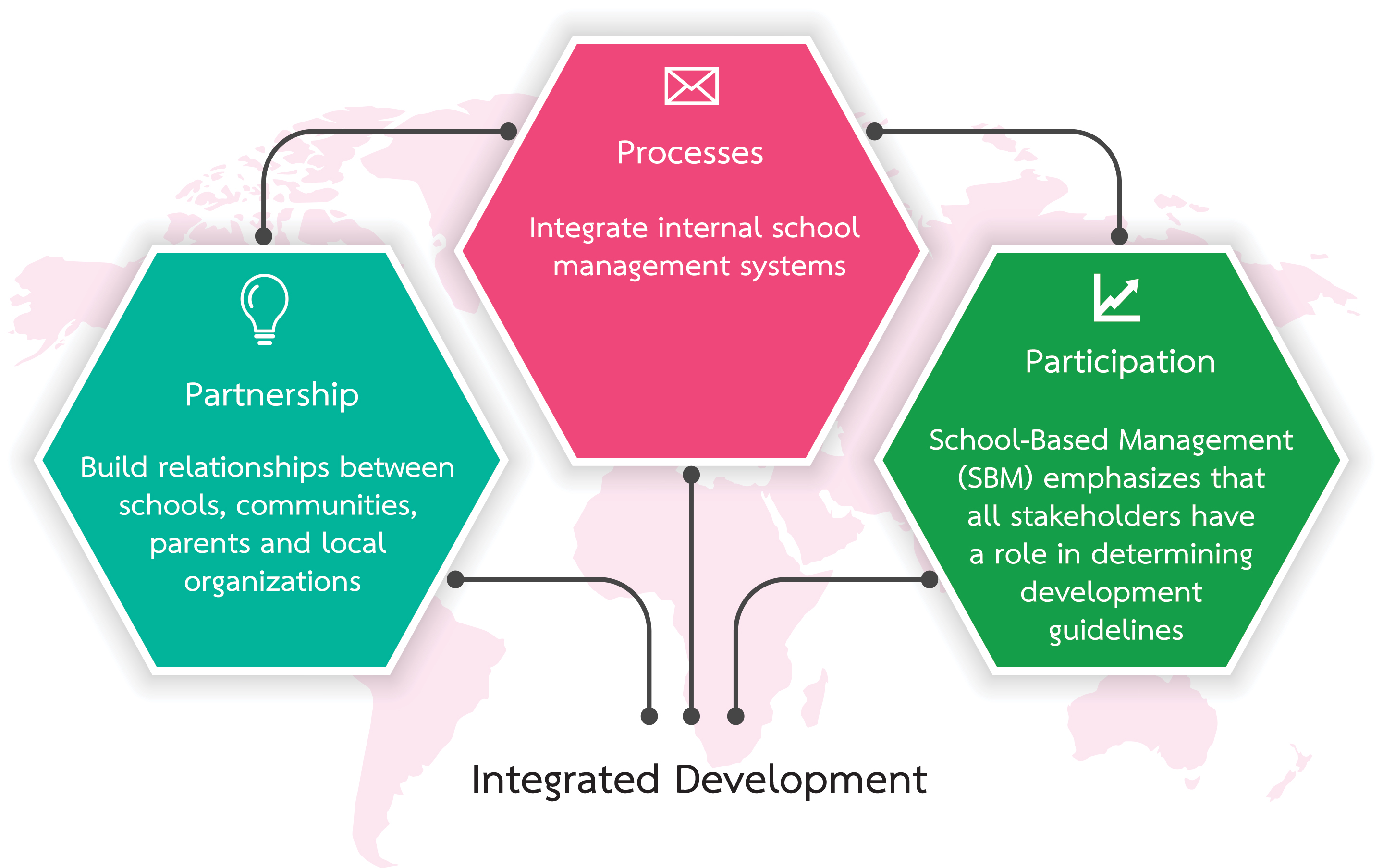
The lack of quantitative data in SAR reports, such as percentage of graduates and long-term monitoring of activity results, is a major obstacle in development planning. In addition, management of resources, such as personnel and technology media, has not been fully utilized in some schools. Meanwhile, participatory management, such as networking with communities and parents, is a strength that helps enhance the teaching and learning process and effectively promotes the development of vocational skills and analytical thinking in students. Policy development guidelines, such as setting quantitative targets in all projects and using assessment results in continuous development planning, as well as practical guidelines, such as following up on students after graduation and creating diverse community networks to support development both inside and outside the school. The application of assessment results and strengthening community cooperation will be important factors in sustainably raising the quality of education in the local area.
References
โรงเรียนเทศบาล 2 สาธิตมหาวิทยาลัยราชภัฏเพชรบูรณ์. (2565). รายงานการประกันคุณภาพภายนอก: ผลการประเมิน SAR ภายใต้สถานการณ์ COVID-19 การศึกษาปฐมวัยและระดับการศึกษาขั้นพื้นฐาน. เพชรบูรณ์: โรงเรียนเทศบาล 2 สาธิตมหาวิทยาลัยราชภัฏเพชรบูรณ์.
โรงเรียนเทศบาล 3 วัดสันติพลาราม. (2565). รายงานการประกันคุณภาพภายนอก: ผลการประเมิน SAR ภายใต้สถานการณ์ COVID-19 การศึกษาปฐมวัยและระดับการศึกษาขั้นพื้นฐาน. พิจิตร: โรงเรียนเทศบาล 3 วัดสันติพลาราม.
โรงเรียนเทศบาล 4. (2565). รายงานการประกันคุณภาพภายนอก: ผลการประเมิน SAR ภายใต้สถานการณ์ COVID-19 การศึกษาปฐมวัยและระดับการศึกษาขั้นพื้นฐาน. พิจิตร: โรงเรียนเทศบาล 4.
โรงเรียนเทศบาลตะพานหินวิทยาคาร. (2565). รายงานการประกันคุณภาพภายนอก: ผลการประเมิน SAR ภายใต้สถานการณ์ COVID-19 การศึกษาปฐมวัยและระดับการศึกษาขั้นพื้นฐาน. พิจิตร: โรงเรียนเทศบาลตะพานหินวิทยาคาร.
Al-Sholi, H. Y., Shadid, O. R., Alshare, K. A., & Lane, M. (2021). An agile educational framework: A response for the COVID-19 pandemic. Cogent Education, 8(1), Article 1980939. https://doi.org/10.1080/2331186X.2021.1980939
AUTHOR_ID, N. (2024). Community functions of schools and municipal support of schools on the continuum of the rural periphery-town. European Countryside, 16(1), 34-45. https://doi.org/10.2478/euco-2024-0015
Basak, R. (2022). Adaptation to new education system due to the COVID-19 pandemic. International Journal of Advanced Research, 10(3), 123-128. https://doi.org/10.21474/ijar01/14577
Gamage, D., & Sooksomchitra, P. (2004). Decentralisation and school-based management in Thailand. International Review of Education, 50(2), 115-133. https://doi.org/10.1007/S11159-004-2624-4
Green, C., Mynhier, L., Banfill, J., Edwards, P., Kim, J., & Desjardins, R. (2020). Preparing education for the crises of tomorrow: A framework for adaptability. International Review of Education, 66(5-6), 657-679. https://doi.org/10.1007/s11159-020-09878-3
Impact of COVID-19: A particular focus on Indian education system. (2022). In COVID-19 and the sustainable development goals. Elsevier, 13-22. https://doi.org/10.1016/b978-0-12-824557-6.00002-9
Kantavong, P. (2018). Understanding inclusive education practices in schools under local government jurisdiction: A study of Khon Kaen Municipality in Thailand. International Journal of Inclusive Education, 22(6), 570-586. https://doi.org/10.1080/13603116.2017.1412509
Khun, D. (2024). Analysis of changes in basic education in Russia in the context of the Covid-19 pandemic. Modern Humanities Success, 326-331. https://doi.org/10.58224/2618-7175-2024-2-326-331
Komatsu, T. (2024). Community-Based School Governance (CBSG). In Education and Social Cohesion in a Post-conflict and Divided Nation . Springer, Singapore. https://doi.org/10.1007/978-981-99-6519-9_4
Lathapipat, D. (2018). Inequalities in Educational Attainment. Education in the Asia-Pacific Region: Issues, Concerns and Prospects, 42, 345-372. https://doi.org/10.1007/978-981-10-7857-6_13
Mansor, H. (2014). The role of school as a community hub and its implications on promoting community cohesion towards sustainable communities. International Journal of Social Science and Humanity, 4(3), 205-210.
Milofsky, C. (2018). Schools as community institutions. In R. Cnaan & C. Milofsky (Eds.), Handbook of community movements and local organizations in the 21st century (pp. 437-446). Springer. https://doi.org/10.1007/978-3-319-77416-9_27
Oder, E. (2005). The social cohesion role of educational organizations: Primary and secondary schools. Peabody Journal of Education, 80(4), 59-72. https://doi.org/10.1207/S15327930PJE8004_6
Pabotoy, A. B. (2023). School districts. In Encyclopedia of education economics and finance, 163-167. https://doi.org/10.4324/9780429001086-13
Reis, F. J. C. dos, & Navarro, A. M. (2021). Avaliação de programas educacionais no contexto da educação remota e COVID-19. Medicina (Ribeirão Preto), 54(Suppl 1), e184768. https://doi.org/10.11606/issn.2176-7262.rmrp.2021.184768
Sivagurunathan, S., & Parthasarathy, S. (2022). A framework for a seamless transformation to online education. Computers, 11(12), Article 183. https://doi.org/10.3390/computers11120183
Soares, A. B., Barreto, L. C. de S., & Silva, I. C. R. da. (2023). Research instrument for the evaluation of basic education during COVID-19: Online/hybrid teaching associated with medicalization, learning and socialization. International Journal of Human Sciences Research. https://doi.org/10.22533/at.ed.5583282307082
Souza, K. R., Melo, A. T. T., & Mira, E. P. (2022). Basic education in emergency contexts: What does research say about the reality of COVID-19?. Revista Tempos e Espaços Em Educação, 15(34), Article 17925. https://doi.org/10.20952/revtee.v15i34.17925
Surendran, S., Neeraja, S., Gutjahr, G., Menon, R., & Nedungadi, P. (2024). Educational emergency treatment model: An adaptive response to education and multivariate HMM model to latent crisis state in rural Rajasthan during COVID-19. KUVempu University Journal of Education, 30(5), Article 4850. https://doi.org/10.53555/kuey.v30i5.4850
Thongthew, S. (1999). Education developments in Thailand. School Effectiveness and School Improvement, 10(1), 118-131. https://doi.org/10.1076/SESI.10.1.118.3515
Warsewa, G. (2017). Neighbourhood-based school strategies for education and integration. In A. Million, A. Heinrich, & T. Coelen (Eds.), Education, space and urban planning (pp. 3947). Springer. https://doi.org/10.1007/978-3-319-38999-8_4
Zakhorolska, V. M. (2022). Municipal educational system as a socio-cultural and pedagogical phenomenon. TNV-Publications, 5(3), Article 32851. https://doi.org/10.32851/tnv-pub.2022.5.3