The History, Legend and Development of the Tenth Lunar Month Tradition (Sart Duen Sib) in Nakhon Si Thammarat Province
Keywords:
The Tenth Lunar Month Tradition; , Buddhism;, Beliefs of the People in Nakhon Si Thammarat ProvinceAbstract
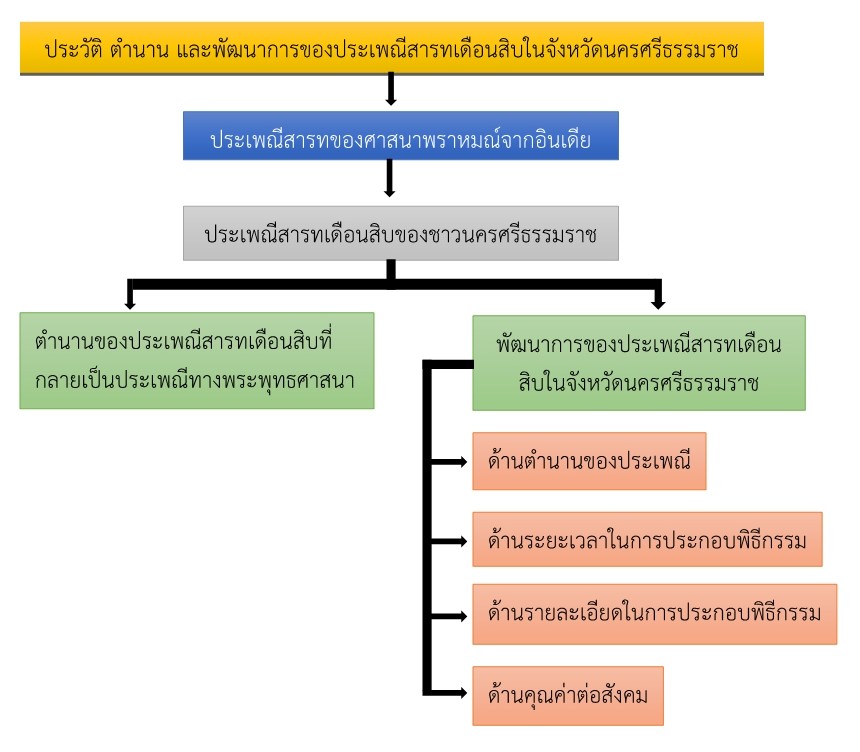
The Tenth Lunar Month tradition or so called Sart Duen Sib has developed from the Indian Sart tradition. This tradition has a target for making merit to deceased ancestors from the 1st day of the waning moon until the 15th day of the waning moon in the tenth lunar month. When the Indian tradition became part of the way of life of Nakhon Si Thammarat's people. It has developed this tradition in various fields. Firstly, the Tenth Lunar Month tradition has become one of the traditions of Buddhism. The second is the duration of the ritual, which is consistent with local mythology, local beliefs, and Buddhism. The third is the development of the details of various rituals. And the fourth is the development of value for society. Because the Tenth Lunar Month tradition is very important to the people of Nakhon Si Thammarat province. No matter how far away they are from their hometown, the Nakhon Si Thammarat people return to join this tradition every year. It has made the Tenth Lunar Month tradition as a provincial tradition organized jointly by both the public and private sectors. So, the Tenth Lunar Month tradition clearly shows the characteristics of Nakhon Si Thammarat people in faith, ritual, the way of life and the belief of local people. People in Nakhon Si Thammarat are ready to practice this tradition and help carry on together. This festival has a huge scale and has a lot of entertainment for people in the non-technology era and globalization era to enjoy. This has been an important festival that has greatly enhanced the economy of the people of Nakhon Si Thammarat Province from the past to the present.
References
เกษม บุญศรี. (2512). ประเพณีทำบุญเนื่องในพระพุทธศาสนา. กรุงเทพฯ: กรมสารบรรณทหารเรือ.
จุฑาทิพย์ ไกรนรา. (2564). ความเชื่อและพิธีกรรมในประเพณีสารทเดือนสิบ ตำบลปริก อำเภอทุ่งใหญ่ จังหวัดนครศรีธรรมราช. รายงานสืบเนื่องจากการประชุมวิชาการระดับชาติและนานาชาติ ครบรอบ 15 ปี มหาวิทยาลัยราชพฤกษ์. นนทบุรี:มหาวิทยาลัยราชพฤกษ์.
ดิเรก พรตตะเสน. (2519). ประเพณีบุญสารทเดือนสิบของจังหวัดนครศรีธรรมราช. วิชชา: ฉบับชีวิตปักษ์ใต้, 2(1), 27.
บุญเสริม แก้วพรหม (บรรณาธิการ). (2542). วารสารเดือนสิบ’42 ที่ระลึกในการจัดงานประเพณีเทศกาลเดือนสิบ ประจำปี 2542 จังหวัดนครศรีธรรมราช. กรุงเทพฯ: นาคร.
ประทุม ชุ่มเพ็งพันธ์. (2548). ศิลปวัฒนธรรมภาคใต้. กรุงเทพฯ: สุวีริยาสาส์น.
พระพรหมคุณาภรณ์ (ป.อ.ปยุตฺโต). (2551). พจนานุกรมฉบับประมวลศัพท์. กรุงเทพฯ: มหาวิทยาลัยมหาจุฬาลงกรณราชวิทยาลัย.
พระรามาธิบดีศรีสินทรมหาจุฬาลงกรณ์จุลจอมเกล้าเจ้าอยู่หัว, พระบาทสมเด็จ. (2463). พระราชพิธี 12 เดือน. กรุงเทพฯ: ไทย.
พระอนุพงษ์ ธนปาโล. (2561). ทัศนะเรื่องคุณค่าทางสังคมในประเพณีสารทเดือนสิบ. วารสารวิจัยธรรมศึกษา, 1(2), 1-4. https://so07.tci-thaijo.org/index.php/dsr/article/view/423/335
พัชรินทร์ ลั้งแท้กุล. (2565). ประเพณีสารทเดือนสิบเมืองนครศรีธรรมราช. เข้าถึงได้จาก https://www.finearts.go.th/storage/contents/2022/11/detail_file/j7tclqwnd2AZQJzoESCs76F9nVpfp1yUSkkbQSK2.pdf
มหาวิทยาลัยมหามกุฏราชวิทยาลัย. (2537). พระไตรปิฎก ฉบับมหามกุฏฯ (ภาษาไทย) เล่มที่ 39. กรุงเทพฯ: มหามกุฏราชวิทยาลัย.
วิญญูชน เฮ่าตระกูล. (2559). ศึกษาความเชื่อเรื่องเปรตในประเพณีสารทเดือนสิบ: กรณีศึกษาประชากร ตำบลในเมือง อำเภอเมือง จังหวัดนครศรีธรรมราช. (วิทยานิพนธ์พุทธศาสตรมหาบัณฑิต). พระนครศรีอยุธยา: มหาวิทยาลัยมหาจุฬาลงกรณราชวิทยาลัย.
สืบพงษ์ ธรรมชาติ. (2544). สารนครศรีธรรมราช ฉบับพิเศษ เดือนสิบ. นครศรีธรรมราช: สำนักงานวัฒนธรรมจังหวัดนครศรีธรรมราช.
สุดาวรรณ์ มีบัว. (2560). ประเพณีบุญสารทเดือนสิบเมืองนคร. วารสารนาคบุตรปริทรรศน์, 9(2), 220-229.
สุมาลัย กาลวิบูลย์. (2557). การศึกษาเปรียบเทียบประเพณีสารทเดือนสิบกับแนวคิดเรื่องกรรมและการอุทิศส่วนกุศลในพุทธศาสนานิกายเถรวาท. วารสารมนุษยศาสตร์และสังคมศาสตร์, 3(2), 93-128.
องค์การบริหารส่วนจังหวัดนครศรีธรรมราช. (2537). เอกสารเดือนสิบประจำปี 2537 ที่ระลึกในการจัดเทศกาลเดือนสิบของจังหวัดนครศรีธรรมราช. สุราษฎร์ธานี: อุดมลาภ.