Development of Innovative Teaching Materials to Enhance Learning Quality for the Pali Department of the Sangha School, Part 1 Part 2 and Part 3
Keywords:
Instructional Media Innovation;, Learning Quality;, Buddhist Monastic Education;Abstract
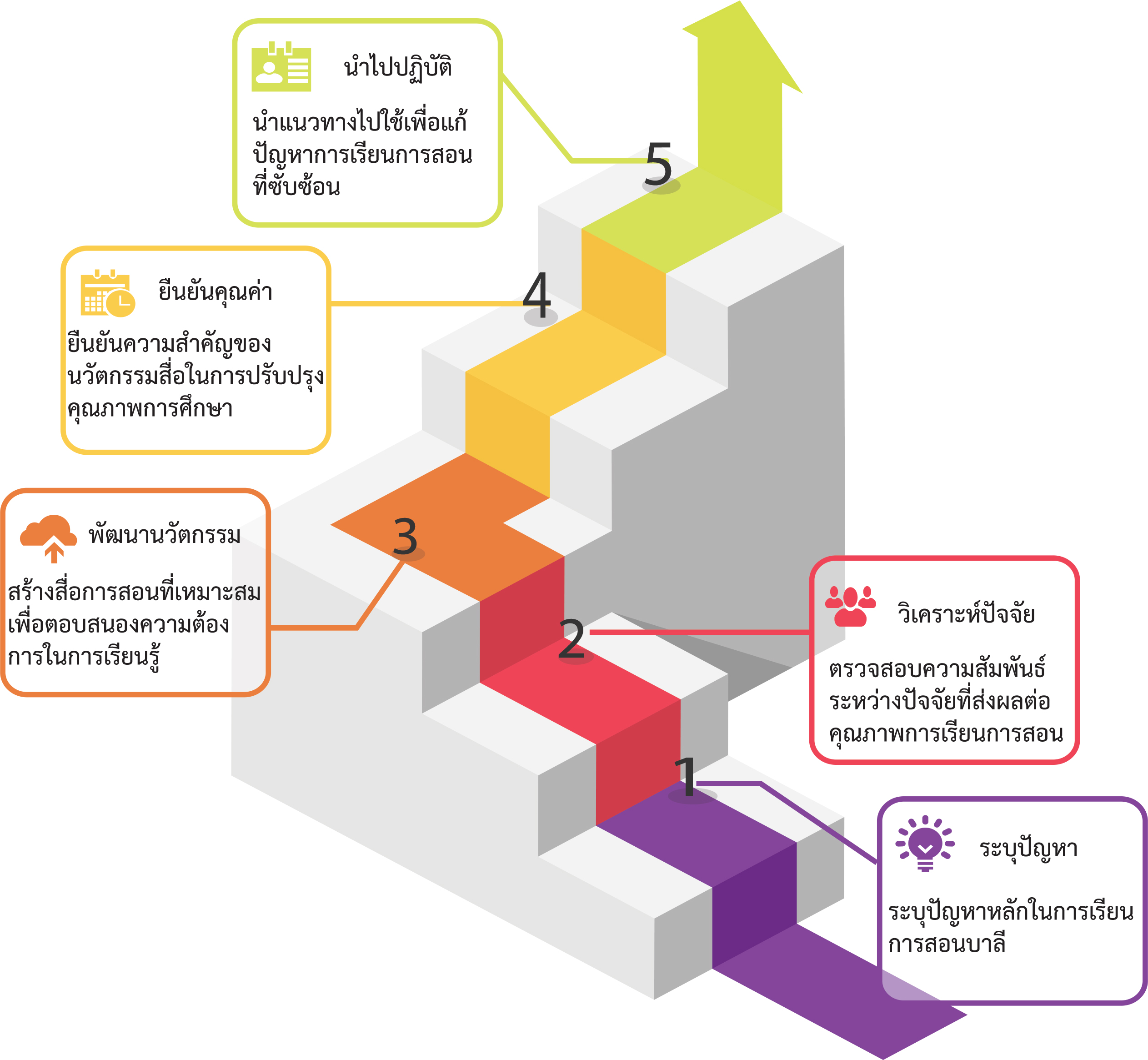
This research aimed to (1) study the problems affecting the teaching and learning management of Pali Scripture Schools (Pariyatti Dhamma Schools) under the Sangha in Region 1, Region 2, and Region 3, (2) Investigate the factors influencing the teaching and learning management of students in these schools, and (3) develop instructional media innovations to enhance the quality of student learning. This was a mixed-methods research. The sample group included 306 monk students from 21 Pali Scripture Schools across 10 provinces in Sangha Regions 1, 2, and 3. The research tools included a 30-item questionnaire with discrimination values (r) ranging from .457 to .840 and an overall reliability coefficient of 0.971. The statistical methods used for data analysis included frequency, percentage, mean, standard deviation, Pearson’s correlation coefficient, multiple regression analysis, and descriptive analysis.
The research results revealed that:
1. Problems affecting teaching and learning management in the Pali Scripture Schools of Regions 1, 2, and 3 were found to be at a high level overall. The problems, ranked from most to least significant, were: Assessment and evaluation, Learning activity organization, Instructional media and learning innovation, and Curriculum and curriculum development.
2. Factors influencing teaching and learning management in these schools showed a positive and statistically significant correlation at the 0.01 level.
3. Instructional media innovations developed and currently applied to enhance the quality of learning in the Pali Scripture Schools of Regions 1, 2, and 3 include: 1) Material-based media, 2) Equipment-based media, and 3) Technique-based media, instructional models, and teaching methods.
References
ทิศนา แขมมณี. (2555). ศาสตร์การสอน: องค์ความรู้เพื่อการจัดกระบวนการเรียนรู้ที่มีประสิทธิภาพ. (พิมพ์ครั้งที่ 15). กรุงเทพฯ: จุฬาลงกรณ์มหาวิทยาลัย.
บุญชม ศรีสะอาด. (2554). การวิจัยเบื้องต้น. (พิมพ์ครั้งที่ 9). กรุงเทพฯ: สุวีริยาสาส์น.
ผู้จัดการออนไลน์. (2558). ปัญหาครูไทย (เมื่อไหร่) ใครจะสะสาง. เข้าถึงได้จาก https://mgronline.com/live/detail/9580000087601
พระครูวิกรมธรรมธัช (พีระ ปิยธมฺโม) และเตือนใจ ผางคำ. (2566). ปัญหาการศึกษาภาษาบาลีของคณะสงฆ์ไทยในปัจจุบัน. วารสาร มจร สังคมศาสตร์ปริทรรศน์, 12(1), 85-94.
พระมหาประจักษ์ กิตฺติเมธี (ทองดาษ). (2560). การพัฒนาเทคนิคและวิธีการสอนพระปริยัติธรรมแผนกบาลี. วารสารสถาบันวิจัยญาณสังวร, 8(2), 101-112.
ภาสกร เรืองรอง, ประหยัด จิระวงพงศ์, วณิชชา แม่นยำ, วิลาวัลย์ สมยาโรน, ศรันยู หมื่นเดช และชไมพร ศรีสุราช. (2556). เทคโนโลยีการศึกษากับครูไทยในศตวรรษที่ 21. วารสารปัญญาภิวัฒน์, 5, 195-207. https://so05.tci-thaijo.org/index.php/pimjournal/article/view/20162
ยิ่งศักดิ์ เพชรนิล และมานิตย์ กุศลคุ้ม. (2560). แนวทางการพัฒนานวัตกรรมสื่อการสอนเพื่อพัฒนาความเป็นพลเมือง. วารสารนิติ รัฐกิจ และสังคมศาสตร์, 1(2), 19-33.
วัดญาณเวศกวัน. (2564). การศึกษาของคณะสงฆ์: ปัญหาที่รอทางออก. เข้าถึงได้จาก https://www.watnyanaves.net/en/book-full-text/38
ศันสนีย์ พรมพินิจ. (2559). ความสัมพันธ์ระหว่างบทบาทของผู้บริหารโรงเรียนในการส่งเสริมการใช้เทคโนโลยีสารสนเทศและการสื่อสารเพื่อการศึกษากับประสิทธิผลของโรงเรียนโพธิสัมพันธ์พิทยาคาร สังกัดสำนักงานเขตพื้นที่การศึกษามัธยมศึกษา เขต 18. (วิทยานิพนธ์การศึกษามหาบัณฑิต). ชลบุรี: มหาวิทยาลัยบูรพา.
สำนักการศึกษา. (2559). แนวทางการพัฒนาเทคโนโลยีเพื่อการเรียนการสอน ในโรงเรียนสังกัดกรุงเทพมหานคร. (รายงานการวิจัย). กรุงเทพฯ: สำนักการศึกษา.
สำนักงานคณะกรรมการการศึกษาขั้นพื้นฐาน. (2550). แนวทางการกระจายอำนาจกรบริหาร และการจัดการการศึกษา. กรุงเทพฯ: ชุมนุมสหกรณ์การเกษตรแห่งประเทศไทย จำกัด.
Yamane, T. (1967). Statistics: An introductory analysis. New York: Harper & Row.