Chofah : Explain Dharma Puzzle Pass Chofah Phra Ubosatha Wat Klang the Royal Monastery Kalasin Subdistrict Mueang District Kalasin Province
Keywords:
Chofa;, Dhamma Puzzle;, Wat Klang UbosotAbstract
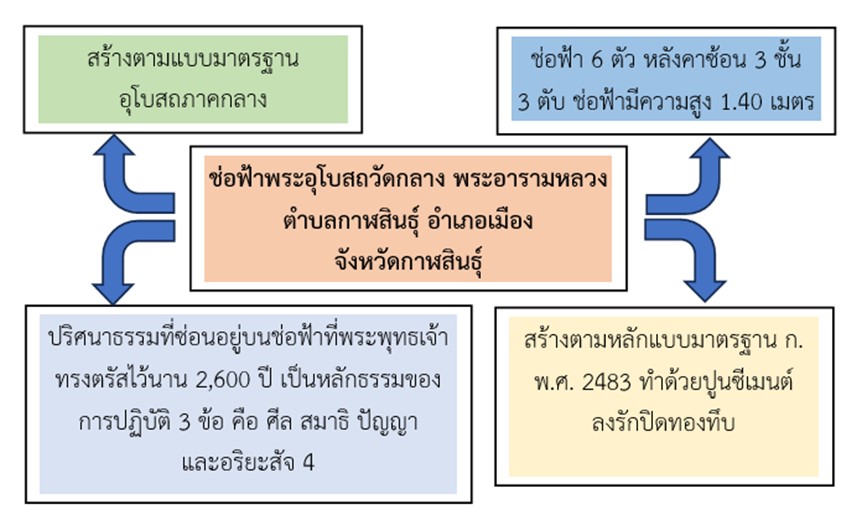
This academic article aims to explain the Buddhist symbolism embodied in the cho fa (gable finial) of Wat Klang’s ordination hall. The study found that the cho fa is in the swan-mouth style with six figures, measuring 1.40 meters in height, and arranged on a three-tiered roof typical of Central Thai architecture, yet reflecting Northeastern beliefs. The cho fa symbolizes the forest creatures of Himavanta and represents the threefold Buddhist practice of morality (sīla), concentration (samādhi), and wisdom (paññā), which lead to enlightenment and liberation. The first cho fa represents morality, encompassing the Five, Eight, Ten, and 227 precepts, as well as the 84,000 Dhamma teachings. The second level signifies virtue and the role of morality in overcoming defilements, leading to concentration, mindfulness, and wisdom. The third and highest cho fa symbolizes wisdom, directed toward the eradication of mental defilements. Its gilded decoration symbolizes prosperity, brilliance, and boundless radiance. Moreover, the cho fa embodies the Four Noble Truths: dukkha (suffering), samudaya (the cause of suffering), nirodha (the cessation of suffering), and magga (the path leading to the cessation of suffering). These represent the core teachings of Buddhism that guide practitioners toward the eradication of ignorance (avijjā) and ultimate liberation.
References
จิรวัฒน์ พิระสันต์. (2543). ทฤษฎีและการวิจัยทางด้านศิลปะและการออกแบบ. พิษณุโลก: มหาวิทยาลัยนเรศวร.
โชติ กัลยาณมิตร. (2539). สถาปัตยกรรมไทยเดิม. (พิมพ์ครั้งที่ 2). กรุงเทพฯ: สมาคมสถาปนิกสยามในพระบรมราชูปถัมภ์.
_______. (2548). สถาปัตยกรรมและศิลปเกี่ยวเนื่อง. กรุงเทพฯ: เมืองโบราณ.
ธงฉัตร เลขาวิจิตร. (2560). รอบรู้เรื่องวัฒนธรรม. กรุงเทพฯ: ชมรมพิพิธสยาม.
เนตรนภิศ นาควัชระ และคณะ. (2525). วัดในกรุงเทพฯ: การเปลี่ยนแปลงในรอบ 200 ปี. กรุงเทพฯ: จุฬาลงกรณ์มหาวิทยาลัย.
บรรจง วงศ์วิเชียร. (2537). ประวัติศาสตร์ โบราณคดี นครศรีธรรมราช. กรุงเทพฯ: กรมศิลปากร สำนักโบราณคดี และพิพิธภัณฑสถานแห่งชาติที่ 11.
พระธรรมปิฎก (ป.อ.ปยุตโต). (2544). พุทธวีธีในการสอน. กรุงเทพฯ: สหธรรมิก.
รุ่งทิวา จักร์กร. (2521). วิธีสอนทั่วไป. กรุงเทพฯ: ประสานมิตร.
เลิศ พ่วงพระเดซ. (2516). เรื่องสถาปัตยกรรมไทย. กรุงเทพฯ: โอเดียนสโตร์.
วิบูลย์ ลี้สุวรรณ. (2539). ศิลปะตัดกรรมพื้นบ้าน. (พิมพ์ครั้งที่ 4). กรุงเทพฯ: ต้นอ้อ แกรมมี่.
ศูนย์ข้อมูลกลางทางวัฒนธรรม กระทรวงวัฒนธรรม. (2554). งานสถาปัตธกรรมไทย. กรุงทพฯ: ศูนย์ข้อมูลกลางทางวัฒนธรรม.
สมใจ นิ่มเล็ก. (2538). เครื่องบนและงานประดับของสถาปัตยกรรมไทย. กรุงเทพฯ: อมรินทร์พริ้นติ้งแอนด์พับลิชชิ่ง.
สันติ เล็กสุขุม. (2546). เมื่อพระพุทธองค์เสด็จลงจากดาวดึงส์” ในลีลาไทย. กรุงเทพฯ: มติชน.
สำนักงานราชบัณฑิตยสถาน. (2558). พจนานุกรม ฉบับราชบัณฑิตยสถาน พ.ศ. 2554. กรุงเทพฯ: สำนักงานราชบัณฑิตยสถาน.
สุเชาวน์ พลอยชุม. (2545). สุนทรียศาสตร์ ปัญหาและทฤษฎีเกี่ยวกับความงามและศิลปะ. กรุงเทพฯ: มหาวิทยาลัยมหามกุฎราชวิทยาลัย.