The Strategy Development of the Buddhist Ways of Buddhist Followers: A Case Study of Pa Aka Nyaw Tribe in Chiang Mai
Keywords:
Buddhist Practices Development;, Buddhist Ways of Buddhist Followers;, Karen Ethnic GroupAbstract
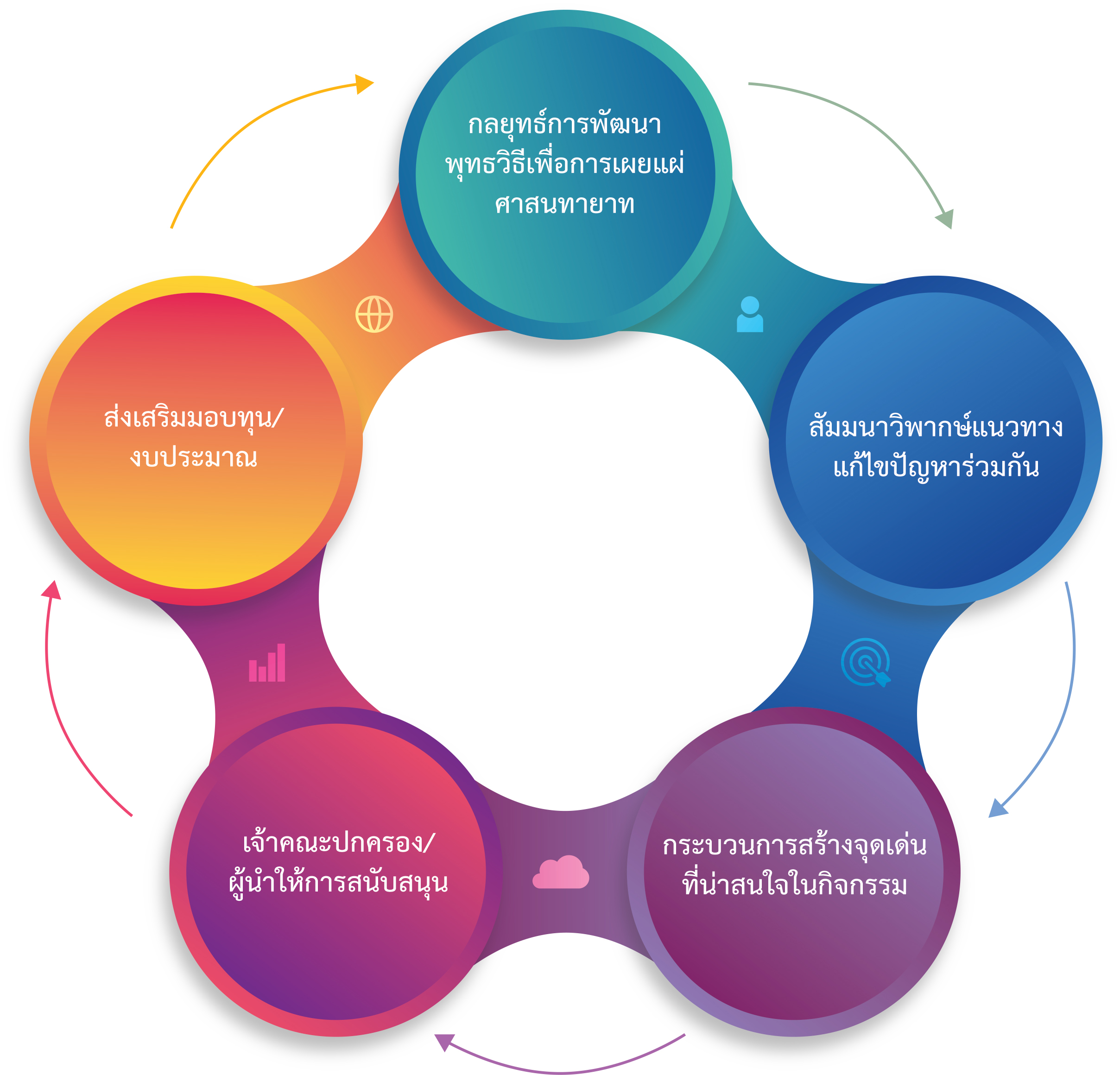
The objectives of this research were: (1) to study the current conditions and factors influencing the development of Buddhist methods for promoting religious heirs; (2) to construct strategies for developing Buddhist methods to enhance religious heirs; and (3) to evaluate these strategies. A mixed-methods approach was employed. The sample consisted of 140 Karen ethnic group members in Chom Thong District, Chiang Mai Province, selected by purposive sampling. Research instruments included interviews and questionnaires, with a reliability coefficient of 0.97. The questionnaire on Buddhist method development for propagation comprised 20 items, with item discrimination values ranging from .609 to .829 and an overall reliability coefficient of 0.96. Data were analyzed using percentage, mean, standard deviation, Pearson’s correlation coefficient, multiple regression analysis (MRA), and descriptive analysis. The research results found that: 1. The overall current conditions and factors affecting the development of Buddhist propagation methods for religious heirs were at a high level. The highest mean score was in dāna (generosity), followed by sīla (morality), while the lowest was in bhāvanā (mental cultivation). 2. Four development strategies were formulated: (1) engaging experts, community leaders, Karen representatives, and Buddhist monks to jointly identify solutions; (2) creating attractive highlights in activities; (3) fostering motivation and supporting community participation based on the Four Saṅgahavatthu (principles of service); and (4) providing financial and facility support to raise awareness of the importance of religious heirs. 3. The evaluation of the strategies indicated a high level overall, with the highest mean in accuracy, followed by appropriateness and feasibility, while the lowest was in applicability.References
กลุ่มชาติพันธ์ในประเทศไทย. (2568). ปกาเกอะญอ. เข้าถึงได้จาก https://ethnicity.sac.or.th/database-ethnic/187
กาญจนา จันทร์สิงห์. (2565). ชนเผ่าปกาเกอะญอ หรือกะเหรี่ยง. เข้าถึงได้จาก https://arit.kpru.ac.th/ap2/local/?nu=pages&page_id=2099&code_db=610004&code_type=05
บุญชม ศรีสะอาด และคณะ. (2551). พื้นฐานการวิจัยการศึกษา. กาฬสินธุ์: ประสานการพิมพ์.
บุญชม ศรีสะอาด. (2554). การวิจัยเบื้องต้น. (พิมพ์ครั้งที่ 9). กรุงเทพฯ: สุวีริยาสาส์น.
พระครูบวรกิจคุณธาร (อนันต์ วรปญฺโญ), พระอุดมสิทธินายก (กำพล คุณงฺกโร) และประเสริฐ ธิลาว. (2564). รูปแบบการเผยแผ่พระพุทธศาสนาของพระสงฆ์ในสังคมพหุวัฒนธรรม ในเขตหนองจอก กรุงเทพมหานคร. วารสาร มจร สังคมศาสตร์ปริทรรศน์, 10(1), 116-124.
พระบัวสอน ทองสลับ. (2563). บทบาทของพระสงฆ์ต่อการส่งเสริมคุณภาพชีวิตของประชาชนในเขต ปกครองของคณะสงฆ์ภาค 10. (ดุษฎีนิพนธ์รัฐประศาสนศาสตรดุษฎีบัณฑิต). มหาสารคาม: มหาวิทยาลัยราชภัฏมหาสารคาม.
พระพรหมคุณาภรณ์ (ป.อ.ปยุตฺโต). (2551). พุทธธรรม (ฉบับเดิม). (พิมพ์ครั้งที่ 15). กรุงเทพฯ: จันทร์เพ็ญ.
พระพุทธโฆสาจารย์. (2005). คัมภีร์วิสุทธิมรรค (สมเด็จพระพุฒาจารย์ (อาจ อาสภมหาเถร), Trans.; 6th ed.). The Corporate Body of the Buddha Education Foundation.
พระสุภาพ สุภาโว (บัวบรรจง). (2561). บทบาทของพระสงฆ์ในการพัฒนาชุมชนในเขตพื้นที่ตำบลยางค้อม อำเภอพิปูน จังหวัดนครศรีธรรมราช. (วิทยานิพนธ์พุทธศาสตรมหาบัณฑิต). พระนครศรีอยุธยา. มหาวิทยาลัยมหาจุฬาลงกรณราชวิทยาลัย.
สาโรช บัวศรี. (2544). ปรัชญาการศึกษาสำหรับประเทศไทย: จุดบรรจบระหว่างพุทธศาสนากับประชาธิปไตย. กรุงเทพฯ: สุวีริยาสาส์น.