Personnel Administration Based on the Seven Suppurisadhammas by School Administrators under the Bueng Kan Primary Educational Service Area Office
Keywords:
Personnel Administration;, Seven Suppurisadhammas;, School AdministratorsAbstract
The objectives of this research were: (1) to study the current conditions of personnel administration based on the Seven Sapppurisa-dhammas (Virtues of the True Person), and (2) to propose guidelines for promoting personnel administration in accordance with these principles. A mixed-methods approach was employed. Quantitative data were collected from 295 school administrators and teachers, while qualitative data were obtained from 12 key informants. The research instruments included a questionnaire and semi-structured interviews. Quantitative data were analyzed using frequency, percentage, mean, standard deviation, and descriptive statistics, while qualitative data were analyzed through content analysis.
The research results found that:
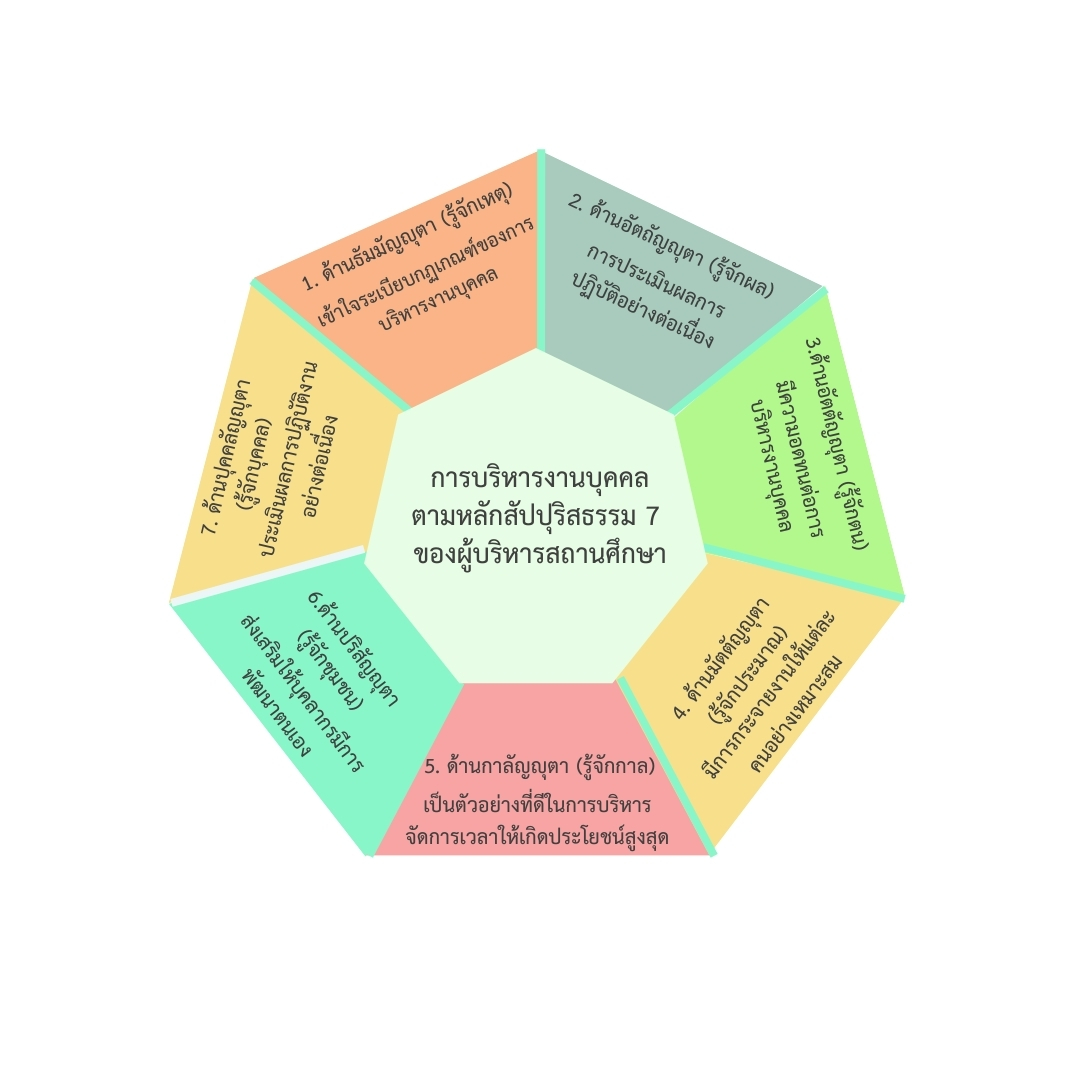
1. The overall conditions of personnel administration based on the Seven Sappurisa-dhammas were at the highest level ( = 4.64, S.D. = 0.35). The highest-rated principle was Attaññutā (self-knowledge) (
= 4.69, S.D. = 0.35), followed by Parisaññutā (knowledge of community) (
= 4.65, S.D. = 0.36), while the lowest was Dhammaññutā (knowledge of principles) (
= 3.62, S.D. = 0.33).
2. The proposed guidelines for personnel administration emphasized that administrators should clearly define goals, develop themselves, and prepare personnel administration manuals. Personnel should be assigned according to their competencies, with regular performance monitoring. Training and equitable knowledge development should be promoted, along with appropriate allocation of manpower and budget. Additionally, administrators should recognize and praise effective staff performance while fostering organizational awareness and morale.
References
ไทยรัฐออนไลน์. (2566). ป.ป.ช. เข้มจับตาเงินแป๊ะเจี๊ยะ ฝากเด็กเข้าเรียนปี 66 แนะเลิกรับเด็กเงื่อนไขพิเศษ. เข้าถึงได้จากhttps://www.thairath.co.th/news/politic/2666850
บุญชม ศรีสะอาด. (2545). การวิจัยเบื้องต้น. (พิมพ์ครั้งที่ 7). กรุงเทพฯ: สุวีริยสาส์น.
บุญทัน ดอกไธสง. (2559). หลักการบริหารการศึกษา. กรุงเทพฯ: จรัลสนิทวงศ์การพิมพ์.
พระครูพิศาลปริยัตยานุกูล (อนันต์ วฑฺฒโน). (2562). แนวทางการบริหารงานบุคคลตามหลักสัปปุริสธรรม 7 ของผู้บริหารโรงเรียนประถมศึกษาเขตบางขุนเทียน สังกัดกรุงเทพมหานคร. (วิทยานิพนธ์ครุศาสตรมหาบัณฑิต). พระนครศรีอยุธยา: มหาวิทยาลัยมหาจุฬาลงกรณราชวิทยาลัย.
พระจิณณ์วเรณย์ อคฺคธมฺโม, พระฮอนด้า วาทสทฺโท และจุฬาพรรณภรณ์ ธนะแพทย. (2563). การบริหารงานบุคคลตามหลักสัปปุริสธรรม 7 ในโรงเรียนพระปริยัติธรรม แผนกสามัญศึกษา จังหวัดขอนแก่น. Journal of Buddhist Education and Research, 7(2), 203-212.
พระพรหมคุณาภรณ์ (ป.อ.ปยุตโต). (2546). พจนานุกรมพุทธศาสน์ ฉบับประมวลธรรม. กรุงเทพฯ: มหาวิทยาลัยมหาจุฬาลงกรณราชวิทยาลัย.
พระมหาบุดดี สุธงษาโม, พระครูปลัดสมชัย นิสฺสโภ และพระครูปริยัติคุณนะรังษ. (2566). การบริหารงานบุคคลตามหลักสัปปุริสธรรม 7 ของผู้บริหารโรงเรียนพระปริยัติธรรมแผนกสามัญศึกษา สังกัดสำนักงานพระพุทธศาสนาแห่งชาติ จังหวัดเลย. วารสารศรีล้านช้างปริทรรศน์, 9(1), 105-120.
พระมหาพงษ์สินธ์ ถิรจิตฺโต (โพธิ์คํา). (2563). การวิจัยในโรงเรียนพระปริยัติธรรมแผนกสามัญศึกษา จังหวัดอุดรธานี. (วิทยานิพนธ์พุทธศาสตรมหาบัณฑิต). พระนครศรีอยุธยา: มหาวิทยาลัยมหาจุฬาลงกรณราชวิทยาลัย.
สมบัติ บุตรแสนคม. (2567). การบริหารงานบุคคลในยุคฐานวิถีชีวิตใหม่ ตามหลักสัปปุริสธรรม 7 ของผู้บริหารโรงเรียนประถมศึกษา อำเภอคลองหลวง จังหวัดปทุมธานี. (วิทยานิพนธ์พุทธศาสตรมหาบัณฑิต). พระนครศรีอยุธยา: มหาวิทยาลัยมหาจุฬาลงกรณราชวิทยาลัย.
สำนักงานคณะกรรมการป้องกันและปราบปรามการทุจริตแห่งชาติ. (2562). มาตรการป้องกันการทุจริตในการเรียกรับทรัพย์สินหรือประโยชน์ตอบแทน เพื่อโอกาสในการเข้าเรียนในสถานศึกษา. เข้าถึงได้จาก https://www.nacc.go.th/categorydetail/20191124125640121/20250218141151
สำนักงานคณะกรรมการพัฒนาการเศรษฐกิจและสังคมแห่งชาติ. (2566). รายงานประจำปี 2566. กรุงเทพฯ: สำนักงานคณะกรรมการพัฒนาการเศรษฐกิจและสังคมแห่งชาติ.
Krejcie, R. V., & Morgan, D. W. (1970). Determining sample size for research activities. Educational and Psychological Measurement, 30(3), 607-610.