Guidelines for Developing Digital Leadership of School Administrators under Maha Sarakham Primary Educational Service Area Office 3
Keywords:
Guidelines for Developing;, Digital LeadershipAbstract
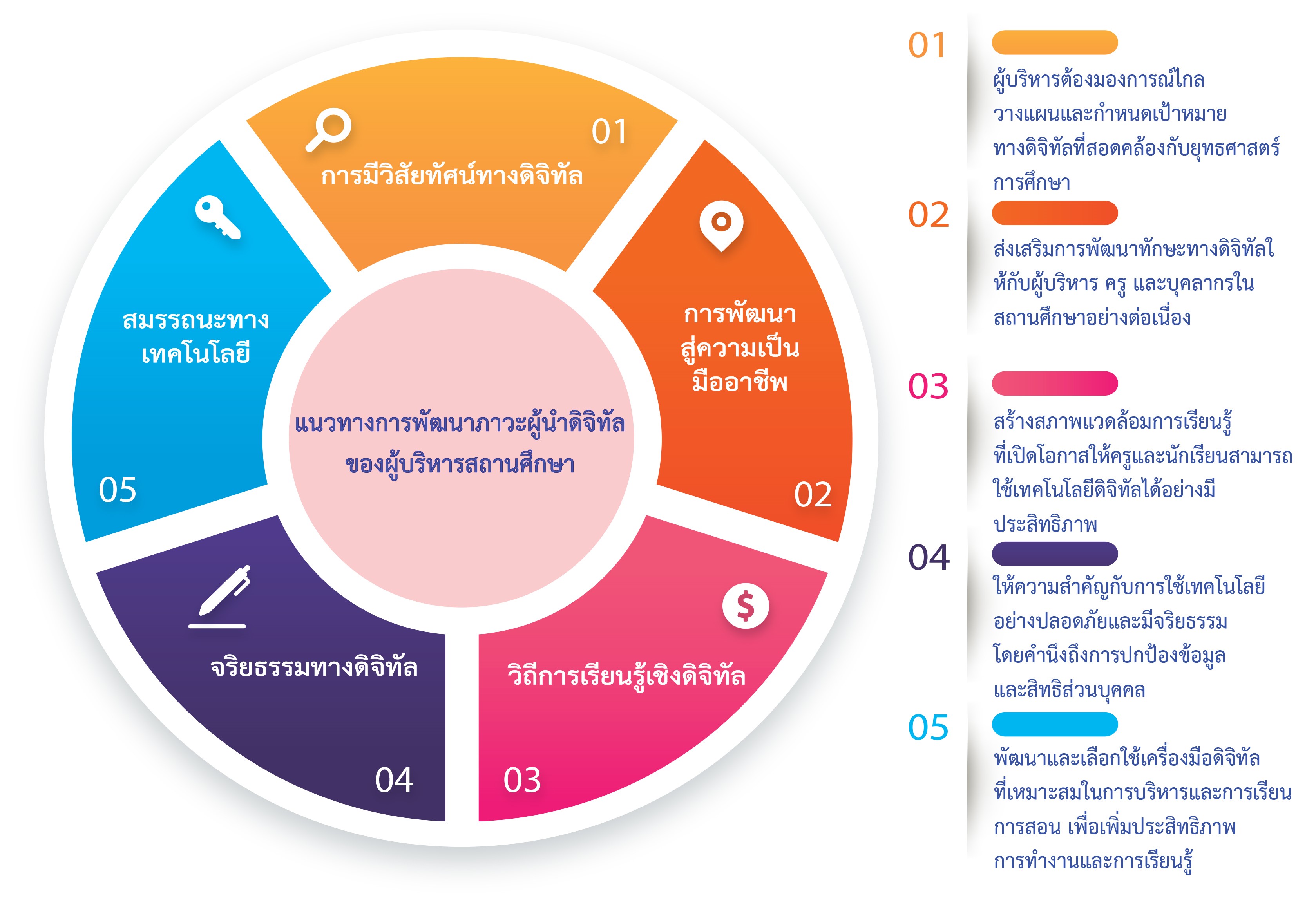
The objectives of this research were: (1) to examine the current state of digital leadership among school administrators, and (2) to propose guidelines for its development. A mixed-methods approach was employed. The quantitative sample consisted of 370 school administrators and teachers selected through stratified random sampling. The research instrument was a five-point rating scale questionnaire with a content validity index ranging from 0.67 to 1.00 and a reliability coefficient of 0.68. Data were analyzed using mean, standard deviation, and percentage. The qualitative data were obtained from three purposively selected school administrators through in-depth interviews and analyzed using content analysis. The research results revealed that: 1. The overall level of digital leadership among school administrators was at the highest level (x̄ = 4.56, S.D. = 0.67). The top five components with the highest mean scores were: digital vision (x̄ = 4.59, S.D. = 0.65), digital ethics (x̄ = 4.57, S.D. = 0.64), professional development (x̄ = 4.56, S.D. = 0.70), digital learning approaches (x̄ = 4.55, S.D. = 0.65), and technological competence (x̄ = 4.52, S.D. = 0.70). 2. The development guidelines for digital leadership comprised five key dimensions: (1) digital vision, (2) professional development, (3) digital learning approaches, (4) digital ethics, and (5) technological competence, with a total of 17 sub-guidelines. These included promoting the use of technology in schools, setting digital goals, creating learning environments, emphasizing ethical media use, and building learning exchange networks. The guidelines highlighted the pivotal role of administrators in driving an effective and sustainable transition to the digital era.References
ดาวรุวรรณ ถวิลการ. (2564). ภาวะผู้นำดิจิทัล. ขอนแก่น: มหาวิทยาลัยขอนแก่น.
ถวิล อรัญเวศ. (2560). ผู้บริหารกับการครองตน ครองคน และครองงาน สุดยอดนักบริหาร. นครราชสีมา: สำนักงานเขตพื้นที่การศึกษาประถมศึกษานครราชสีมา เขต 4.
ทินกร บัวชู และทิพภาพร บัวชู. (2562). ภาวะผู้นำดิจิทัลของผู้บริหารสถานศึกษา. วารสารครุศาสตร์สาร, 13(2), 294-285.
บุญชม ศรีสะอาด. (2554). การวิจัยเบื้องต้น. กรุงเทพฯ: สรีวิยาสาสน์.
ไพฑูรย์ สินลารัตน์. (2553). ผู้นำเชิงสร้างสรรค์และผลิตภาพ: กระบวนทัศน์ใหม่และผู้นำใหม่ทางการศึกษา. กรุงเทพฯ: จุฬาลงกรณ์มหาวิทยาลัย.
ล้วน สายยศ และอังคณา สายยศ. (2539). เทคนิคการวัดผลการเรียนรู้. กรุงเทพฯ: สุวีริยสาล์.
วาสนา พลชาย และละดา ดอนหงษา. (2563). ภาวะผู้นำทางดิจิทัลของผู้บริหารสถานศึกษาตามทัศนะของข้าราชการครู สังกัดสำนักงานเขตพื้นที่การศึกษาประถมศึกษาหนองบัวลำภู เขต 1. อุดรธานี: วิทยาลัยพิชญบัณฑิต.
วิโรจน์ สารรัตนะ. (2555). แนวคิด ทฤษฎี และประเด็นเพื่อการบริหารทางการศึกษา. (พิมพ์ครั้งที่ 8). กรุงเทพฯ: ทิพยวิสุทธิ์.
สำนักงานเลขาธิการสภาการศึกษา. (2560). แผนการศึกษาแห่งชาติ พ.ศ. 2560-2579. กรุงเทพฯ: สำนักงานเลขาธิการสภาการศึกษา.
สุกัญญา แช่มช้อย. (2561). การบริหารสถานศึกษาในยุคดิจิทัล. กรุงเทพฯ: จุฬาลงกรณ์มหาวิทยาลัย.
สุวรรณา เทพประสิทธิ์. (2555). ความสัมพันธ์ระหว่างภาวะผู้นำแบบวิถีทางเป้าหมายของผู้บริหารกับประสิทธิผลของโรงเรียน. (วิทยานิพนธ์ศึกษาศาสตรมหาบัณฑิต). ปทุมธานี: มหาวิทยาลัยเทคโนโลยีราชมงคลธัญบุรี.
อัจฉรา จงดี. (2560). การศึกษาการมีส่วนร่วมในการบริหารสถานศึกษาของคณะกรรมการสถานศึกษาขั้นพื้นฐาน ในจังหวัดจันทบุรีระยองและตราด. (วิทยานิพนธ์การศึกษามหาบัณฑิต). จันทบุรี: มหาวิทยาลัยราชภัฏรำไพพรรณี.
American Library Association. (2012). Digital literacy, libraries, and public policy. Retrieved from https://www.districtdispatch.org/wp-content/uploads/2013/01/2012_OITP_digilitreport_1_22_13.pdf
Bradon, C. D. (2008). Leadership and adoption of instructional technology in schools. (Unpublished doctoral dissertation). Nova Southeastern University.
Cronbach, L. J. (1970). Essentials of psychological testing. (3rd ed.). New York: Harper & Row.
Greenberg-Walt, C. L., & Robertson, A. G. (2001). The future of leadership. Jossey-Bass.
Martin, A. & Gtudziecki, E. (2006). DigEuLit: Concepts and Tools for Digital Literacy Development. ITALICS: Innovations in Teaching & Learning in Information & Computer Sciences, 5(4), 246-264.
Mohan Rao, T., Xi, Y., & Sandhu, K. (2020). Leadership to advance innovation for digital healthcare transformation. Retrieved from https://www.igiglobal.com/chapter/leadership-to-advance-innovation-for-digital-healthcaretransformation/246928
Polly, D. (2010). Preparing teachers to integrate technology effectively: The case of higher-order thinking skills (HOTS). In S. D’Agustino (Ed.), Adaptation, resistance and access to instructional technologies: Assessing future trends in education (pp. 395-409). IGI Global.