การพัฒนาการเรียนผ่านบทเรียนบนระบบ E-Learning
คำสำคัญ:
การพัฒนา;, การเรียนรู้;, ระบบ E-Learningบทคัดย่อ
บทความวิชาการนี้มีวัตถุประสงค์เพื่อนำเสนอแนวคิดและแนวทางการพัฒนาการเรียนผ่านบทเรียนบนระบบ E-Learning เพื่อยกระดับคุณภาพการจัดการเรียนการสอนและเพิ่มประสิทธิภาพการบริหารสถานศึกษา โดยอาศัยกระบวนการบริหารจัดการตามวงจรคุณภาพ PDCA (Plan–Do–Check–Act) เป็นกรอบในการพัฒนาและขับเคลื่อนการดำเนินงานทางการศึกษาอย่างเป็นระบบ
การจัดการเรียนการสอนผ่านระบบ E-Learning เป็นรูปแบบการเรียนรู้ที่สนับสนุนการเรียนรู้ที่เน้นผู้เรียนเป็นสำคัญ เปิดโอกาสให้ผู้เรียนสามารถเข้าถึงแหล่งเรียนรู้ได้โดยไม่จำกัดสถานที่และเวลา และสามารถควบคุมจังหวะการเรียนรู้ของตนเองได้ ซึ่งสอดคล้องกับแนวคิดการเรียนรู้ในศตวรรษที่ 21 และการพัฒนาทักษะการเรียนรู้ตลอดชีวิต
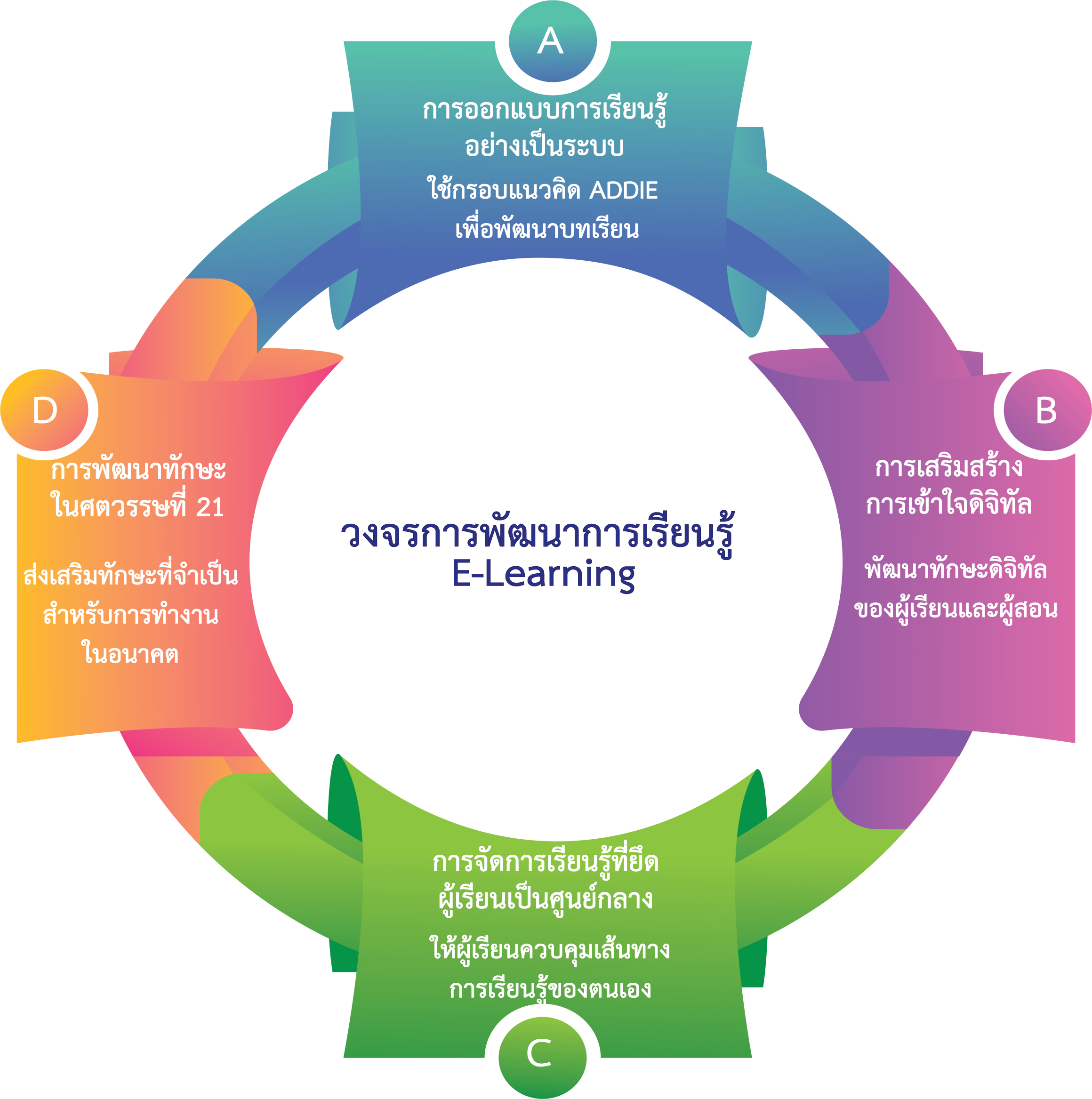
บทความนี้นำเสนอองค์ประกอบสำคัญของการพัฒนาบทเรียน E-Learning ได้แก่ การออกแบบเนื้อหาและกิจกรรมการเรียนรู้ที่สอดคล้องกับความสนใจและศักยภาพของผู้เรียน การใช้เทคโนโลยีสารสนเทศเป็นเครื่องมือสนับสนุนการเรียนรู้ และการประยุกต์ใช้วงจร PDCA ในการวางแผน ดำเนินการ ติดตามประเมินผล และปรับปรุงการจัดการเรียนการสอนอย่างต่อเนื่อง อันจะนำไปสู่การพัฒนาสถานศึกษาให้เป็นองค์กรแห่งการเรียนรู้และนวัตกรรมทางการศึกษาในยุคดิจิทัลได้อย่างยั่งยืน
เอกสารอ้างอิง
จินตวีร์ คล้ายสังข์. (2553). โครงการวิจัยรูปแบบเว็บไซต์และรูปแบบบทเรียนอิเล็กทรอนิกส์ที่เหมาะสมสำหรับการเรียนการสอนแบบอีเลิร์นนิงในระดับอุดมศึกษา. กรุงเทพฯ: สำนักคณะกรรมการการอุดมศึกษากระทรวงศึกษาธิการ.
บุปผชาติ ทัพหิกรณ์. (2544). ความรู้เกี่ยวกับสื่อมัลติมีเดียเพื่อการศึกษา. กรุงเทพฯ: คุรุสภา.
พิชัย ทองดีเลิศ. (2547). การนำเสนอรูปแบบการเรียนรู้ร่วมกันบนเครือข่ายคอมพิวเตอร์สำหรับนิสิตระดับปริญญาตรีที่มีรูปแบบการเรียนต่างกัน. กรุงเทพฯ: จุฬาลงกรณ์มหาวิทยาลัย.
ศูนย์เทคโนโลยีสารสนเทศเพื่อการสื่อสาร. (2554). การจัดการเรียนการสอนผ่านเว็บ (Web-based Instruction). กรุงเทพฯ: ศูนย์เทคโนโลยีสารสนเทศเพื่อการสื่อสาร.
Gnanamalar. (2017). Performance analysis of conventional pitch angle controllers for DFIG. International Journal of Pure and Applied Mathematics, 116(12), 1-9.
Imran, M., Abdul Hamid, S. N., & Aziz, A. (2018). The influence of TQM on export performance of SMEs: Empirical evidence from manufacturing sector in Pakistan using PLS-SEM. Management Science Letters, 8(5), 483-496.
https://doi.org/10.5267/j.msl.2018.3.001
Jyoti, J., & Dev, M. (2015). The impact of transformational leadership on employee creativity: The role of learning orientation. Journal of Asia Business Studies, 9(1), 78-98. https://doi.org/10.1108/JABS-03-2014-0022
Lamb, R., Annetta, L., & Vallett, D. (2015). The interface of creativity, fluency, lateral thinking, and technology while designing serious educational games in a science classroom. Electronic Journal of Research in Educational Psychology, 13(2), 219-242.
Lee, M. Y., & Lim, W. (2017). Investigating preservice teachers’ written feedback on procedure-based mathematics assessment items. In B. Kaur, W. K. Ho, T. L. Toh, & B. H. Choy (Eds.), Proceedings of the 41st Conference of the International Group for the Psychology of Mathematics Education (Vol. 3, pp. 137-144).
Paulin, D., & Suneson, K. (2012). Knowledge transfer, knowledge sharing and knowledge barriers Three blurry terms in KM. Electronic Journal of Knowledge Management, 10(1), 81-91.
UNESCO. (2020). Education: From disruption to recovery. Retrieved from https://en.unesco.org/covid19/educationresponse